


Weight Distribution And Sway Control System For A 17' Trailer That Weighs 4,200 Pounds Dry
Updated 07/03/2025 | Published 06/30/2025
Products Featured in This Question

Question:
I’m looking at a 17 ft trailer. 4200lb dry weight. 450 tongue weight. What sway control weight distribution system works?
asked by: John
Expert Reply:
Good question John!
I have two options for you to choose from. One is more of an "entry level" system and the other is a more premium system. Either will absolutely work with your trailer and your 2025 Honda Passport (I double checked in your owners manual and it said you can use weight distribution).
"Entry Level" Option: Reese Pro Round Bar Weight Distribution w/ Sway Control - 6,000 lbs GTW, 600 lbs TW # RE34FR
-This comes with everything you need and will get the job done. But, with it being a round bar system, it will not have as much tension on the bars when hooked up. This means it will not have as much sway control as other options, but it will still work. If you decide to go this route and want more sway control, you can also add on the Friction Sway Control Kit # 83660. You would need to drill into the trailer frame to install this and it would have to be disconnected when reversing the vehicle/trailer.
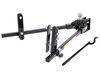
Premium Option: Equal-i-zer Weight Distribution w/ 4-Point Sway Control - No Shank - 6,000 lbs GTW, 600 lbs TW # EQ37061ET
-This will need a shank ( # C17100), ball ( # EQ91-00-6080), and a pin/clip ( # C21500) to hold it in the hitch, but it will get the job done better. Equal-i-zer has been doing weight distribution systems for longer than basically anyone else and they have it down like no one else. Their bars are much more substantial and will do an excellent job of distribution the weight of the trailer and keeping it from swaying, but it is a lot more expensive.
Couple things to keep in mind if you are new to using weight distribution systems:
-The Reese system has a tongue weight rating of 200 to 600 pounds and the Equal-i-zer has a tongue weight rating of 300 to 600 pounds. You want your loaded longue weight to fall as close to the middle of the systems capacity as possible, which both of these options would.
-It looks like the hitch on your Passport sits at 16" off the ground, so you would probably want to run either shank in the rise position, depending on the height of the coupler on your trailer (measured from the ground to the bottom of the coupler when on very level ground). Most trailers measure right at 18", but not all.
-Both options will make noise. This means they are working. The sway control is the friction between the bar/arm and the bracket attached to the frame of the trailer. It can be surprising so I figured I would mention it.
I know this is a lot to take in, so if you have any other questions or need clarification on anything, just let me know!


(click to enlarge)

Product Page this Question was Asked From
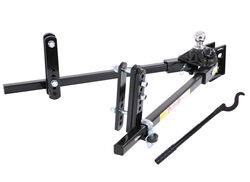
Equal-i-zer Weight Distribution w/ 4-Point Sway Control - No Shank - 6,000 lbs GTW, 600 lbs TW

- Weight Distribution Hitch
- WD With Sway Control
- Trunnion Bar
- Fits 3 Inch Frame
- Fits 4 Inch Frame
- Fits 5 Inch Frame
- Fits 6 Inch Frame
- Shank Not Included
- 2 Inch Ball
- Fits 2 Inch Hitch
- Allows Backing Up
- 400 lbs
- 500 lbs
- Equal-i-zer
more information >
Featured Help Information
Instructions

Continue Researching
- Search Results: ox box
- Search Results: weight distribution hitch
- Search Results: blue ox drop hitch
- Shop: Blue Ox SwayPro Weight Distribution Shank for 2" Hitches - 9" Long - 9 Hole Adjustment
- Shop: Towing Mirrors
- Search Results: hitch drop bar
- Search Results: drop hitch
- Shop: Air Safe Shock Absorbing Ball Mount for Weight Distribution - 2" Hitch - 14K
- Q&A: Weight of Fastway e2 Weight Distribution w/ 2-Point Sway Control - Trunnion # FA92-00-0600
- Shop: Convert-A-Ball Interchangeable Ball Set - 3 Balls - 1" Shank - Stainless
- Q&A: Recommended Weight Distribution Hitch for 3500-lbs Trailer
- Shop: Curt TruTrack 2P Weight Distribution System w/ Sway Control - 7-Hole Shank - 8K GTW, 800 lb TW
- Shop: Fastway e2 Weight Distribution w/ Sway Control - Round - 6,000 lbs GTW, 600 lbs TW
- Shop: Blue Ox SwayPro Weight Distribution Shank for 2" Hitches - 12" Long - 9 Hole Adjustment
- Shop: Fastway e2 Weight Distribution Shank - 12" Long - 12-1/2" Rise 9-3/4" Drop - 1.2K TW
- Video: Equal-i-zer Weight Distribution System w/ 4-Point Sway Control Feature Review
- Video: What to Know About the Equal-i-zer Weight Distribution w/ 4-Point Sway Control
- Video: Equal-i-zer Weight Distribution w/ 4-Point Sway Control Review
- Q&A: Best Weight Distribution System For A 2020 R-Pod 195 Being Towed By A 2013 GMC Yukon Denali
- Q&A: Is Weight Distribution Needed for a Gulf Stream Ameri-Lite 189DD Travel Trailer
- Shop: Trailer Wiring
- Q&A: Equal-i-zer Weight Distribution Hitch Recommendation for a 17 Foot Casita Liberty Deluxe
- Search Results: tire pressure monitoring
- Shop: Brake Controller
- Article: Brake Controller 7- and 4-Way Installation Kit (ETBC7)
- Q&A: Does the Maximum Trailer Frame Height Mean How Far Off the Ground?
- Q&A: Availability of Custom Towing Mirrors for 2024 Ford Ranger
- Search Results: brake controller wiring harness
- Video: Towing Mirror Options - Custom Fit VS Universal Fit
- Video: How to Install: K-Source Universal Towing Mirror on your 2020 Ford Ranger
John
7/3/2025
What about Blue Ox?