


How To Power A Third Brake Light With Diode Wiring While Flat Towing
Updated 04/16/2025 | Published 07/12/2022
Products Featured in This Question
Question:
I recently purchased a RM47ZR wiring kit for a 2021 Jeep Wrangler High Altitude with LED lights. I noticed on the video when they were testing the stop lights on the jeep the third brake light did not illuminate when it was tested. Is there another connection that can be made so the third stop light will function when hooked to the motor home? Thanks
asked by: Bill H
Helpful Expert Reply:

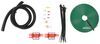
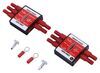
The reason the third brake light isn't coming on is because the Roadmaster Wiring Kit with Smart Diodes for Variable Voltage LED Tail Lights # RM47ZR is only being wired to the just the tail lights. To get the third brake light to activate you would need to splice in a jumper wire between the third brake light and the the "RV Brake In" on the diode.
You would need an additional Smart Diode # RO54FR for the third brake light and essentially wire it the same as one of your tail lights. The jumper wire can be placed on either tail light and just be twisted together with the "RV Brake In" wire before you crimp it into the spade terminal and connect it to the Smart Diode and then ran up to third brake light.


Product Page this Question was Asked From
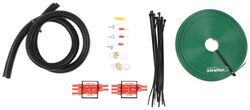
Roadmaster Smart Diode Kit for Variable Voltage LED Tail Lights

- Flat Tow Wiring Harness
- Splices into Vehicle Wiring
- Diode Kit
- Universal Fit
- Roadmaster
more information >
Featured Help Information
Instructions
Miscellaneous Media


Continue Researching
- Shop: Vehicle Tow Bar Wiring
- Shop: Vehicle Tow Bar Brake System
- Shop: Base Plate for Tow Bar
- Search Results: tow bar
- Shop: Roadmaster Battery Charge Line Kit for Towed Vehicles
- Shop: Roadmaster Brake-Lite Relay Kit for Towed Vehicles
- Shop: Roadmaster Smart Diode Kit for Variable Voltage LED Tail Lights
- Search Results: rm88400
- Shop: Trailer Wiring
- Shop: Blue Ox Alpha Non-Binding Tow Bar - RV Mount - 2" Hitch - 8,500 lbs
- Search Results: 4 wire wiring
- Shop: Roadmaster Universal Stop Light Switch Kit
- Search Results: rm732
- Search Results: battery disconnect
- Shop: Roadmaster Battery Disconnect for Towed Vehicle w/ Flat Tow Brake System - Gas Only
- Shop: Roadmaster Smart Diode Kit for Variable Voltage LED Tail Lights - 7-Way to 6-Way Adapter Cord
- Search Results: roadmaster 766
- Search Results: blue ox baseplate
- Q&A: Roadmaster Parts For Flat Towing 2023 Ford Edge ST
- Article: Wiring Trailer Lights with a 6-Way Plug (It's Easier Than You Think)
- Video: Roadmaster Brake-Lite Relay Kit Comprehensive Review
- Shop: Mud Flaps
- Video: Comprehensive Review: Roadmaster Brake-Lite Relay Kit for Towed Vehicles
- Video: Roadmaster Automatic Battery Disconnect Installation - 2017 Ford Edge
- Video: Review of TowSmart Wiring - 14 Gauge 4 Conductor Wire 25 Foot - TS85SR
- Video: An In-Depth Look at the Roadmaster Stop Light Switch Kit
- Video: Review of Blue Ox Tow Bar - Avail Non Binding Tow Bar 2-1/2 Inch Hitch - BLU78QV
- Q&A: What Wire Colors do I Need to Attach for Installing Roadmaster Smart Diodes in 2024 Sierra 1500?
- Q&A: Does The 2023 Ford Edge Require Smart Diodes?
- Q&A: Recommended Flat Towing Parts for 2024 Ford Edge ST
Rod Z.
4/16/2025
Have installed Roadmaster Smart Diodes on 2022 Jeep Gladiator, which I flat tow with Newmar Ventana. Would like to install brake/turn/running lights on back of truck cap to provide high up lighting because the regular taillights are blocked by the bike rack and bike covers. Can I jumper the rv brake, rv tail and car brake feeds into the existing Smart Diodes into additional smart diode per side and connect to smart diode car brake out and ground? Assuming this is correct, thinking of Part Number DG52435VP, but which wire would I use to connect to the smart diode car brake out, the red brake or black tail light wire ? Thank you, Rod Z