


Where to Place the Four Loom Clamps to Support Brake Lines in Kit HBA16-252-82
Updated 07/22/2025 | Published 10/06/2018
Products Featured in This Question


Question:
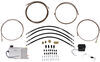
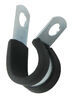
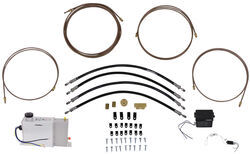
I just received this kit the other day, but it seems incomplete. The brass X and T fittings and unions labeled G, H, and I in the online diagram above are shown connected to both the metal brake lines and the flexible brake lines that go to each wheel. My question is- how are these fittings secured to the trailer frame? There were 4 large plastic loom clamps included as well as many smaller ones, but these will not work on G or H. In any case they would likely quickly break if used to secure I to the frame as roadway impact forces will be transferred through the flexible brake lines as the suspension articulates. This will place stress on the metal brake lines, flexing and eventually breaking them. What am I missing here?
asked by: ORVAL
Expert Reply:
In short; they're not secured to the trailer frame. Presumably you would strategically place the loom clamps near those fittings you mentioned from kit # HBA16-252-82 to limit any movement of those fittings. The rigidness of the metal lines will help keep those metal lines in place so the clamps would not be needed for the metal lines.
We do have other loom clamps if you want more, # A0500 for 1/2 inch and # A0250 for 1/4 inch. We also have clips, # T0936600, for more brake line support.
I would place clamps somewhere between A and F, between G and H, between H and I, and between G and I. The flexible lines need to be able to move so you would not put clamps on them.


Product Page this Question was Asked From
Hydrastar Electric Over Hydraulic Actuator Kit for Disc Brakes - 1,600 psi

- Brake Actuator
- Electric-Hydraulic Brake Actuator
- Boat Trailer
- Travel Trailer
- Disc Brakes
- Hydrastar
more information >
Featured Help Information
Instructions

Continue Researching
- Article: Adding Electric Over Hydraulic Disc Brakes
- Q&A: DeeMax Disc Brake Kit Recommendation for 2022 Grand Design Solitude 310
- Q&A: Can Deutsche Hydrapro Breakaway Battery Box Be Bottom Mounted
- Article: Brake Controller Installation: Starting from Scratch
- Q&A: Replacement for Swing Away Coupler/Actuator on MasterCraft Boat Trailer
- Q&A: Length of Parking Brake Kit Cable
- Q&A: Adding DeeMaxx Hydraulic Brake To A 2024 Brinkley Z2900 5th Wheel
- Q&A: How To Install The Plug-And-Play Hydrastar Vented Marine Electric Over Hydraulic Actuator
- Q&A: What Is The Difference Between SumoSprings SSR-307-47 And SS67UJ
- Article: RV AC Not Cooling? What's Normal, What to Check, and When to Replace
- Article: Double-Eye Trailer Suspension System Review
- Article: Trailer Lighting Requirements
- Article: Trailer Wiring Diagrams
- Article: How to Measure Your Trailer Wheel Bolt Pattern
Mark
7/20/2025
You don’t attach flexible brake lines to the frames? You just lay them on the flange, is that right? What about putting them within 1/2” looms to allow them to move some but to also be secured? Is it ok to drill the bottom flange of a 4” channel and a tube axle that is about 3”? Thank you!