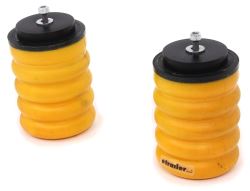
If you’ve ever dug out a bike pump at a campsite or crouched behind your bumper at a gas station just to adjust your air bag pressure, you already know the value of onboard air. But is it really necessary? Do you need a compressor, or is manual fill good enough?
The short answer: it depends on how you use your truck. Air suspension is all about balance—keeping your ride level, stable, and safe. For some setups, manual fill is plenty. For others, a compressor turns air bags from a basic helper into a fully adjustable tool. At etrailer, we talk with a lot of drivers who want to know if onboard air is worth the investment or if manual fill is all they really need.
Do you always need a compressor for air bags?
Not at all. If your load is consistent and doesn’t change much, manual fill can be all you need.
Manual fill is the simplest way to run air bags. You’ve got Schrader valves (like tire stems) mounted near the bumper, and you set the pressure with a pump or compressor. That’s it—no wiring, no switches in the cab.
This setup is a good fit if you:
Haul the same trailer or camper every time
Only tow once in a while
Don’t mind grabbing a tire gauge and topping off air the old-fashioned way
Already keep a small compressor or pump handy
For steady, predictable loads, manual fill is a true “set it and forget it” solution. Once you dial in the right PSI, you probably won’t touch it again for months. And that’s perfectly fine—onboard air wouldn’t add much for this kind of setup.
etrailer Tip
Even with manual fill, give your bags a quick check before long trips. A few seconds with a gauge can mean the difference between a smooth ride and a squatted rear end.
When a Compressor Is a Game Changer
When should you add a compressor to your air bags?
If your loads change from trip to trip or you want more control over comfort and handling, a compressor can make life a lot easier.
An onboard system lets you fine-tune air pressure without tools or crawling under the bumper. That means smoother handling when towing, better braking, and less squat or sway when hauling heavy. Too little air makes your truck sag and wander; too much makes it ride like it’s on wooden wheels. A compressor helps you find that “just right” balance every time.
You’ll appreciate the upgrade most if you:
Tow different trailers with different tongue weights
Switch between heavy hauling and driving empty
Want to adjust for comfort on rough or smooth roads
At etrailer, we often suggest a compressor for drivers who use their trucks for more than one job—like towing a camper one weekend and running errands the next. It saves time, protects your suspension, and keeps the ride feeling consistent no matter what’s in the bed.
Choosing the Right Compressor
What’s the best type of air bag compressor for your truck?
It really comes down to how you load your truck and how much control you want over the ride. The more your setup changes, the more flexibility pays off.
1. Manual Single-Path Compressors
This is the “keep it simple” option. One switch or knob inflates both bags at the same time, so your truck stays level front to back. Perfect if your loads are balanced—like a camper tongue weight or lumber stacked evenly across the bed.
The tradeoff? If your load leans to one side, single-path can’t fix it. You’ll still feel that tilt.
Best for: Someone who always tows the same trailer or hauls weight that’s spread out evenly. You want in-cab control without a lot of bells and whistles.
Think of dual-path as single-path’s big brother. Instead of one control, you’ve got two—one for each side. That means you can pump a little more air into the bag under your camper’s slide-out or balance out a heavy water tank that sits off to the side.
Best for: RVers, contractors, or anyone whose truck never carries weight evenly. This setup keeps you from driving down the road with a camper that looks like it’s leaning into the wind.
This is the “comfort at your fingertips” setup. Adjust pressure from a phone app or remote, and in some systems the compressor even monitors and adjusts as you drive. No wires into the cab, no crawling around—just tap a button and you’re done.
Best for: Drivers who switch loads all the time or just want the smoothest ride without the hassle. If you tow on weekends but use your truck daily, wireless is worth every penny.
What features should you look for in an onboard air system?
Once you’ve picked between manual or wireless, it’s worth thinking through a few details that make living with your system easier long-term.
MonitoringSome compressors automatically check and adjust your air pressure for you. That means no more guessing if one side has dropped a few PSI overnight. For anyone who likes a “set it and forget it” setup, automatic monitoring can be a real time-saver.
Mounting LocationWhere you install your compressor matters. Keep it tucked away from road spray, salt, and heat if you can—under the bed rail, inside the frame, or in a protected corner of the engine bay. A good mounting spot helps your system last a lot longer.
Duty CycleThis just describes how long your compressor can safely run before it needs a break. Light-duty is great for occasional weekend towing. Heavy- or extreme-duty setups are better if you’ll be airing up multiple times a day or using the system for other tools.
Extra FeaturesSome onboard air kits include tanks and quick-connect outlets so you can fill tires, blow up an air mattress, or even run small tools at the campsite. If you want a little more versatility out of your setup, those extras can be worth it.
If you’re investing in onboard air anyway, it’s worth choosing a system that can do more than one job—level your truck and help out at the campsite or job site.
Final Thoughts
Is an onboard compressor worth it for air bags?
Yes—if you haul different loads or want comfort control, a compressor is worth the upgrade. If not, manual fill is usually enough.
If your load is always the same and you rarely adjust, manual fill is cost-effective and reliable.
If your loads vary, or you want more control over comfort and handling, a compressor is worth the upgrade.
For some drivers, onboard air is just convenience. For others, it’s the difference between wrestling with squat and sway—or cruising with confidence.
At etrailer, we’ve helped thousands of drivers choose between manual fill and onboard air. The right choice always comes down to your truck, your load, and how much you value convenience on the road.
About Nicki B. I’ve always loved learning and teaching. Every day I get the chance to help a neighbor pick up something new, whether it’s understanding how to tow with more confidence, setting up camp a little easier, or just finding the right gear for their next trip. For me, the real joy comes from turning those little “aha” moments into solutions that make life safer, smoother, and more fun.Outside of work, you’ll usually find me outdoors. I love fishing, camping, and hiking the trails with my family and our golden retriever (who insists on carrying the biggest stick he can find). I spent years as a Cubmaster and scout leader, and now I get to put those skills to good use running our team campouts—my favorite part is dreaming up fun games and activities that get everyone laughing.When I’m not outside, I’m probably curled up with a book or unwinding with some old Top Gear reruns. At the end of the day, I just like finding ways to make things a little easier and more enjoyable—on the road, at camp, or at home.


.png "Nicki in front of RV")