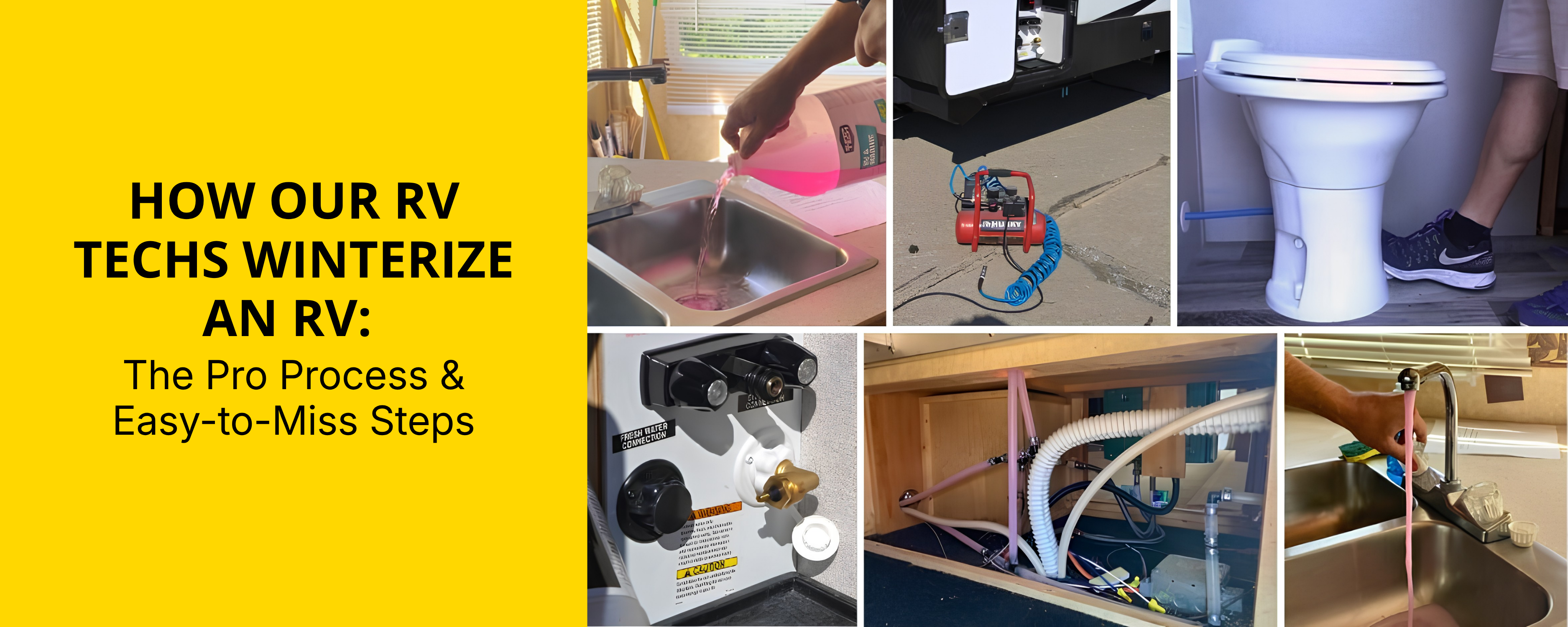
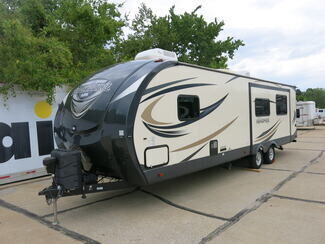
Draining the fresh water tank and running pink antifreeze through the faucets? That’s the easy part. It’s the water hiding in the places nobody thinks about that gets you: low-point drains, ice maker lines, tankless water heaters, outdoor kitchens, and little pockets around valves and fittings. Leave water in one of those spots, and you probably won’t know you screwed up until spring. Then you’re looking at split fittings, cracked tanks, or a busted pump because “eh, it’ll probably be fine” turned out to be a terrible winterization strategy.At etrailer, we’ve seen what happens when winter wins, and it isn’t pretty. This guide walks through the same basic RV winterization process our technicians use in the shop, with extra attention on the easy-to-miss stuff that causes expensive problems later. Your RV manufacturer’s instructions always get the final say, but whether this is your first winter with a camper or your tenth, we’ll show you what to drain, what to protect, and what you really don’t want to forget before the first hard freeze.
Why does the exact process matter?Ask five RV owners how they winterize their camper, and you’ll probably get five different answers. Blow out the lines. Run RV antifreeze. Do both. Everybody has a method they swear by. The truth? There isn’t one magic way to winterize every RV. What matters is using a process that works with your specific setup and gets the water out of all the places it likes to hide. Lines, valves, fittings, and tanks can all hold water, and freezing temperatures can turn that leftover water into an expensive spring surprise.Even in warmer states, a cold snap can cause serious damage. Our recommended method doesn’t cut corners. It’s consistent, safe, and proven in every climate.
What do I need to winterize my RV?
You don’t need a full workshop, just the essentials our techs use every season:The must-haves:
Basic Tools: Screwdriver, pliers, maybe a flashlight. You’ll probably be contorting under a cabinet or two.
Air Compressor with Regulator: Keeps your RV plumbing lines safe by maintaining the correct air pressure. It’s the small gauge between your hose and the compressor outlet. Set it before connecting to your RV so that first blast doesn’t hit full pressure.
Blowout Plug: Threads into your city water inlet so you can push air through the lines. Trust me, skip the plastic ones. They strip, they leak, they make you swear.
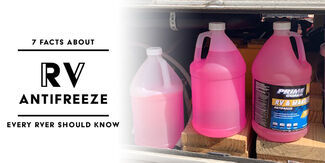
RV & Marine Antifreeze: Use the pink stuff. RV antifreeze is a non toxic propylene glycol formula made specifically to protect RV and boat plumbing from freezing. Automotive antifreeze is toxic and has absolutely no business in your RV’s fresh water system. RV antifreeze is cheap, easy to find, and a whole lot cheaper than replacing cracked plumbing in the spring. Grab enough to do the job right.
How do I pick the right antifreeze?
RV antifreeze is rated by burst protection, not “when it looks frozen.” It’ll start to slush up before that number but it won’t expand and break pipes until it hits its rated burst temp.
Rating
Protection Zone
Notes
-50°FMidwest & Southern U.S.Standard choice
-100°FNorthern U.S. & CanadaSafe bet if unsure
-200°FArctic expeditionsNot your problem
Still have questions about RV antifreeze? Wondering what that temperature rating actually means, how many gallons you need, or why you absolutely cannot just grab the antifreeze sitting in your garage? We cover all of that and more in our RV Antifreeze Guide.
etrailer Pro-Tip
Our technicians use -100°F in most regions. It adds an extra layer of protection for just a couple of bucks more.
PHASE ONE: DRAIN & BLOW OUT THE LINES
You can’t protect what’s still full of water. Get every drop out of your RV plumbing system before adding antifreeze.
Step 1: Drain the freshwater tank
Start here. It’s the slowest part of the job. The valve’s small, the tank’s huge, and gravity doesn’t hurry. Open it first, let it drain while you move on.
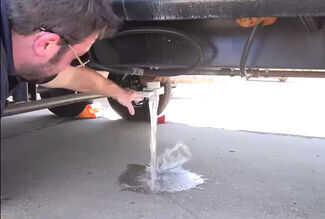
Start by draining your fresh water tank.
Step 2: Open the low point drainsThey’re the plumbing’s basement windows. Way in the back, lowest part of the RV. Our techs never skip this step. It’s one of the most common causes of cracked plumbing lines come spring.
Look for two short hoses poking out of the underbelly. Usually one red (hot) and one blue (cold), with little screw-on caps. That’s them. Drain as much water as you can before blowing out the lines and adding antifreeze.
Low point drains are located at the lowest point of the RV's water system
Step 3: Set the right air pressure20–30 PSI. That’s your sweet spot.
RV manufacturers use air pressure at the factory to check plumbing for leaks, and they may test at 60 to 80 PSI. That does not mean you should blast 80 PSI through your RV when you winterize it.For blowing out water lines, 20 to 30 PSI is typically recommended. That’s plenty of pressure to push water out without turning winterization into a stress test for your plumbing. Always use a pressure regulator. An unregulated shop compressor is a great way to turn a simple winterization job into shopping for a new faucet.
By staying in the 20-30 PSI range, you are well within the system's tested limits.
Step 4: Use the blowout plug
Screw in your brass blowout plug. Hand tighten the blowout plug into your city water connection. You want it snug enough to seal, not cranked down like you’re putting a lug nut back on.We recommend a brass blowout plug over a plastic one. Brass holds up better, seals more reliably, and is much harder to cross thread. Plastic plugs are easy to get crooked in the threads, and if the connection leaks air, you’re defeating the whole point of blowing out the lines.
Hook up the compressor. Clip your air hose to the plug’s valve stem, just like filling a tire. Double-check that your regulator is set between 20–30 PSI before turning it on.
Open all faucets. Start inside and work your way out — kitchen sink, bathroom sink, shower, outside shower, and toilet. Open every fixture all the way.
Cycle hot and cold lines. If your faucet has separate knobs, open both; if it’s a single lever, move it back and forth to flush both sides.
Run air until it sputters dry. You’ll see a few bursts of water and mist, then it’ll start blowing only air. Let it run 20–30 seconds longer just to make sure the line is fully clear.
Check each fixture. Close one faucet before moving to the next so you’re pushing air through the whole system, not venting everywhere at once. Make sure each line clears fully, the professional way to winterize your RV plumbing system.
Attach your air hose to the valve stem on the plug, just as you would when inflating a tire
etrailer Pro-Tip
You can’t overdo this step. Air costs nothing and saves pipes. If you’re unsure, run air longer — there’s no harm in it.
PHASE TWO: SPECIAL COMPONENTS THAT NEED EXTRA ATTENTION
Now it’s time to handle the parts our technicians pay special attention to — the components that turn small oversights into big repair bills.
What about the refrigerator ice maker?
Do not blow air through it. You’ll blow the valve apart — guaranteed. Ice makers have tiny solenoids inside that don’t like pressure.Here’s what to do instead:
Shut off its water line (usually under the kitchen sink or behind a lower cabinet near the fridge).
Disconnect the line from the shut-off valve and let it drain into a towel or small bucket.
Leave it open for winter so any trapped moisture can evaporate.
If your fridge also has a built-in water dispenser, shut that line off and drain it the same way. Both feed from the same valve, so skipping one leaves water in the line.
How do I handle the water heater?
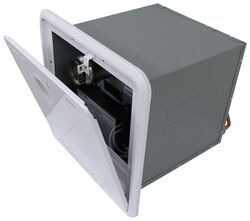
Tanked Water Heater
If you have a tanked water heater, drain it and bypass it. RV antifreeze isn’t recommended in the tank and can damage the liner and internal components. Let the pink stuff protect the plumbing, not fill your water heater.
Flip the bypass valves to “bypass.” Most setups have three valves on the back of the tank: one on the cold line in, one on the hot line out, and one small line connecting the two. In bypass mode, the top and bottom valves are closed and the middle one’s open. That lets water flow around the tank instead of through it.
Pull the drain plug or anode rod and let it drain completely. The plug may be tight. Use a wrench and expect a quick splash when it breaks loose.
Leave the plug out all winter. That prevents moisture buildup and gives leftover drips a place to go. (And no, squirrels aren’t moving in. They’re not that motivated.)
If your anode rod looks pitted or corroded, plan to replace it in the spring. Its job is to corrode so your water heater tank doesn’t. A new rod is cheap. A new water heater is not.
Standard Water Heater
Tankless Water Heater
Opposite rules apply. Tankless heaters need antifreeze in the internal coils or they’ll crack.
Use the winterize ports (if equipped) or follow the manufacturer’s directions for your model.
Always check the manual. Tankless water heaters can have their own winterization steps, including specific valve settings or flushing procedures. Follow the manufacturer’s instructions here. Guessing can lead to an expensive replacement.
If you’re not sure which type you have, check the exterior access panel. A tanked heater has a large round plug or anode; a tankless unit looks flat with multiple small fittings and no obvious drain.
Tankless Water Heater
What if my RV has an accumulator tank?
If you’ve got one of those small pressure tanks near the pump — usually a black or blue cylinder the size of a football — take it out before blowing out your lines. It traps water like a sponge.
Disconnect the fittings (usually quick-connect or threaded).
Drain the tank fully.
Install a short bypass line or a simple union fitting until spring.
If you’re not sure whether you have one, look near the water pump. If you see a small tank on the outlet side of the pump with flexible hoses attached, that’s it.
PHASE THREE: PUMPING ANTIFREEZE
Here’s where the pro-grade protection really starts — circulating antifreeze through every line in your RV plumbing system.
Step 1: Set up the water pump
Find it: Turn the pump on and listen — it’s always hiding behind the loudest cabinet in your camper.
Flip to winterizing mode: The valve on the intake side lets it suck from your hose, not the fresh tank.
If your RV doesn’t have a built-in winterizing valve, no big deal — just disconnect the line from the freshwater tank, stick it straight into the antifreeze jug, and run the pump. Same idea, just done manually.
Drop the hose: Straight into a jug or bucket of antifreeze.
Power up: Make sure your 12V system’s on. No power, no pump.
Check the bypass: Confirm the water heater is still in bypass mode before you turn the pump on. (Pros never skip this step.) Otherwise, you’ll fill the whole tank with antifreeze and waste a few gallons fast.
Drop the hose straight into a jug of antifreeze.
Step 2: Run antifreeze through the systemStart at the lowest point and work your way up.
Open low point drains until you see a steady pink stream, then close them. That ensures the lowest part of your plumbing is filled first.
Move to the farthest faucet from the pump. Open the cold side first and run it until the water turns from clear to a solid, bubble-free pink. Then do the hot side the same way.
Work fixture by fixture. Go through every faucet, shower (inside and out), and the toilet. Don’t forget any washer hookups, spray ports, or outdoor kitchens — those lines freeze too.
Watch for air pockets. When switching between fixtures, you may hear sputtering. Let it run until the flow evens out to a smooth, solid stream of pink.
Flush the toilet pedal until you get pink in the bowl. That protects the valve and the line leading to it.
Open the taps and let them run until the stream is solid pink.
etrailer Pro-Tip
Place a short piece of PVC pipe in the toilet opening to hold the flush valve open while you run antifreeze through the system. This keeps the antifreeze flowing into the black tank without having to stand there holding the pedal down.Before using it, glue a larger fitting or coupler to the top of the pipe. This gives it a wider lip so it can’t accidentally slip through the opening and fall into the black tank.
Step 3: How much antifreeze do I need?
Bumper Pull Trailer = 2–4 gallons
Fifth Wheel = 4–5 gallons
Toy Hauler = 5–7 gallons
A smaller trailer might only use two gallons if you’re efficient, but it’s smart to have one or two extra jugs ready. You’ll use more if you have multiple bathrooms or an outdoor kitchen. Antifreeze is cheap — about two bucks a jug — and replacing frozen plumbing costs hundreds. Don’t gamble.
FINAL STEP: DRAINS & TANKS
You’re almost there. Don’t stop before the finish line — frozen P-traps can wreck your day just as fast as a busted pipe.
Why pour antifreeze in the drains?
Every sink and shower has a P-trap — that U-shaped bend under the drain that holds a small amount of water to block sewer gas from creeping up. But that water doesn’t drain out when you winterize. When it freezes, it expands, and that’s how you end up with cracked elbows and leaks under the sink.
Pour ½ to 1 cup of RV antifreeze into every drain — kitchen, bathroom, shower, and even the washing machine drain if you have one. The goal is to fill that trap with antifreeze so the water sitting there can’t freeze solid.
Don’t forget the shower or tub drain. They’re the easiest to overlook because they’re not eye level — but they’re also the biggest lines and hold the most water.
What about the black and gray tanks?
Once the freshwater system’s protected, you’ve still got to think about your waste tanks. Even a small amount of water around the dump valves can freeze, expand, and crack them.
Option 1: Drain and leave open
You can empty both tanks and leave the termination valves open, but it’s not ideal if your RV has tank sensors. When the tanks dry out completely, leftover residue can harden on the sensor probes, making them read “full” forever.
Option 2: Add antifreeze directly (recommended)
Pour a few cups of pure RV antifreeze down the toilet for the black tank and through a sink or shower drain for the gray tank. Then drive the RV a short distance or rock it a few times so the antifreeze sloshes around and coats the valves.
If your RV has a macerator or dump pump, make sure to run a little antifreeze through that line too. Those seals can crack just as easily as a valve.
BONUS: QUICK CHECKLIST
Drain freshwater tank
Open low point drains
Blow out all lines at 20–30 PSI
Bypass or fill water heater (depending on type)
Pump antifreeze through every fixture
Add antifreeze to drains and tanks
Pressure test in spring before adding water
Sanitize system before first trip
THE BOTTOM LINE
Winterizing isn’t optional. It’s a couple of gallons of antifreeze and an afternoon of work that can save you a spring full of regret. These are the same steps our etrailer technicians use every day — tested, proven, and built to last.Take your time, double-check your valves, and remember: it’s easier to pour in pink now than to replace cracked plumbing later.
When it’s time to wake your RV back up, check out our Winterize and De-Winterization Guide
for a smooth spring start-up.
About Sam C.Here at etrailer I spend my day working on trailers, fixing RV's, and building training aids/displays to keep all of employees up to speed on how things in an RV work! I'm also responsible for training all of our Customer Service/Content teams, so it's important I'm out doing things keeping up with changes in the RV industry. In my personal time I stay in my camper up at a large fishing lake here in Missouri with my wife, and am always doing something to it. It's a 2005, and I'm cheap, so I will keep it for as long as possible!
I prefer the LoadLifter 5000 setups over the style that install in the coil of the vehicle like what fits your 2017 Ram 1500. So I would recommend the #AL88365. The LoadLifter style of bag can offer better support and since it wouldn't be rubbing…
Congrats on the new truck Larry! We haven't had a chance to install the Firestone Air Helper Springs item #F2613 on one of the new 2024 Sierra 3500 AT4's. I can tell from looking at the instructions and some of our other installs you'll…
Pin box bolt torque is based on the size of the bolts actually. 1/2 inch Bolts GR5 90 ft-lbs 5/8 inch Bolts GR5 150 ft-lbs 3/4 inch Bolts GR5 275 ft-lbs
When adjusting the height of a pin box such as #LC1191191 it is important to support the pin box when removing the bolts. I recommend 2 or 3 buddies to give you a hand and make sure no one is beneath the pin box while raising or lowering it. With the…
To drop the front of the pin box and thus lower the front of the fifth wheel, you'd need to RAISE the pin box, not lower it. Lowering the pin box would raise the height of the fifth wheel at the front. If you have an available set of holes at the…
Hey Gary. The B&W Companion OEM 5th Wheel Hitch w/ Slider for Chevy/GMC Towing Prep Package item #BWRVK3775 weighs 250 lbs. This hitch fits the puck systems on the 2020 - 2026 GMC Sierra and Chevy Silverado 2500 and 3500s. What kind of truck do…
When installing the pivot arms on your B&W Companion OEM 5th Wheel Hitch for Ram Towing Prep Package - Dual Jaw - 25,000lbs Item #BWRVK3600 you'll want to ensure that you have 6" of clearance between the bed rails and the nose of your…
Hello John, thanks for reaching out. For starters, the B&W Companion hitch #BWRVK3600 you were looking at is the correct fit for your 2022 Ram 2500. As you said, it will install directly into the 5 holes or "factory puck system" as we…
We have lift kits for trailer that easily add 2 inches to the height of the trailer. For that you'd want the part #RR23QX and you'd be set. I attached a picture that shows how it installs to give you an idea. This would be the easiest…
In order to determine the torque rating for the lug nuts on your trailer you will need to know check out the chart I attached that shows all of the torque specs for all the trailer lugs available based on stud size, wheel material and wheel size.
If you just need a 4-pin to 7-pin trailer wiring adapter, then you can use part #C57672. This will plug into the 4-pin trailer connector on your brother's vehicle and give him the 7-pin socket for the trailer. Keep in mind, this will only give…