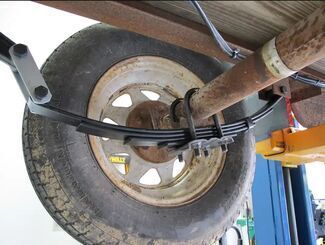
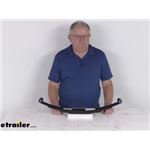
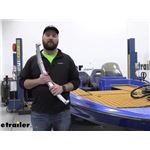
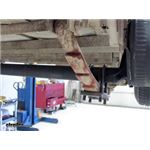
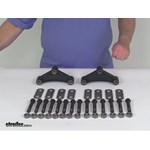
Fresh trailer leaf springs restore ride height and control on campers, boats, and utility rigs. Choose double-eye or slipper to match your hangers and 1-3/4" width, and measure center eye to center eye with the trailer jacked up to get the right length. Ratings run from 2,000 lb to 5,000 lb; adding a leaf can improve fender clearance. Plan on new U-bolts, shackles, or bushings, and consider paint if you see saltwater.
Coating springs with paint can help reduce corrosion, and rinsing after saltwater dips helps. Replace shackle bolts and u-bolts with the springs for a fresh start. If using wet bolts, aim the grease hole at 3 or 9 o'clock and confirm the bushing fits snugly in the spring eye; if a bushing slides through, stop and recheck sizing.
Yes, moving to a higher-rated spring or adding a leaf can help reduce sag and improve tire-to-fender clearance. Confirm your current length first, then choose the closest length in the next capacity step. Expect a firmer ride and a potential increase in ride height. If one side sags more, shift cargo so weight wears evenly.
Match the spring capacity to your axle rating, like 2,000 lb, 4,400 lb, 4,500 lb, or 5,000 lb. Measure eye-to-eye (or overall for slipper) with the trailer lifted and no weight on the springs. Since springs flatten over time, a replacement can be slightly shorter than your worn spring. Replace both sides of an axle together for an even ride.
Verify hanger style and spring ends (double-eye vs slipper) before ordering. Check the spring's center bolt location against your u-bolt plates; fabricating or moving plates may be needed if the bolt is about an inch off from your originals. Confirm shackle strap length and bushing size if you use wet bolts or an upgraded equalizer.


 Filters