
Curt T-Connector Vehicle Wiring Harness with 4-Pole Flat Trailer Connector


To see if this custom-fit item will work for you please tell us what vehicle you'll use it with.


Thank you! Your comment has been submitted successfully. You should be able to view your question/comment here within a few days.
Error submitting comment. Please try again momentarily.


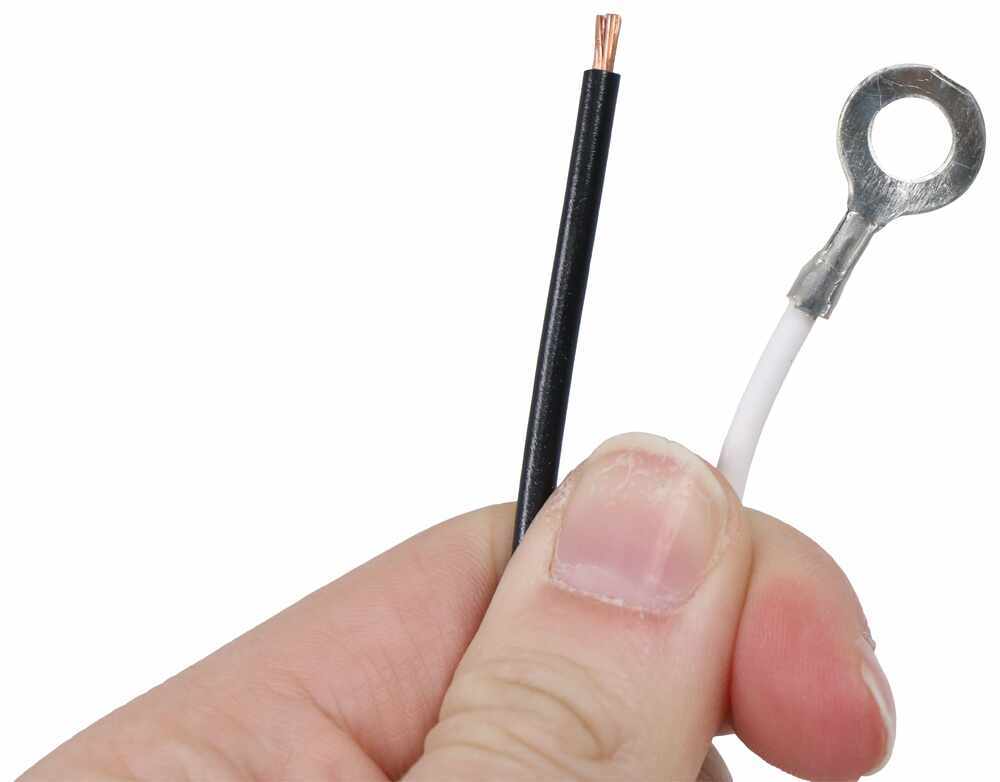


Wiring a trailer doesn’t have to mean cutting into factory wires. The Curt T-Connector plugs directly into the vehicle’s existing wiring for a clean, plug-and-play setup. No need for wire tracing or splicing—just connect the matching plugs and it’s ready to tow.

Electrical shorts are a hassle you don’t want when towing. This harness uses a built-in converter with the highest amp ratings among similar options, giving solid protection to both your trailer lights and vehicle circuits. It’s built to handle higher draw without overheating or flickering, keeping your lighting system consistent and reliable.
Once installed, the wiring stays tucked out of sight until you need it. The hidden, plug-in design routes neatly behind trim panels, leaving a clean factory appearance when the trailer isn’t connected. When it’s time to tow, the 4-flat connector is easy to access and provides standard running, turn, and brake light functions.
Curt is known for wiring harnesses that hold up over the long haul. The connectors fit tight and stay secure through weather, road spray, and repeated use. It’s a dependable setup for anyone who wants a solid wiring connection that just works trip after trip.

Videos are provided as a guide only. Refer to manufacturer installation instructions and specs for complete information.
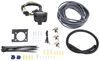
Ellen: Hey everybody. I'm Ellen here at etrailer.com. And we're going to be taking a quick look at the Curt T-Connector Vehicle Wiring Harness.One of the things you might be wondering with getting a vehicle wiring harness is how hard is this going to be to install Well, this is a custom fit for the 2020 through the current year model of the Lincoln Aviator. So that being said, most of these installs are pretty straightforward. Really the trickiest part is just getting access to the back of your taillights to plug in the wiring here. That can sometimes be a little bit kind of just tricky just to get in there.
For the Aviator you do have to pull a panel off in the rear of the vehicle. Just requires some basic tools, a seven millimeter socket and a trim panel tool to get access in there, maybe a flat blade screwdriver.So it does take a little bit of work, but it's really not that bad. It's definitely something that you can do at home, in your garage, in your driveway. Might take an hour or two to get done. And besides getting access to the back of those taillights, the other hard part is running the power wire.
This needs to go from the box to your battery, which is on the passenger side for the Lincoln. So you just want to wrap that somewhere along, usually the bottom of your vehicle. Easiest thing to do is just follow your brake lines, tie it off with some of the included zip ties. You might need some extra, you can never have too many. And make sure that it's grounded out or anchored out in several spots.
Take it out slack, follow along with those brake lines, it's the safest route to go. Otherwise, avoid anything hot like your exhaust, anything moving like your suspension.And then you also are going to put a fuse in between the bulk wire and your positive side of the battery. So all in all, not too bad, as far as getting this installed. As far as the wiring itself, it doesn't impede the functioning of your vehicles lights overall. Doesn't change anything about how you drive.
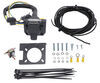
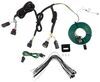
Once it's installed you really won't know that it's there. You might have some wiring hanging off the back of your vehicle. Some people don't like that. Because usually you just route this through the back hatch of your vehicle and just use it as needed and then fold it up inside the vehicle when you're not using it.If you want to have a more permanent install or kind of a cleaner look, you can get some brackets to attach to your hitch. And then mount this more permanently. Does require a little bit more work, a few more parts, but just kind of up to you on what kind of look you're going for. If you don't really care how it looks just as long as it works, you can route it out the back door. And there's really no problem with that. It's a nice flat wire. It goes right through the weatherstripping or lays right on top of the weatherstripping. It doesn't let any water or anything into your vehicle. And it doesn't damage the wire at all. Just as long as you stay away from the door striker. That's pretty much the only thing to be aware of with that.As far as the box or how this wiring functions, Curt makes a pretty good wiring. They've updated it now. So it's got this potting material in here to make sure that there's no issues with that. It keeps the wiring protected. So you don't have to worry about any kind of shorts or back feed or anything else. It also keeps any water or dirt from getting into this main component. This is kind of the brains of the operation for your wiring.Everything else that it comes with. You've got your two connectors, one that goes for the passenger side, one that goes to the driver's side. You have to make a ground connection power. We talked about that already. And then your four pole. It does come with a dust cap to go over that, to keep that protected as well. And then you'll get a hardware kit. So again, you get some zip ties. You'll also get the butt connectors necessary to make those connections between your wiring. And also the fuse to go in that fuse holder. And a double-sided piece of foam tape to mount up this box.If it we're me, I would maybe grab a couple of heat shrink butt connectors to replace those. Especially if you're making that wiring connection outside the vehicle, it's not required, but I just liked them better because they create a watertight seal. They just going to hold on a little bit better, and typically lasts a little bit longer. If you're going to be routing everything inside, which some people do prefer to do. Again more work, but you don't really need to go with the heat shrinks if you go that route. Again, if you use those wraps and electrical tape around them, it should do just fine. But that's just my two cents as far as that.As far as the tools required for this, again, we talked about flat blade screwdriver. I think this requires a seven millimeter socket. You might want to get an extension as well, just to get to some of those harder to reach areas, wire cutters, strippers and crimpers as well to make everything happen. So it shouldn't take too long, should be a good fit for you. And again, it does give you that four-pole at the back of your vehicle, which is what you're after.I hope this video has been helpful in deciding that this is the right wiring for you. We do have a lot of options available here at etrailer.com, along with a lot of other, those other parts and tools that I mentioned. So if you're missing anything, check us out, we should have you covered. And thanks for watching.
Customer Satisfaction Score:
99% were satisfied with this product
1% of customers were not satisfied
Ratings & Reviews

No problems, quick arrival in 2 days. Solid transaction
To start, this is not the first time I've installed a hitch on my car. First time in the early 80s. I love the plug and go function. My reason for 2 stars is not enough length on the power wire. Short by 2 feet. I wired like the video showed. Wire is cheap, add 4 feet of wire to the power lead.
I trailer about once a month, just hauling “stuff” to and from the cabin up north. The wiring harness has worked perfectly so far. It needs to run outside through the bottom of the tailgate on the Aviator, from inside near the spare tie compartment, but no issues so far.
As others have commented, I found the home run pos to batt cable short. For my Aviator though I routed it not under the car as recommended, but through the firewall at the battery, along the sills, over the RR wheel well and into the underfloor storage where the module goes-it was barely enough cable. Works fine
Do you have a question about this Custom Fit Vehicle Wiring?
Info for this part was:
At etrailer we provide the best information available about the products we sell. We take the quality of our information seriously so that you can get the right part the first time. Let us know if anything is missing or if you have any questions.






















Joe
12/19/2024
It doesn’t get a lot of use, so this wiring harness has worked well. I keep it in the “trunk” area of the Lincoln when not in use. I suspect if I was using it daily, that closing the tailgate on the wiring harness would cause it to break, but for me, there’s no issue.