



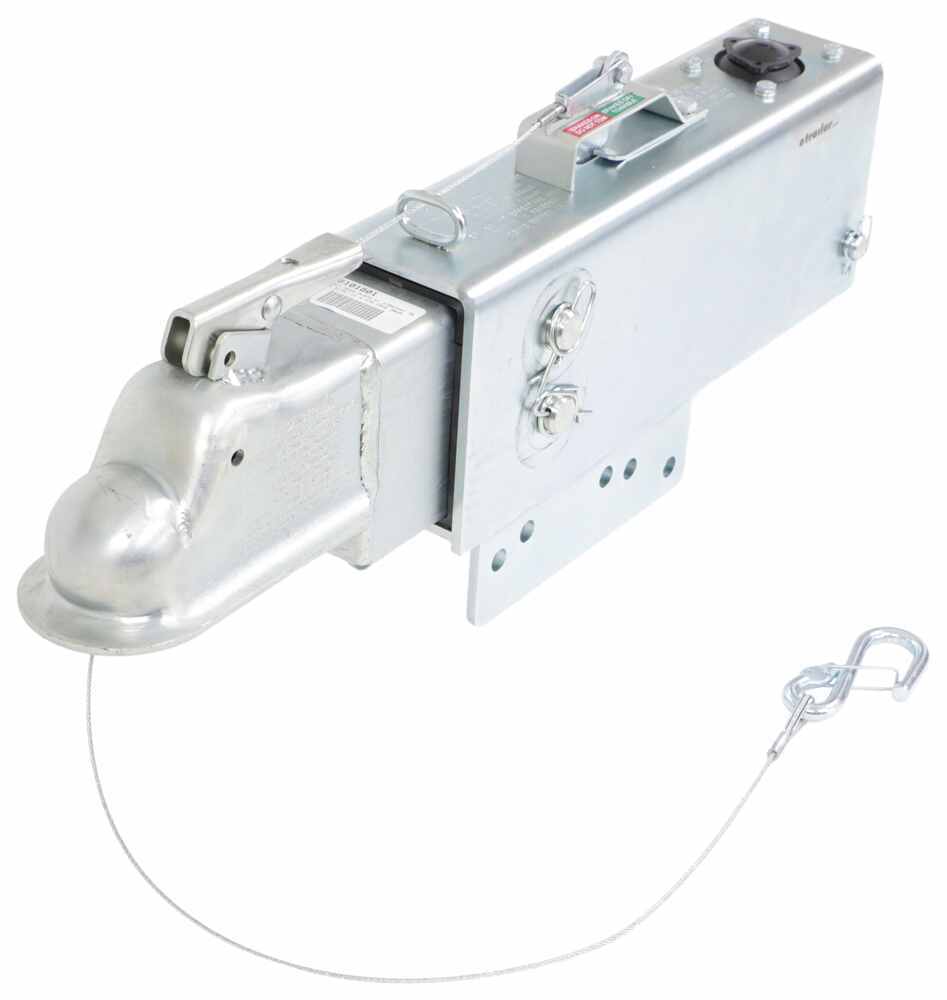
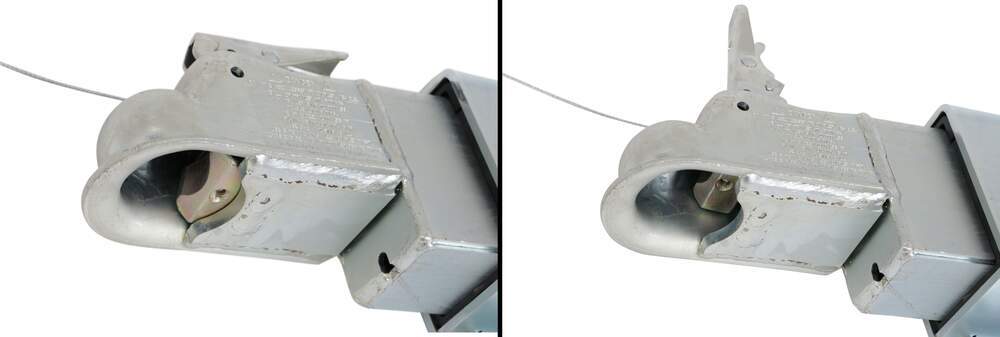
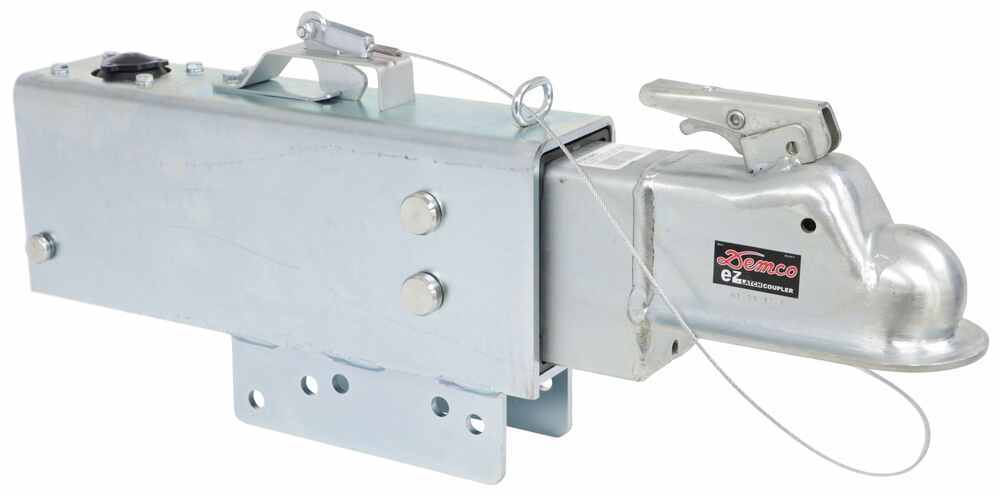
Few things are more frustrating than fighting with a coupler latch or wondering if it’s really locked on. The Demco EZ-Latch takes all the guesswork out. Just lower the coupler onto your 2-5/16" hitch ball and listen for the click. The latch automatically snaps into place, giving you a solid connection without tugging or wiggling. A hole on the side lets you add a locking pin if you want extra security. With this setup, hitching becomes simple and fast, and you leave knowing your trailer is truly secure.


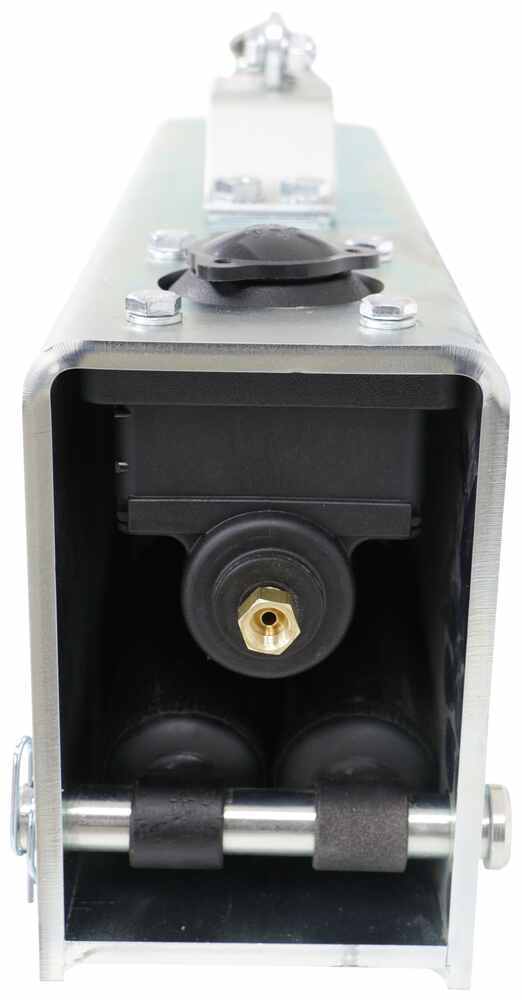
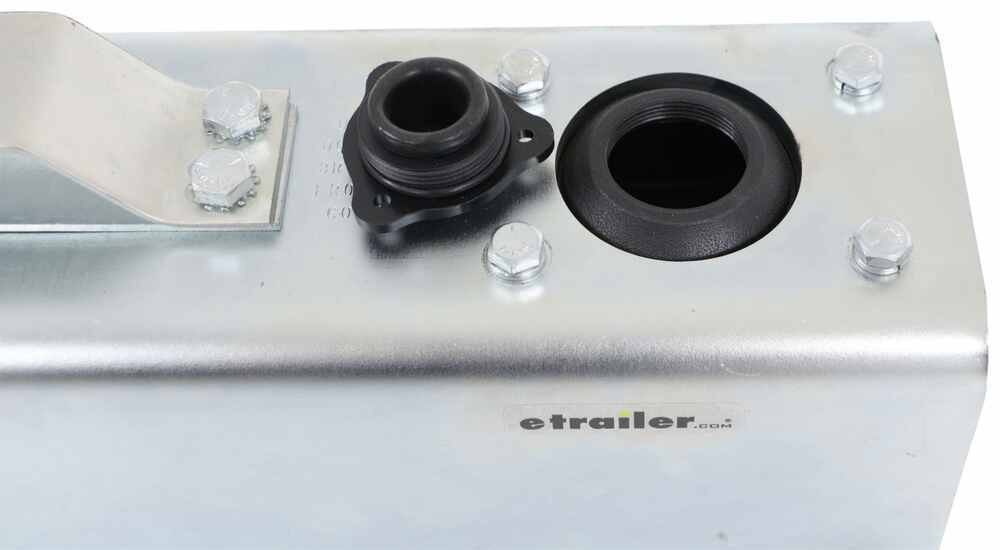
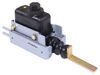
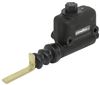
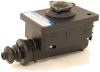
Inside, a glass-reinforced nylon master cylinder keeps corrosion away while giving reliable hydraulic pressure to your drum brakes. The large reservoir holds more brake fluid, reducing refill needs and helping prevent the system from running dry. An automotive-style diaphragm cap seals out contaminants so your brake fluid stays clean. It’s a dependable setup that delivers consistent stopping power mile after mile.
Boat trailer owners and anyone towing in wet or salty environments will appreciate the zinc finish on this actuator—it holds up twice as long as standard zinc coatings. That means fewer worries about rust even after repeated dunking or exposure. The heavy-duty steel body provides strength for up to 12,500 lbs gross towing weight and 1,250 lbs maximum tongue weight, giving you confidence when hauling heavier loads.
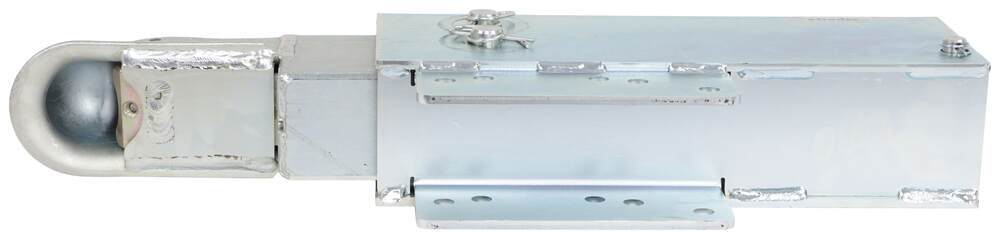
This actuator bolts right onto a 3" wide straight trailer tongue using 1/2" x 4-1/2" Grade-5 bolts (not included). The standard 5-hole bolt pattern makes it a straightforward replacement or upgrade for older units. Once bolted down, the inner member glides on a self-lubricating acetal copolymer liner—so it telescopes smoothly every time you brake or pull away again. Simple mounting, clean operation, and long service life all in one package.

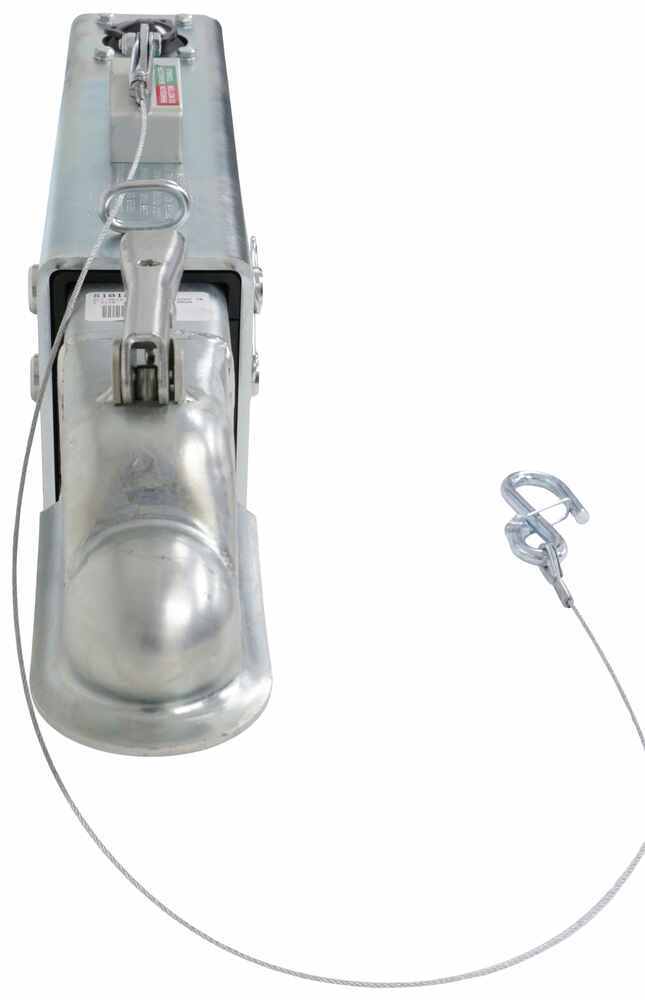
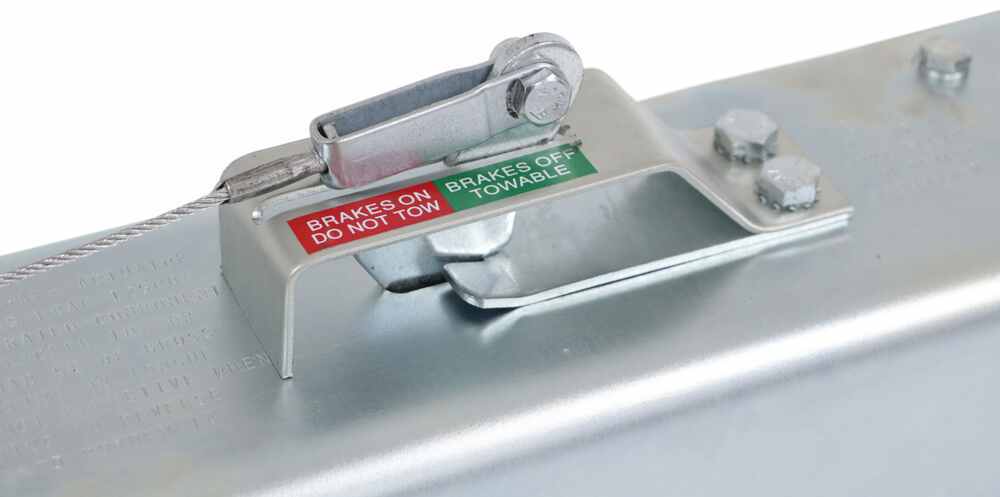
If your trailer ever comes loose from the tow vehicle, the included breakaway cable triggers the actuator to apply the brakes automatically. It’s an extra layer of protection that helps prevent runaway situations and keeps everything under control when it matters most.


Videos are provided as a guide only. Refer to manufacturer installation instructions and specs for complete information.
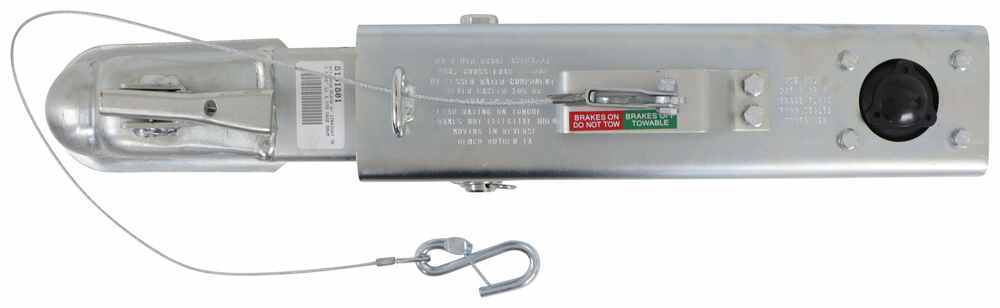
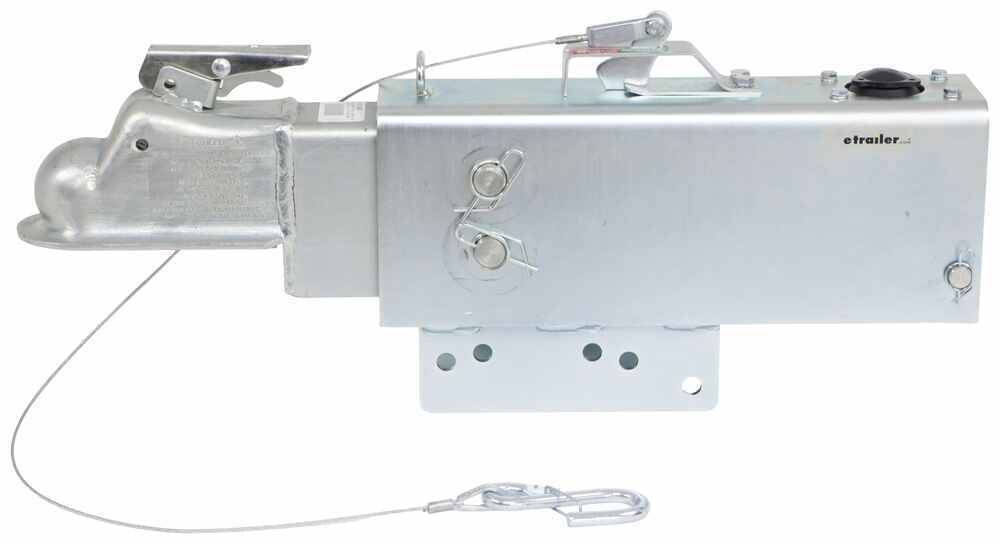
Today we're taking a look at the Demco hydraulic break actuator. This is a surge type actuator, which basically means that as you come to a stop with your towing vehicle your trailer is going to push forward since it wants to continue that motion, that pushes against our actuator, which will activate its function to push out that hydraulic break fluid to our breaks and thereby slowing down our trailer. So, it's a mechanical break controller. It's going to help us to slow down our trailer so it's not pushing us forward.We'll have an easy latch coupler at the front to make it a lot easier to hook up to your trailer. Basically, whenever you're dropping the trailer down onto the ball this coupler is going to automatically come up and release, and then snap back in place. So, it makes that a little bit easier so you don't have to lift that up yourself, and have someone in the back.
So, you can do that all on your own.This is going to fit a two and five sixteenth inch ball. We'll have a zinc plating to offer good corrosion resistance. It has a 200 hour salt spray rating. So, it's been tested for that 200 hours of continuous salt spray and, you know that it'll last at least that long without any rusting.We'll have a composite master cylinder. So, it's got a glass reinforced nylon construction to resist any rust and corrosion there.
Then, at the back, we'll have our large reservoir to help to increase that capacity for our break fluid. You want to check that periodically, make sure that it's nice and topped off so that we always know our breaks work properly.It has an automotive style diaphragm cap that's going to completely enclose the system and that helps to prevent any contamination from the air getting into our fluid and causing that to not work anymore. It has an asettle co-polymer lining to provide smooth operation as that actuator telescopes in and out. So, that co-polymer just lines the inside and helps prevent friction build up.See at the top we'll have this cable with the S hook and safety clip. This is going to be our breakaway switch.
So, you'll attach this to your towing vehicle and in the event of an accidental disconnect it'll pull on that switch and activate the breaks, which will bring our trailer to a stop. You'll just want to make sure that, again, that you snap that hook onto a secure connection point to make sure that the breakaway lever will deploy properly, again in the event of an emergency.This is a bolt on install for our actuator. It does require half inch by four and a half inch bolts. You want to use grade five bolts. Now, those are not included.
So, you'll have to pick those up on your own. You will have the mounting holes down here at the bottom. The narrowest set of holes there, about three inches apart, center to center. The wider, further down ones are about five inches apart, center to center.This fits a three inch wide channel. So, a three inch wide trailer tongue. The mass gross towing weight that this can handle is 12,500 pounds. The maximum tongue weight is 1,250 pounds. See our hydraulic line connection at the back there. Does come with a little plug for shipping so that it won't have any contaminants get into the system there.This does not have a reverse lockout. So, you'll want to make sure that your trailer is equipped with free baking breaks so that your actuator doesn't lock up your breaks whenever you go into reverse. Basically that operates the same way as whatever you're slowing down. Your trailer wants to push forward, and that'll activate the system if you don't have just those free backing breaks.And that's going to do it for our look at the Demco hydraulic break actuator.
Customer Satisfaction Score:
89% were satisfied with this product
11% of customers were not satisfied
Ratings & Reviews

Product seems to be fine but it sure would be helpful to have the bolts needed to attached to the trailer. I had hard time finding them. Our HD only had zinc and stainless.
I like the set-up; however it needs to have 3 mounting bolts instead of 2…that would keep the coupler straight instead of rotating up.
Good quality and the holes lined up perfectly with my old Atwood actuator.
The right product for the right price. The installation video makes a simple job more complicated. Instead of two bolts very difficultly installed from the inside out, a single through bolt works fine.
Though I love the Demco hitch on my other boat trailer, this one was listed as a drop-in replacement for a Titan Hitch, and though the holes are 3" apart, they are cut about 1/4" too low. I will be reaching out to return this and exchange it for a Titan brand replacement.
There were not any instructions on an easy way to bleed the hydraulic master cylinder.
The actuator seems to work fine. It is significantly longer than the unit it is replacing which unit a benefit.
It worked perfect!!!! I was restoring a tow master hydraulic dolly and it works amazing!!!!
This brake actuator was an easy replacement to my previous 1996 Tennessee boat Trailer actuator. I did have to get creative with the line plumbing do to the change in angle. Also needed to change the lock to a pin lock. I like the latching feature and overall quality. I would not hesitate to make this purchase again.
Replaced my obsolete Atwood actuator with this Demco DA70 model. Also purchased along with it the reverse lockout solenoid since I don’t have free backing brakes on the trailer. My plan is to use a 7 pin plug allowing me to wire the solenoid to the centre reverse position along with the other 4 wires used in basic trailer light wiring. Very pleased with my purchases.
Great product. So glad to find something that was just bolt on to this old trailer I was fixing up.
Works a lot better than my original 2002 actuator. Boat actually slows down when I stop the truck. Easy to install. Blew the old fluid out of the lines with air compressor. Access to the piston made it easy to bled the lines.
i bought this to replace a Dico actuator, had to cut the dico off, and drill holes for the new one. Worked out great.
Excellent product to replace my old failed unit. The cost of this made my old unit prohibitive to fix.Thanks etrailer.
Perfect fast ship , beyond cost effective and I was able to downsize to 2 inch ball. Naomi was awesome. Give her a raise
Installed, have not bled brakes yet but should work, Replaced my old welded on Attwood, lot of work removing the old set up. I think it will work perfect. Super fast shipping!
Very friendly company, customer service was very knowledgeable and helpful. The part arrived in just a few days.
This component we had to replace the brake master cylinder in because of a manufacture defect in the installation of the brake line fitting. etrailer gets 5 stars! erailer was great to work with and we were up and going on the project quickly. Great example of how they address issues that arise in life. 4 stars for the part since it made it past the factories quality control without them catching th defect.
We purchased these parts for a custom build trailer for hauling heavy tool boxes over steep grades. Since completion of the build about a year ago, we have been using it and put a lot of miles on it. The hydraulic surge brake system makes it worry free. We can tow it behind different vehicles of differing weights and wheel bases and not worry about setting trailer braking, it is very nice. We will continue to use etrailer for our trailer needs.
Excellent hitch my trailer actually stops now replaced my old atwood. You do have to drill a 3rd hold of replacing an older Atwood but it's not had. Bleeding brakes was also easy, Just pump the emergency pull line with vice grips and put a screwdriver underneath to lock the pressure on. Then run to each wheel (furthest first) crack the line until bubbles stop and boom your good.
thank you, keep up the good work
Alternative to others. Excellent produ ct.
some one made a mistake on line but when i called about it you got right on it and got me the right part on the way .know i and waiting on my return label to send the wrong part back to get my refund thanks
Info for this part was:
At etrailer we provide the best information available about the products we sell. We take the quality of our information seriously so that you can get the right part the first time. Let us know if anything is missing or if you have any questions.


















Thank you! Your comment has been submitted successfully. You should be able to view your question/comment here within a few days.
Error submitting comment. Please try again momentarily.