


What Is Causing My New RV To Bounce?
Updated 05/18/2026 | Published 02/24/2026
Question:
I need some expert advice about my trailer causing my new RV to bounce. Once I hear from someone, I can describe the problem in more detail! Thank you!
asked by: Lee W
Expert Reply:
Hey Lee. Yes I can help with that. What's going on? Send me as much detailed info as you have and I am happy to look into it and help you get to the bottom of it.
Typically, bounce is caused by worn out or undersized suspension components, or by the trailer being loaded way too light. Sometimes you can add a helper spring like part # TSS-106-40 to help stabilize things.
Lets see what you have going on and what can be done to address it.


Product Page this Question was Asked From
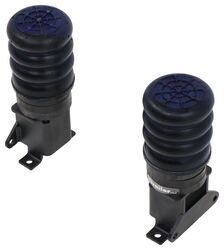
SumoSprings Trailer Helper Springs w/ Line Relocation Bracket - Single Axle - 3K to 5K - Underslung

- Trailer Suspension Parts
- Leaf Spring Enhancement System
- Boat Trailer
- Camper
- Car Hauler
- Snowmobile Trailer
- Utility Trailer
- 3000 lbs
- 4000 lbs
- 5000 lbs
- Single Axle
- SuperSprings Intl
more information >
Featured Help Information
Instructions

Continue Researching
- Article: 5 Tell-Tale Signs It’s Time to Replace Your Trailer’s Leaf Springs
- Video: Review of TruRyde Trailer Leaf Springs - Double Eye Springs - TRU25FR
- Search Results: 4400 lbs trailer leaf springs
- Search Results: 4000 lbs trailer leaf springs
- Search Results: 4400lb axle
- Shop: Suspension Enhancement
- Search Results: trailer axles
- Search Results: trailer tires and wheels
- Search Results: 5000 lbs trailer leaf springs
- Search Results: 2500 lbs trailer leaf springs
- Q&A: Can MORryde CRE3000 and SumoSprings Kit for Trailer be Used at Same Time
- Q&A: Can 5,000 lb Leaf Spring be Used on 3,500 lb Axle
- Q&A: Can I Upgrade My 3,500 lb Leaf Springs To 5,000 lb Springs If The Measurements Match?
- Q&A: Can MORryde CRE3000 be Used with SumoSprings SS26MV on Jayco North Point 377RLBH
- Video: Installing the MORryde Shock Absorbing Suspension Equalizers on a 2024 Grand Design Imagine Travel T
- Video: Trailer Axle with Idler Hubs Spec Review
- Shop: 4-Leaf Double-Eye Spring for 5,000-lb Trailer Axles - 25-1/4" Long
- Shop: Dexter Trailer Axle w/ Electric Brakes - 5 on 4-1/2 Bolt Pattern - 89" Long - 3,500 lbs
- Q&A: Upgrading Leaf Springs on a Trailer with a 3500 Pound Axle
- Shop: MORryde Shock Absorbing Suspension Equalizers for Tandem Axle Trailers w/ 35" Wheelbase - 8K
- Shop: 3-Leaf Double-Eye Spring for 4,000-lb Trailer Axles - 25-1/4" Long
- Q&A: Recommended Leaf Springs, Shackle Kit, and Wet Bolts for a Trailer w/ 4,400 lbs Axles
- Shop: Dexstar Steel Mod Trailer Wheel - 14" x 5-1/2" Rim - 5 on 4-1/2 - Black w/ Red Stripes
- Shop: Bronze Bushing - 9/16" Inner Diameter, 11/16" Outer Diameter - 1-3/4" Long - Qty 1
- Shop: Trailer Axle w/ Electric Brakes - Easy Grease - 6 on 5-1/2 Bolt Pattern - 89" Long - 5,200 lbs
- Q&A: Trailer Is Heavy On One Side - Will Upgrading Tires Prevent Uneven Tire Wear?
Lee W.
2/25/2026
Hi Jesse, OK, here are the particulars: 1999 Wells Cargo Tote Wagon with torsional suspension (no leaf springs), loaded weight 4,000 lbs. 1999 Dodge Road Trek pulled it for 26 years with no problems, except for being pushed around by semi's. Installed Recurve R3 weight distribution hitch five years ago, which helped with sway. Just purchased a 2025 Thor Gemini RV built on the Ford Transit 350HD. It easily pulls the trailer, but in order for the trailer to be level, I had to buy a 9 inch drop shank to fit the Recurve, so now the bottom of the hitch is only 3-4 inches above the pavement (that's one problem). Thor and Ford say NOT to use a weight distributing hitch, but the Recurve also has sway control, so I have it installed but not really using the weight distributing aspect. Driving on smooth interstates everything is fine. But going through construction, or patched asphalt, or wavy interstates, or any kind of road that is not perfectly smooth, and this happens: when the trailer hits a bump, the tongue of the trailer bounces up and down, and flexes the entire hitch along with it. This is transmitted to the RV, which results is the RV shaking three or four times. Feels like someone grabbed the back of my chair and shook it. Very unsettling. The Gemini has a towing capacity of 5,000 lbs., and a tongue weight capacity of 500 lbs. With the Recurve hitich weighing about 75 lbs., I have the maximum tongue weight allowed. I never measured the tongue weight when the trailer was attached to the Road Trek, but I'm guessing it was over 1,000 lbs. Could that be why it didn't cause bouncing in the past? I can't put that much tongue weight on the Gemini, so what are my options? Buy a new trailer? Buy one of those expensive and heavy shock absorbing hitches? Install Sumo springs on the RV? Just live with it? I'm concerned about the hitch flexing so much. I'm afraid it will crack the hitch or even the Gemini frame. Any advice? Thanks!