


How to Add Grease to Super Lube Trailer Hub with Rear Grease Zerk Fitting
Updated 08/12/2020 | Published 05/03/2019
Question:
If the hub has a grease fitting on the back, do you still use the bearing buddy grease fitting or do you add more grease from the grease fitting on the back of the hub and fill until grease comes out of bearing buddy?
asked by: Rick T
Expert Reply:
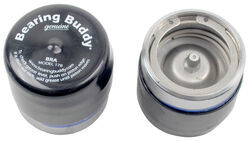
The rear side of a Super Lube hub has a grease zerk fitting that works like the one on a Bearing Buddy grease cap such as # BB1781. These zerk fittings let you add wheel bearing grease to the hub interior without having to remove it from the spindle.
The claimed advantage of the Super Lube hub is that the rear zerk fitting gives you the same grease fill convenience as a Bearing Buddy but without the risk of blowing out the rear grease seal from the pressure of pumping in too much grease. Since the hub's rear zerk feeds grease in an outward direction toward the dust cap (or Bearing Buddy) the idea is that this method of adding grease will be less likely to damage the seal, which WILL require you to remove the hub to replace the seal.
When you fill your hubs from the rear zerk you will want to have the grease cap removed or at least loosened so that old/excess grease can be pushed out. This way you can easily remove it once you see the hub bore has been filled with fresh grease. With this type of hub you can safely use standard grease caps.


Product Page this Question was Asked From
Bearing Buddy Bearing Protectors - Model 1781 - Chrome Plated - Qty 2

- Trailer Bearings Races Seals Caps
- Caps
- Bearing Protector Grease Cap
- 1.78 Inch
- 3000 lbs Axle
- Bearing Buddy
more information >

Continue Researching
- Search Results: 480 12 tire
- Search Results: trailer jack
- Search Results: boat trailer jack
- Search Results: trailer bearings races seals caps
- Search Results: 3500 lbs axle trailer bearings races seals caps
- Search Results: trailer suspension parts
- Search Results: trailer hubs and drums
- Shop: Bearing Buddy Bearing Protectors - Model 1781 - Chrome Plated - Qty 2
- Shop: 3-Leaf Double-Eye Spring for 3,300-lb Trailer Axles - 18-5/16" Long
- Shop: Dexter Trailer Idler Hub Assembly for 3,500-lb Axles - 5 on 4-1/2
- Q&A: Trailer Hub Recommendation with 4 on 4 inch Bolt Pattern and Bearings L44643
- Video: Breaking Down the Taskmaster 4.80R12 Radial Trailer Tire
- Shop: Taskmaster 4.80R12 Radial Trailer Tire - Load Range C
- Shop: Bearing Kit with Grease Cap for BT8 Spindle, Bearings L44643, Races L44610, 34823 Seal
- Shop: Taskmaster 4.80R12 Radial Trailer Tire w/ 12" Vesper Silver Mod Wheel - 4 on 4 - LR C
- Shop: Trailer Idler Hub Assembly for 2,000-lb Axles - 4 on 4 - L44643 Bearings - Pre-Greased
- Video: Review of the Dexter Trailer Idler Hub Assembly for 3,500-lb Axles
- Q&A: Replacement 18-3/8" Long Double Eye Leaf Spring for Yacht Club Pontoon Trailer
- Video: In-Depth Review of the Easy Grease Trailer Idler Hub Assembly for 3.5K Axles
- Video: Breaking Down the Kodiak Trailer Hub for 3,500-lb Axles
- Video: In-Depth Review of the CE Smith Trailer Idler Hub Assembly w/ Case for 2.7K Axles
- Video: Feature Breakdown: CE Smith Trailer Idler Hub Assembly w/ Case for 3.5K Axles
- Q&A: Do the Hubs or Axle on the CE Smith Multi Sport Boat and Kayak Trailer Come w/ Grease Zerks?
- Q&A: Comparing Loadstar And Kenda ST175/80D13 Bias Trailer Tires
- Q&A: How Does Grease Reach The Bearings On The CE Smith Trailer Axle Beam # CE33201GA?
- Q&A: Difference Between EZ Lube Compatible Hubs and Regular Hubs
- Q&A: What is a #84 Spindle and How Do I Know I Have One On My Trailer?
- Video: Review of the Grease Cap Plug for E-Z Lube Grease Caps
- Shop: Towing Mirrors
- Shop: Brake Controller
Georgiepoo
8/12/2020
Bearing buddies work great for short haul to put-in where axle will be under water for launching, but for a long haul one needs to check the bearing by feel occasionally for overheating. With the zirk in a buddy and keeping the hub filled with grease protects the bearings from salt water but risks popping the seal out the back. No easy answer, even with hand packed hubs I feel for overheating when traveling.