


Thank you! Your comment has been submitted successfully. You should be able to view your question/comment here within a few days.
Error submitting comment. Please try again momentarily.


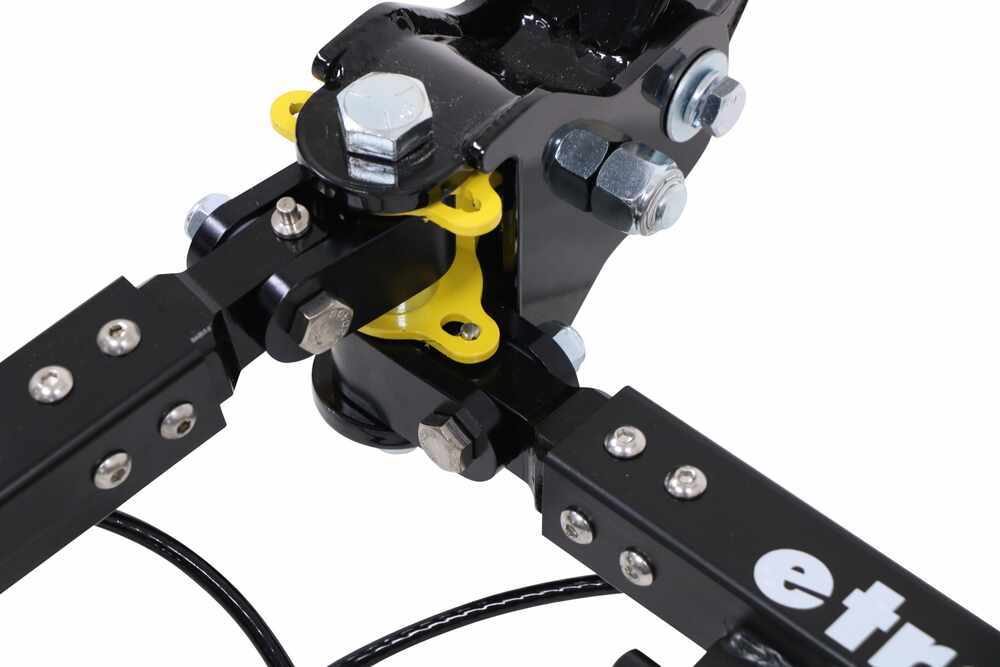


Getting lined up on uneven ground can be tricky, but this tow bar makes it simple. The self-supporting arms hold their own weight, so they won’t drop to the ground when you let go, and each arm moves independently so you can connect one side at a time. Once you pull forward, the arms automatically lock into towing position. When it’s time to unhook, non-binding triggers release tension with a squeeze—no wrestling or rocking needed, even when the ground isn’t level.


Built for serious towing, this steel tow bar handles up to 10,500 lbs with ease. Two straight, vinyl-coated safety cables are already integrated into the bar and rated at 14,000 lbs, giving you an added layer of confidence. The cables connect with spring-loaded S-hooks and stay up off the ground so they won’t drag or tangle. It’s a clean, heavy-duty setup that keeps everything organized and secure mile after mile.

Tight spots at fuel stations or campground loops are easier to manage thanks to the tow bar’s extra-long arms. They extend to 51-3/4" and retract to 39-1/4", giving you more room to maneuver without worrying about clipping corners. That wider turning radius helps make every setup—from highway stretches to campground curves—feel more relaxed and controlled.
Keeping your tow bar level is key for safe, even towing. This design builds adjustment right in, with a 1-1/2" rise/drop and a head that tilts 3" up or down. That means you’re more likely to stay within the recommended 3" difference without needing an extra high-low adapter. The result is a balanced connection that reduces stress on your rig and keeps everything tracking straight.

When you’re done towing, the arms swing to either side and lock in place on the back of your RV—no need to lift them all the way up. A built-in rod keeps your electrical cord (sold separately) up off the ground, so nothing drags or dangles. It’s a quick, neat way to stow your setup before hitting the road again.


Flat towing can be a much more convenient way to take your car RVing with you than using a trailer or a tow dolly. It'll save you storage space both at home and at the campsite, and it takes less time and hassle to hook up.
To flat tow your vehicle, there are 5 basic components you're going to need: a tow bar, a base plate kit, a safety cable set, tow bar wiring, and a flat tow braking system.
| For the RV | Between the RV and Towed Car | For the Towed Car |
|---|---|---|
| Hitch | Tow bar | Base plate |
| Wiring plug | Safety cables | Braking system |
| Wiring adapter cord | Wiring kit/diodes |
The custom-fit base plate installs on the frame of your toad so you can connect the car to your RV with a tow bar. Hook up safety cables between the vehicles to ensure that the toad does not separate from the motorhome if the tow bar becomes detached. Tow bar wiring syncs your vehicle's signal lights with your motorhome's tail lights, as required by law in most states. Finally, the flat tow braking system - also required in most states - activates the brakes in the toad when you hit the brakes in the RV, making for smoother, safer braking, and preventing wear on your motorhome.

Videos are provided as a guide only. Refer to manufacturer installation instructions and specs for complete information.
Hi there, I'm Michael with etrailer.com. Today, we're gonna take a quick look at our XHD non-binding tow bar. This is going to slide into your 2 inch by 2 inch trailer hitch receiver on your RV. That will then allow you to hook up to the base plate on your tow vehicle so that you can safely and securely tow your vehicle behind your motor home. Now, this is not going to require a ball mount, so if you do have a ball mount on your trailer already, you'll need to take that out so that you can get this slid into your hitch receiver. This does feature these telescoping arms.
That's gonna make it fast and easy to get hooked up to your vehicle. The arms are self supporting, so as you're moving them around to get hooked up, you're not gonna have to worry about them falling on the ground. They are gonna support themselves so it's gonna give you a little bit more support as you're getting hooked up. They are going to fully articulate, so it is going to allow for unlimited spread so that you can fit your application. As you can see on the ends of these arms we are gonna have these tabs that are going to work with your Reese and Valley Industries base plates.
So if you have a Reese or Valley base plate on your vehicle, very easy to get these just put in place and then slide your pin and clip through. This tow bar does have a 10,500 pound weight capacity, so you wanna make sure that that works for your vehicle. If you have the 10,000 up to 10,500 pound vehicle with the Reese or Valley Industries base plates, this will work really well for you. The arms allow for a self-aligning design, so even if your vehicle isn't straight behind your RV, if it's at a little bit of an angle, the arms will accommodate that. So just get them hooked up and then once you start driving forward, it will both lock out and give you that nice locked in, tow-ready position so that you can get everything secure as you're towing it behind.
When we have our arms retracted like this, we're looking at right about 39 1/4 inch when retracted. when we have it fully extended we're out to to 51 3/4 inch, so gonna give us plenty of room there to get adjusted. And the non-binding design of this tow bar comes in with our trigger release here. So zoom in a little bit, you can see we just push in on that trigger and that's going to allow us to pull those arms in so even if we're on unlevel surfaces, there's a lot of pressure being put on the arm, it could be difficult for us to push that in and pull it out. But especially when it's already locked, just push in on that trigger there and that's going to allow it to come in.
We're not gonna have to worry about it binding up for us. Now, these arms can be folded in several different configurations. We can have them up or out to the sides either to the left or to the right. So different ways of storing them. The tow bar itself does weigh about 46 pounds, so it's not unreasonable to take off, if that's the way you prefer to do it, but you can leave it attached to your RV and just fold those arms either up or to the sides there. So couple different ways to securely store it alongside your motor home. We do have these integrated safety cable clips here that will keep our safety cables up off the ground so we don't have to worry about them dragging. The included safety cables are a vinyl-coated cable with the steel S-hooks and these spring-loaded latches here. It's gonna make sure that we have a nice secure connection. It's always nice when you're getting hooked up so you don't have to worry about one coming loose and falling off and that sort of thing so these will do a good job keeping those cables up off the ground. We also have this built-in storage rod here that's going to keep your electrical cords in place. Those electrical cords are sold separately. Is gonna depend on your different kinds of connections, but that will slide right into this here and that will help to keep that up off the ground as well. One of the other nice features of this is that you're not gonna need a high-low adapter for most setups because our shank does have a built-in 1 1/2 inch rise or drop for adjustability. We're also going to have this adjustable head that's gonna tilt up or down 3 inches to help keep your tow bar parallel with the road during travel. Overall, this is gonna be a really nice tow bar for you. It's made here in the USA. It's got this e-coat finish, provide corrosion resistance, and it comes with the lifetime limited warranty and lifetime technical support from our experts here at etrailer.com. So if you're new to flat towing, a tow bar system is just one of the components that you're gonna need. You'll also need a supplemental braking system, some sort of lights to send that signal back from your RV back to the end of your vehicle. This is going to give you both your tow bar and your safety cables here, but of course, you also need a base plate on the front of your vehicle to get this connected to. So just one of the, or two of the components that you're gonna need to flat tow your vehicle, but it is gonna do a good job for you if you have that Reese and/or Valley Industry's base plate already on your vehicle this will be very easy to get hooked up for you. So that completes our look for today. Again, I'm Michael with etrailer.com. Thanks for watching.
Ratings & Reviews




Heather A.
2/21/2025
Hey Kevin, I went ahead and sent these notes to our engineering department. Can you send me a video of what is happening when you try to disconnect? These are non-binding but have some limitations. I would like to see if what you are experiencing is considered normal. If you reply to my email with a video, I can help a little more.
Kevin
2/22/2026
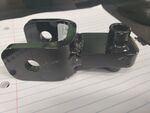
Same as above. Tough to disconnect when tow vehicle is not perfectly tandem with MH. The tabs that look like grease fittings will bend when resting arms on them and when trying to to remove arms.
Jeff
5/20/2026
I have had no issues with the tow bar, we put over 8,000 miles on it last year.

Larry
4/28/2024
This has been the best thing for me since I started RVing, having the ability to take my vehicle with me state to state
Will
1/2/2026
Still working perfectly after many miles, hookups and uses. No concerns with this draw bar system.
Do you have a question about this Tow Bar?
Info for this part was:
At etrailer we provide the best information available about the products we sell. We take the quality of our information seriously so that you can get the right part the first time. Let us know if anything is missing or if you have any questions.

























Lazer S.
4/21/2026
Glad we could help, David! What's the next trip you have planned?