
etrailer Invisible Base Plate Kit - Removable Arms


To see if this custom-fit item will work for you please tell us what vehicle you'll use it with.


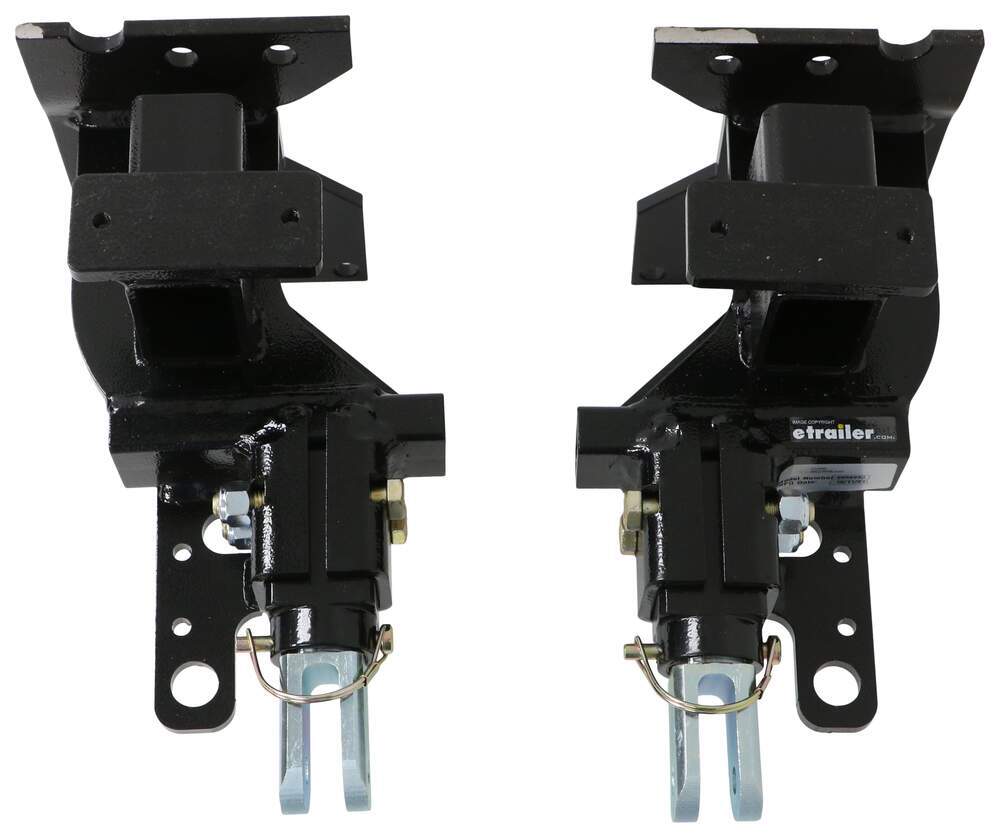
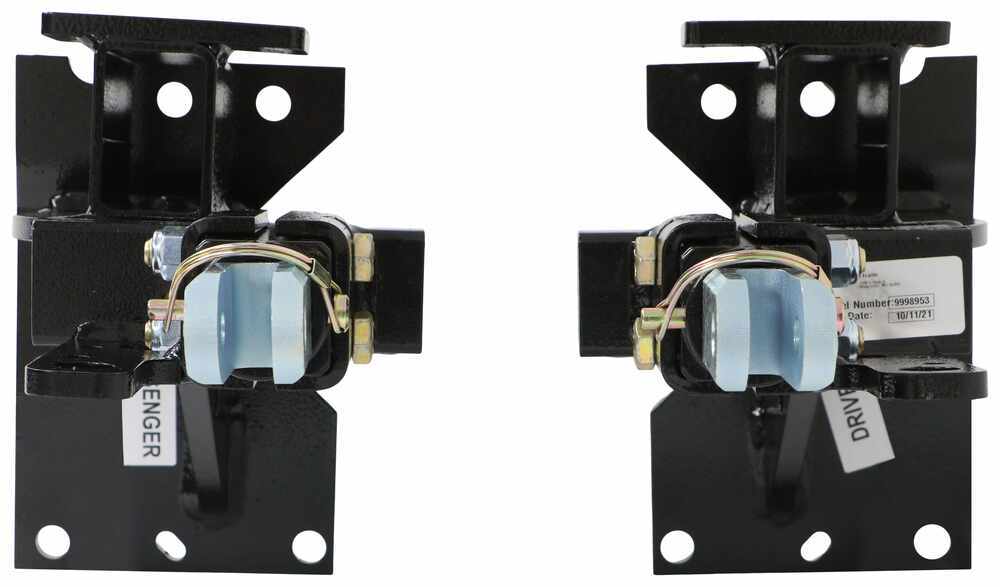
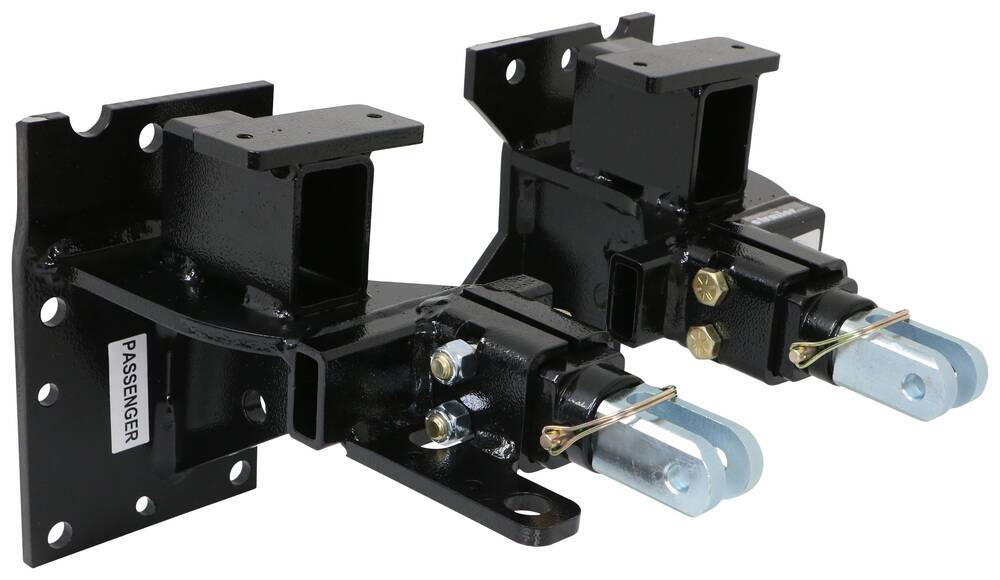

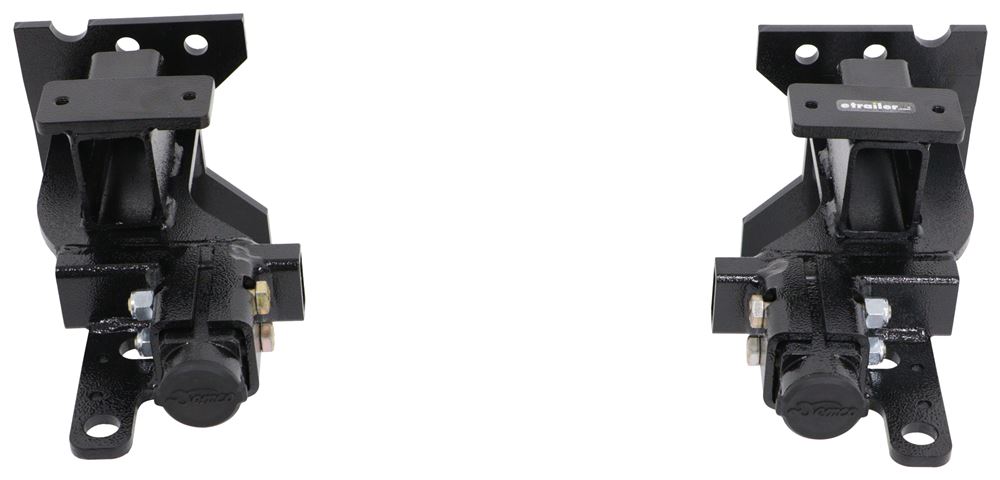
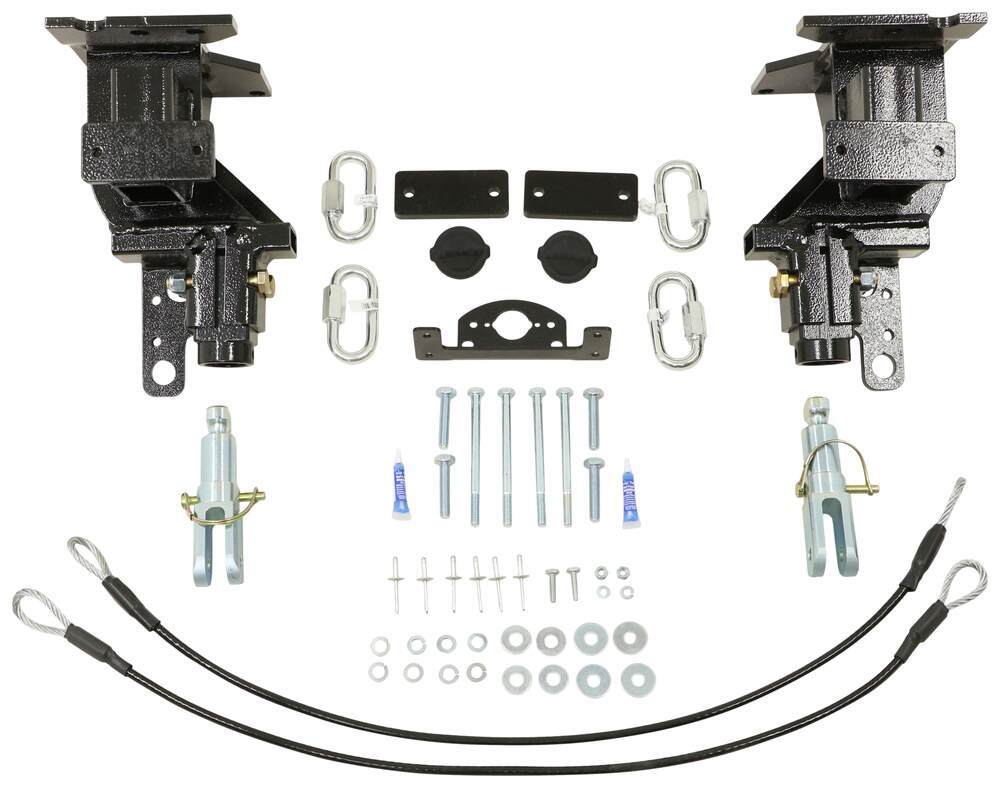
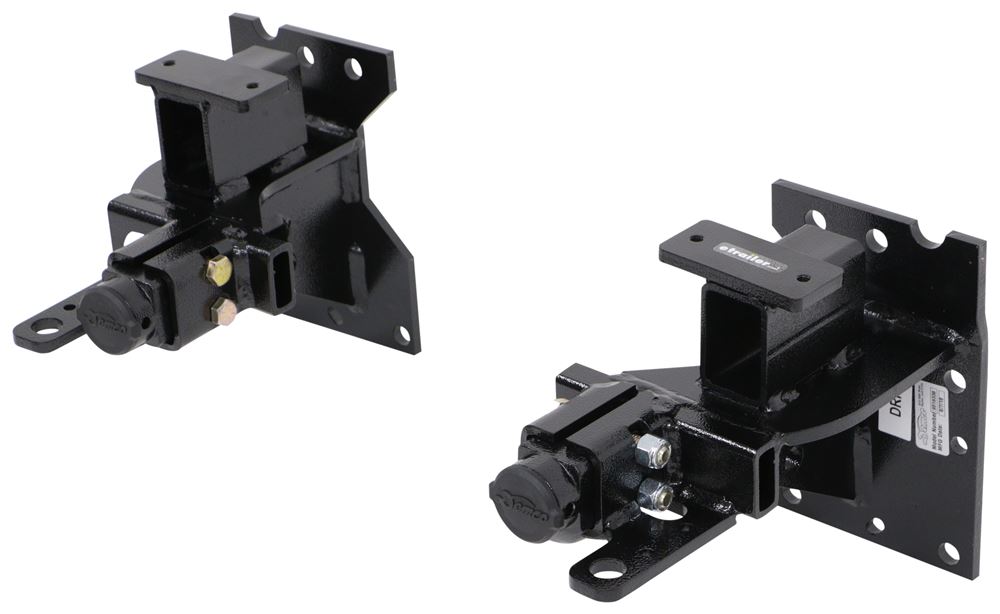
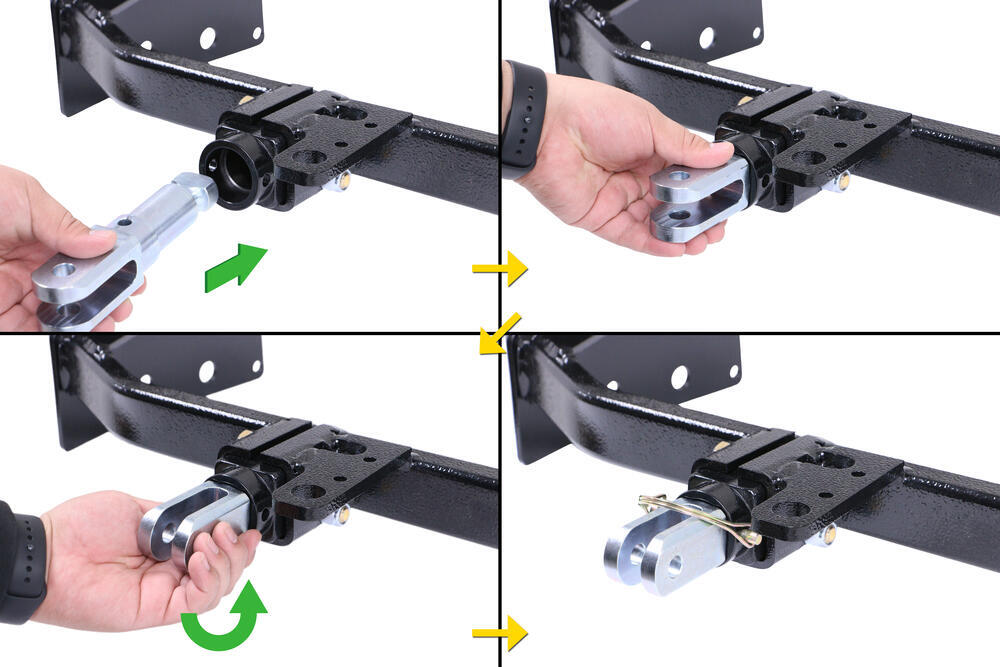



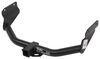
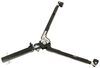
If you like your vehicle to keep its clean look when you’re not towing, this setup makes that easy. The invisible design leaves no crossbar or bulky brackets sticking out, and the removable tabs stay on your tow bar instead of the bumper. Snap-in high-density polyethylene covers keep dirt and debris out of the base plate receivers so the arms slide in and out smoothly the next time you hook up.

Connecting takes just a few quick moves. Each arm slides into the receiver, twists to lock, and secures with the included pull pin for an extra layer of safety. When it’s time to disconnect, pull the pin, twist, and slide it out—simple and repeatable every time. The bracket spacing is 32-3/4" with a bracket height of 19", giving you solid alignment for your tow bar setup.

This base plate bolts directly to your chassis with no welding required. Its durable steel design spreads towing force evenly to help reduce stress on your suspension. The sturdy build means you can count on it for long highway hauls and daily trips alike without worrying about flex or fatigue.
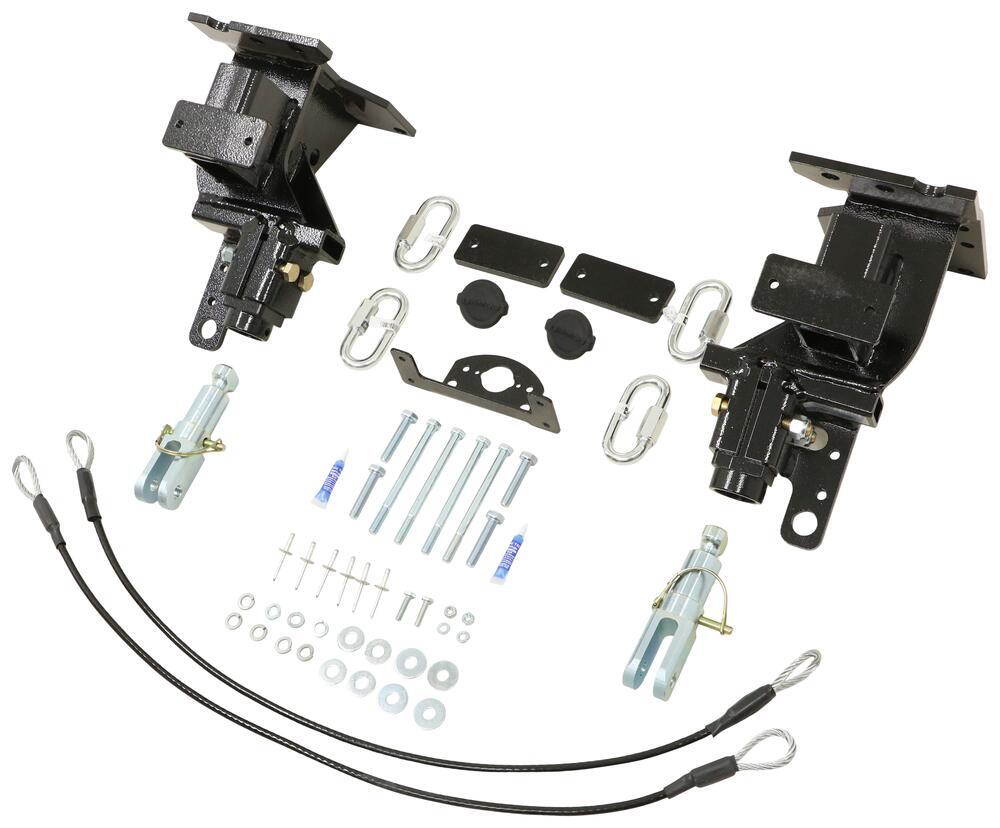
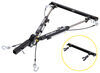
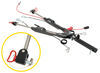
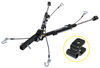
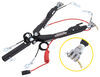
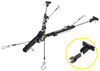
If you already have a tow bar you like, there’s no need to change it out. This base plate works directly with Demco, etrailer, and Blue Ox tow bars—no adapter needed. If you’re running a Roadmaster setup, add the correct adapter (e98983 or e99037, sold separately). The included electrical bracket makes it easy to mount a round connector plug up front so your wiring stays neat and ready to plug in when you hook up.

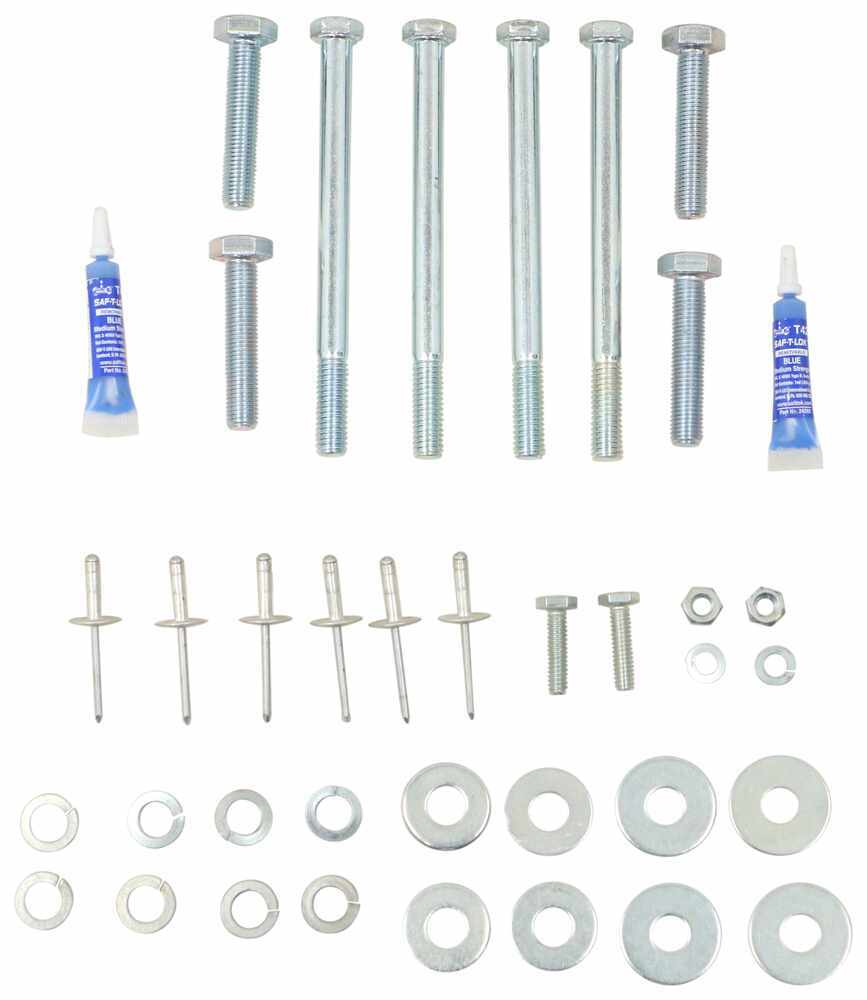
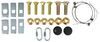
Designed for hands-on enthusiasts, this kit includes all hardware and instructions for a simple bolt-on install. There’s no welding required—just line it up, bolt it down, and you’re set. Once mounted, the setup feels solid and gives you confidence that your flat towing gear is properly secured for miles ahead.

Videos are provided as a guide only. Refer to manufacturer installation instructions and specs for complete information.
Hey, everyone, Ryan here at etrailer. Today on our 2018 Jeep Cherokee, we're gonna be showing you how to install the etrailer.com base plate kit. Before we do that though, let's take a moment. I'll check this out and make sure it's gonna work for you. Before we jump right in, I figured I'd just touch base on one of the main questions that we get asked in regards to setting up your Cherokee to get flat towed, and that's what parts am I gonna need. So there's a total of five main components.
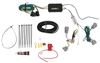
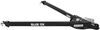
You'll have your base plate, your tow bar, your safety cables, your tow bar wiring, your supplemental braking system. And there's one other thing that I like to recommend for the Cherokee, which is a towed vehicle charge line kit. That way, your battery stays charged whenever you're flat towing. This is what the front of your Cherokee can look like whenever you're not hooked up and flat towing, and I think it's pretty important, 'cause you're not always gonna be pulling this behind your motor home. And for the most, part I think it looks pretty good.
Really no complaints. Does a pretty good job of blending in. The base plate is gonna come through this portion of the grill here. They give you a bracket to make mounting up some of your other components a little more straightforward. And compared to some of the other ones, as far as the appearance goes, they're all gonna be pretty similar, come out in the same location, and not a whole lot of differences to be honest.
When you are ready to hook up to your coach, all you're gonna have to do is remove these caps, which I do like. It makes it look a little bit better and keeps debris and stuff out of there, and will stay in good shape. And you're gonna have these removable arms, all right, and these holes are gonna line up with holes in the base plate. So you'll put it in like that. Take your pin, lock it down, and same setup over here for this side.
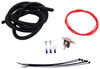
Having these arms in position, that's gonna give us the attachment point that we need to hook up our tow bar head. So the way you do that, you just line it up, put the pin and click through there. Lock it down. And this base plate is gonna work with etrailer.com tow bars, Demco tow bars, Blue Ox tow bars, CURT tow bars. So it's really versatile. Can even work with some of the other manufacturers by getting an adapter end. You can change out the very end part. Let's say if you have a Roadmaster tow bar that you like already, for example. Get the adapter, change it over, it'll allow you to hook these two up. The safety chain openings are pretty easy to get to, and a lot of different size hooks will work with 'em. And that's one of the things that's a little bit different from this base plate compared to some of the others is the placement of ease. I've noticed in the past the other ones are a little bit tighter and a little more tricky to get to, but not really a huge deal. This is what your setup could look like whenever you are hooked up and flat towing behind your motor home. And I like it. Everything's pretty easy to see and get to, things like that. And this base plate is gonna work with the four-wheel drive models and all the submodels for that matter really with one exception, and that's the Trailhawk edition. So if you happen to have the Trailhawk, not a big deal. There's a base plate or several of 'em rather designed to work specifically with those. Something I do wanna mention, since the base plate is compatible with so many different tow bars is the overall width. So the base plate's pretty wide. The connection points are way out here, and the exact measurement from center to center is 32 3/4 of an inch. And I say that because some tow bars have limitations on how far they can actually spread. Not a ton of 'em, but there are a few of 'em out there. So if you already have a tow bar or you're trying to find one, that might be worth looking into. Usually you can find it in instructions, maximum spread. But like I said, a lot of 'em aren't gonna have that limitation. For example, the etrailer.com XHD, doesn't matter. You can go real wide like this and not be an issue. Other than that, at the end of the day, a pretty good choice as far as picking out a base plate for your Cherokee. This one is right on par, as far as the appearance goes, with all the other ones out there. And it's really versatile. Being able to work with a lot of different tow bars, that could really be convenient, and things like that. As far as the installation goes, it's really not too bad. Trimming everything out, the openings out, take your time with that. I'll show you a couple things that might be able to help you out as far as that goes. But if this is something you don't wanna mess with or have the time or place to work on, I definitely understand that. You can always use our dealer locator network to help you find a shop in your neighborhood that can do this for you. But if you're gonna give it a go, hang around, we'll go ahead and get started on it now. To begin our installation, we're gonna be here at the front of our Jeep, and go ahead and pop the hood. And the very first thing that we need to do is remove this plastic radiator cover. To do that, we're gonna have six plastic push pin fasteners on each side of our vehicle. And from this point on, whatever we do to one side, we're also gonna do to the other, so it'd be set up the same. But what you can do, you get a trim tool or flathead screwdriver, pry underneath the head of it, and you're able to work that base out. And these are kinda just scattered throughout here. So we'll work our way around and get all of them removed. So like I say, you got six on each side, but you're also gonna have one right there in the middle. I got the six on the other side removed already, and so now we should be able to just grab the plastic cover, work it off, and set it to the side for now. We're gonna have three 10-millimeter head bolts tucked off in the corner. Two of 'em will be right here. So you got this one and then one just like it about an inch on top of it there. (tool whirring) And the last one, if you look straight down in this little pocket, this is gonna be another 10. (tool whirring) Move to your wheel wells now, and it helps if you turn your tires in or out, gives you more room to work. But you can grab an eight-millimeter socket, and we're gonna have three screws here. (tool whirring) We'll get them removed. Underneath the front, on each side, you're gonna have two rivets that we need to drill out. So I have a 3/16 drill bit. You just run it right through the middle of it, and they pop right out. We can get this underbody panel removed. I'm just gonna take it completely off I think, make it easier to work. But there's several 10-millimeter head bolts just scattered throughout here. (tool whirring) Just work your way all the way around. (tool whirring) Looks like this might be the last one, so you wanna support the underbody panel, pull that out, and then this should be able to push it towards the back, drop it down, and set it to the side. Back to our wheel wells. I put some painter's tape around all the edges where we're gonna be working so we don't scratch anything up on accident. We're gonna have this wheel well trim piece, and we're gonna have to take it off about halfway. So if you come in from the back here and. It's just clipped in. You kinda start to work it loose. There's some tabs on the back. And once I get one or two off here, we can have a better look. But all I'm doing is I'm coming in from the back there and pushing down on this little tab. And while you're doing that, kinda applying light outward pressure and that's gotta release 'em. And then up here, about this area, there's a different type of fastener. And as soon as I get it, I'll show you what I'm doing with it. With this other style, that's what it looks like. And with these, you can come in from the back and kinda squeeze those two ends. And while you're doing that, I'll pull out on this trim piece. And once we get to about this point, that'll be more than enough. Thing I'd like to do is come in with a piece of foam or paper towel, just kinda wedge it in there to keep it pulled away from our fascia. You are gonna have one bolt, and the head of it's on the bottom side going up. That is attaching the fascia to the quarter panel, so you can remove it with a 10-millimeter. (tool whirring) While we're over here on our driver's side, there's this electrical connector. And to me, it looks like the wiring is attached to the fascia, and go into our fog lights and stuff, so we'll probably need a disconnect in anyway, so might as well do it now. If you grab the connector, there's a little tab on it, you push down on that tab, and you can pull those two ends apart. With an extra set of hands, now we can actually get the fascia removed. And one thing that I like to do is just around all the cracks and seams, you can spray some soapy water in there, and it just seems to help everything come apart easier. But you wanna start at the corner, and everything's just gonna kinda unsnap. Pull straight back on it. So we don't have any other electrical connectors or nothing. So with everything free, we can set it off to the side. We're gonna have these little aluminum support pieces now, and these will have to come off. You have one nut. It's a 10 millimeter, (tool whirring) You can grab a 15-millimeter socket. There's gonna be three bolts. (tool whirring) Slide this off the front, get it out of the way. And while we're right here, there's gonna be two 15-millimeter bolts on the bottom flange of our bumper beam. Pull those out too. You can grab your base plate now. And something you wanna do before you even put this on is look at this top plate here. These holes are threaded, and that's because this is gonna sit on the bottom side of your bumper beam. You'll have some big bolts that'll go on top of and around the beam and thread into here. A lot of times though what can happen is the powder coating gets into the threads and makes it kinda difficult. So I like to try to clean 'em out beforehand. You can take your bolt and slowly work it back and forth to clean it out, or since I have this on hand, it's just a tap, this'll cut it and make the threads almost like brand new. It's a 3/8 - 16, and that's what I'm gonna use. If you do use a tap, just be real careful. You wanna make sure that it gets started straight. You can just work it back and forth. Now, this is my case. Some instances might not be like that. If you take your bolt, when it threads in with ease, you don't really need to bother. But just in case this is something you run into, this can be the fix for you. Grab your base plate now, and these are side-specific. Ours is pretty obvious, a big label here. But if yours don't have one, check the instructions, not a bad idea too anyway, even if it is labeled, just to make sure. We're gonna put this in place. Then what I'm gonna do just to kind of hold everything together, take that little factory nut. We'll run that down. Take one of these longer bolts here, get a few threads started on it. And then up on the top, that's where we're gonna drop some of the longer bolts down. That way, they can thread into there. You'll have two of these long bolts on each side, and you wanna put on a split lock washer, the appropriate size, and a flat washer. And then take some of the blue Loctite, put that on the threads. Then you have this here, your plate, and set that over the bumper beam. Take your bolts. It'll actually be easier to put it through first and drop 'em through. So these, now you're able to line the bolt up with the base plate, and just run these down by hand for now. For these bottom two holes, you can grab the factory bolts again, put your blue Loctite on the threads and all the hardware that we're gonna use to secure the base plate. We'll get this blue Loctite. Now that that is kinda held in, gonna take this one out that we put in earlier. Put Loctite on it. And then for these two attachment points up there, the kit's gonna give you some new hardware. It's gonna look like this, your bolt and the appropriate size split lock washer and flat washer. Loctite 'em up, and get these started. With all the hardware hands tight, now you can come back to these top bolts, take a 9/16 , and just snug 'em down. That way, the base plate will kind of draw up tight against the bottom of our bumper beam. Can snug the rest of these down. We'll start with the bottom three here. (tool whirring) And then we can change out for a 17-millimeter socket and snug these ones down. We're ready to torque these down completely now. There's a chart and instructions that tells you the specs and you want to do these three first, then those two up there, and then the one's at the very top there, the little support brace. And just work our way around and get 'em completely tightened. Once everything is all torqued down, you can take the safety cables that they give you and the and the D-links, and attach those. So I like to try to keep everything as short as possible. So what I did, an actual cable, and I folded it in half, put it around the frame where it comes out, and then I used the D-link on this end, D-link through the base plate through the opening there, and the safety cable ones on it, attach 'em together. So that's really all there is to it. And then something I like to do is come back a few spots, put some zip ties just to help keep everything tight and prevent all this stuff from kind of clunking around. At this point, it'd be a good time to do some of your other flat towing components, like your wiring, braking system, things like that. And I say it because, with the fascia off, it gives you a lot more room to work, run wires and things like that. So that's exactly what I'm gonna do. And once I have that wrapped up, we can start to get our fascia trimmed out and put back in. If we look at the back of our fascia, over on the side we have these little covers here, we're gonna have to remove 'em 'cause that's where our base plate's gonna sit. So there's a couple of these tabs. If you just take a screwdriver, push down on the middle of that tab, kind of pry it out of there. And there's another one right over here on this side, same exact deal. Get that popped out, and then there'll be two screws, one here, one just like it on the other side, seven millimeter, get them removed, and then we can set this off to the side. We can trim out these openings now, and we're just gonna get rid of all this honeycomb material. If you want to, you can hold everything up and line it up, and remove some bits and pieces here. But honestly, just from doing this several times on other vehicles, it's usually more trouble than what it's worth and you end up getting a cleaner look by just removing all of it anyway at the end of things. So that's what I'm gonna do, and I'm gonna use a multi-tool to cut this out, seems to work pretty well. You can use a Dremel tool or pair of snips, whatever you got. Just work your way all the way around here. (tool whirring) So I'll just come back with some sandpaper or utility knife and kinda clean up some of these rough edges. I was able to get our fascia put back into position now that we have everything trimmed out, and it's definitely a tight fit, so take your time, work it into place and everything, but it's not secured right now. I still gotta put all the bolts and everything in. so it should just be the opposite way that we removed it. If I happen to run into any issues or anything that's different, we can touch base on it. Got our fascia all put back together, and there is one difference that I kinda forgot about, and that's when it comes to resecuring these two attachment points here. So if you remember, these had rivets in 'em, and we had to drill 'em out. So to replace 'em, we take the rivet, put it through there, and you will need a gun to be able to lock it down and secure the rivet. So a lot of times you can rent these from the auto parts store, or you can pick one up here, Just put some slight pressure on it, and that's really all there is to it there. Got everything put back together now, and I think it turned out pretty good. Just in case you're wondering too, I figured I'd throw this out there. With this bracket, 'cause they give you this with the base plate, you can mount it up really hard you want. I wanted to kinda recess ours back in there a little bit to give us a clean appearance. And so, actually, what I did, if you remember when we were taking parts off, we had these little plates that we inchesre bolted here that had square tubes that come out to about here. And I used that, I cut it off, and cut some sections out of it, and kept it to where you have just an L. And I mounted that to our bumper beam, which brought it down and kinda L'd out, and that gave me an area to hook up our bracket and secure it there. So it's really up to you on how you want to do that, but overall I think that'll do it for our look at and our installation of the etrailer.com base plate kit on our 2018 Jeep Cherokee.
Customer Satisfaction Score:
82% were satisfied with this product
18% of customers were not satisfied
Ratings & Reviews

If you follow the easy to read and understand instructions, it’s a breeze to install. Beautiful!!! Highly recommend rhese baseplates
Like the look of the base plate ( hence invisible).
Amy was very knowledgeable about your products and Absolutely Professional as well Prompt with obtaining Correct information. Very friendly and helpful. Will Surely use your products and services when needed. Thank you
Excellent quality workmanship. Installation instructions were clear and the process was straightforward. Very pleased with the end result.
Very good quality. Great instructions and install video.
easy to find on your web site, quick delivery, everything needed for a quick and secure installation. The instructions were easy to follow and all parts were included and fit perfectly.
Fit my 2018 Colorado 2WD manual perfectly. I disconnect the drive shaft and hose-clamp it to the gas tank cross-member when I flat-tow it. works perfectly
This is a great base plate, it really looks good and integrates well with the front of the jeep.
Very easy to install and I love the finished look. However I had to cut a couple of relief points in the rock guard in order to get the back two screws into place. Without these the rock guard would bind against these points on the base plate and not allow the rock guard to travel back far enough to reattached the screws. I have a 2025 Jeep Wrangler Sahara.
Easy installation on my F-150. Videos on website are very helpful.
Great fit, great instructions.
They were easy to install and came with good instructions and pictures. This is the second vehicle I have installed this product on and etrailer is my go to.
Relatively easy install. Double check the skid plate templates. I had to change mine significantly, not just holes but slots from the top all the way to the bottom of the towbar. In the end, they look great they install well. Very nice system.
Heavy duty bracket. The included bracket for the electrical is also heavy duty.
Mounted on a 2025 Bronco with modular bumper. I did have to do a little additional cutting on the bumper to make it fit.
Easy installation if you watch the videos on the etrailer website.
I like the fact that this base plate is hidden behind the air dam below the bumper.
Install of the baseplate itself was not difficult and went smooth. The templates to cut out the holes in my plastic shroud were not accurate. It took some additional trimming to get right and I found that a bit frustrating.
I have installed three base plates on my vehicles. All have been purchased from trailer. They have all been rather easy to install just a matter of taking the time it takes. On this last one mounted on my 2024 Ford Maverick I recommend adding to the instructions an easier way to unplug the light plug from the front facia. I think it is much easier if one turns the wheel full left and unplug the socket before pulling the facia. Easier than current instructions that say be careful when pulling the facia since the plug needs to be undone. I was able to do the whole thing by myself this way and not needed someone else to hold the facia while disconnecting the plug.
Everything went together well and it looks great. No cutting or modification needed other than drilling the frame for the 2nd bolt. 2023 GMC Sierra 1500 AT4 Duramax
Nice setup. Instructions were little off for my application (2026 with shutters) Shutters had to be removed to install correctly. Instructions did not cover this. Everything fit as it should. Final product very satisfied.
2025 Ford Mavrick AWD Hybrid. I have installed 2 base plate kits on Honda CRVs.
Piece of cake. Remove front cowling..install base plate..done. Not so on my 2 day old Mavrick. 1 add a spacer to move kit away from shutters...adding washers is super poor planning on manufacturing's part..2 you don't have to go up & over in the middle now 70% of the condenser air flow is blocked by welded steel..could have been much better. 3 provide a mounting ring or hook...wrapping a safety cable around sheet metal components is silly Engineering.
Installation on a 2018 Jeep JL Unlimited Sahara went well, no surprises. Attaching the base plate to chassis safety cables required some ingenuity as the instructions were useless in this installation. Etrailer should post some actual installation photos vs. a poor generic diagram.
Easy to install and works like should. I put a aftermarket bumper on as well so it was simple with no issues to install I have pulled it over 6000 miles and a lot of one nighter stays. It is simple to hook up and no issues pulling.
Came very well packaged, looked great very well made and heavy duty.
Instructions could have been better.
Template for air dam cutout just a rough starting point you will need to do more trimming for proper fit. Overall very happy looks great and very solid.
I've bought from e-trailer several times and I'm always happy with my purchase. The base plate and tow bar are of excellent quality and a good price. Installation was as not too bad; I watched the installation video for my truck even though it was for a different base plate. It gave me enough information to get the job done.
Do you have a question about this Tow Bar Base Plate?
Info for this part was:
At etrailer we provide the best information available about the products we sell. We take the quality of our information seriously so that you can get the right part the first time. Let us know if anything is missing or if you have any questions.
















Thank you! Your comment has been submitted successfully. You should be able to view your question/comment here within a few days.
Error submitting comment. Please try again momentarily.