bing tracking image
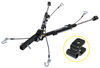
  1. Tow Bar Base Plate
  2. Roadmaster
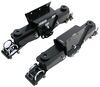
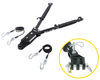
  3. Removable Draw Bars
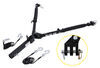
  4. Twist Lock Attachment
  5. Partially Hidden
THIS ITEM IS NOT A FIT FOR
2013 Chrysler 300
Roadmaster

Roadmaster Direct-Connect Base Plate Kit - Removable Arms

Part Number: RM45EQ
In Stock
$575.00
Retail:$632.50
You Save: $57.50
Tow Bar Base Plate
Not Confirmed to Fit

2013 Chrysler 300

Will this fit?

To see if this custom-fit item will work for you please tell us what vehicle you'll use it with.

zoom in icon
slider vertical icon
zoom out icon
Comment field cannot be left empty.
Name field cannot be left empty.

Thank you! Your comment has been submitted successfully. You should be able to view your question/comment here within a few days.

Error submitting comment. Please try again momentarily.

Product Images

In Use/Installed

Need help with installation?
Locate installers near me
Designed for use with motor-home-mounted tow bars, the direct-connect brackets are virtually invisible, easy to mount and remove, and they eliminate the need for a quick-disconnect crossbar on your tow bar. Installs on your vehicle's frame. Great Prices for the best tow bar base plate from Roadmaster. Roadmaster Direct-Connect Base Plate Kit - Removable Arms part number RM45EQ can be ordered online at etrailer.com or call 1-800-940-8924 for expert service.
  • All Info
  • Reviews (3331)
  • Q & A (0)
  • Videos (2)
  • Photos

Roadmaster Tow Bar Base Plate - RM45EQ

  • Roadmaster
  • Removable Draw Bars
  • Twist Lock Attachment
  • Partially Hidden

Designed for use with motor-home-mounted tow bars, the direct-connect brackets are virtually invisible, easy to mount and remove, and they eliminate the need for a quick-disconnect crossbar on your tow bar. Installs on your vehicle's frame.


Features:

  • Direct-connect brackets provide attachment points for your motor-home-mounted tow bar
  • Streamlined design creates supremely clean look
    • No obtrusive quick-disconnect crossbar
    • Hidden brackets sit even farther back than standard brackets
  • Drawbars attach and remove quickly and easily
    • Arms click to lock in place in brackets
    • Built-in pull rings let you unlock arms so you can twist and remove them
  • Computer-cut, all-steel construction provides exceptional strength
  • Black powder coat finish is durable and corrosion resistant
  • Simple installation - no welding required
    • Custom base plates ensure a perfect fit for your vehicle
  • Compatible with Roadmaster motor-home-mounted tow bars only
  • Instructions and mounting hardware included
  • Made in the USA
  • Limited lifetime warranty


Note: Roadmaster direct-connect base plates will only work with Roadmaster tow bars that slide into a trailer hitch, such as the Nighthawk, Sterling, Blackhawk, Blackhawk 2, Falcon, or Falcon 2. These base plates will not work with tow bars that require a hitch ball.


The drawbars, or front arms, on this base plate kit are supremely easy to mount and remove. Just insert them into the brackets and twist to lock them in place. To remove each arm, simply tug the built-in pull pin to disengage the lock, twist the arm back and pull it out of the bracket. Once the drawbars have been removed, the remaining brackets are virtually invisible. On most automobiles, the brackets are mounted within the grille, where they remain not only unseen, but protected from scrapes and scuffs as well.


524477-5 Road Master EZ-5 Base Plate Kit

Installation Details RM45EQ Installation instructions

This Product Fits The Following Vehicles


California residents: click here


Video of Roadmaster Direct-Connect Base Plate Kit - Removable Arms

Videos are provided as a guide only. Refer to manufacturer installation instructions and specs for complete information.


Video Transcript for Roadmaster Direct-Connect Base Plate Kit DIY Installation - 2024 Ford F-150

Hello, neighbors, it's Brad here at etrailer, and today we're taking a look at installing the Roadmaster base plate on a 2024 Ford F-150. Now your base plate is gonna be one of the main units that you're gonna put on as far as components for flat towing on your F-150 to get it to tow down the road. And the base plate is really gonna be your structural mounting point to the frame of the vehicle to allow you to be able to, you know, tow it safely down the road. But some base plates are really good at giving you mounting points for the rest of your components, and this is one of 'em. This allows us to easily mount up our breakaway switch as well as our six-pole. And as someone that's installed a lot of different flat tows, pickup trucks tend to be a little bit more difficult, Not necessarily because of the install, but because trying to find a mounting point that's gonna be a solid metal spot is really hard on trucks these days.

They just really don't have metal bumpers as much, a lot of plastic, and so you're left really having to fabricate to make it look good. And that's not the case here. So huge thanks to the Roadmaster for that R&D that went into that, and also really throughout the entire kit. Instructions are really good. And our removable arms sit where the factory tow hooks are located.

So you are gonna get rid of those toe hooks, but you still have safety chain loops here, and they sit recessed, so it's really clean. And the same goes for our components. I was able to get these to be pretty well flushed with the front of the F-150. And more times than not, when you flat tow a vehicle, once it's all set up aesthetically, eh, some look better than others. This is one that I think really looks good.

And so when you're going down the road, this is what it'll look like, you know, pretty clean. You can take off your breakaway switch, or at least the, you know, extended orange cord here. But to get this ready to flat tow, your arms are gonna be super easy. You just push 'em in, give it quarter turn, and snap into place. So to remove it, same thing, you're gonna pull this pin, give it a quarter turn, and that's gonna come out.

So, pretty easy. So, with that being said, I'm gonna get these in place. I'm gonna get my truck pulled up enough to where we can hook up our tow bar, and I'll show you how all of this hooks up and how it looks hooked up. We're gonna be using an etrailer XHD tow bar, which is a great unit that's going to be heavy duty enough to tow something like an F-150 down the road. And also if you ever go to a larger vehicle, you can keep this one. But something that's unique is Roadmaster has a wider arm, and so it requires a larger diameter pin that is not really common on any other brands. But if you have a different tow bar, not to worry, you can get adapters. But pretty simple here, this goes all the way through. And there's an opening, a little pin hole at the top here, and that's to get your linchpin in place, so that way that pin can stay in place. And then from here, we'll get our safety cable attached to our mount. (metal clacking) And we also have our diode wiring. We'll get that plugged in. Our breakaway switch. And then just the other side. And something else that's important is making sure that you have a high-low adapter, so you're traveling safely down the road. So, first, I'll measure our base plate. And so from the ground to the center of our pin hole, it's right at 16 inches. So that's gonna be important because you're gonna wanna measure the height of your hitch on your RV from the ground to the center of the hitch pin hole. So, for instance, ours comes in today at about 20 inches. So four inch difference is not really something you're gonna want. The minimum threshold of difference should be three inches, and that's mostly to keep that tow bar as level as possible. It's not gonna bind it up in any weird ways. And if you had just a traditional tow bar, you would probably need a small rise or drop, a high-low adapter, which we have plenty here available at etrailer. If you're buying a tow bar, ways that you can get around that difference a little bit is gonna be a Demco or an etrailer tow bar, where you can see our shank has this built-in drop. It can also be a built-in rise by unbolting, turning that shank over, and that's a really great way to have to, you know, be able to adjust that height difference without having to get a high-low adapter. So if that's something when you measure yours out, you know you have a big difference, sometimes you can mitigate that. I believe this has 1 1/2 inch built-in rise or drop, so that was enough to put us in that window. With all that being said, here's how it looks all hooked up, super clean, nice widespread. So, overall, very, very impressed with this. This was the first time I've done this kit on an F-150. And Roadmaster just keeps making improvements to their base plates, whether it be tabs for wiring to be zip tied, or our mounting brackets that we have today. And that's where this is more of the premium base plate across other brands. But Roadmaster, great, great products. I personally like them for an installation standpoint. So that's something that's gonna be depending on your budget, and also, are you doing this yourself If that's the case, Roadmaster, for the most part, I think, is the easiest of the base plates to install, and I really like the quality of them. But really, all of them are gonna accomplish the same thing. And the main thing is, is making sure that you get adapters for your tow bars to work specifically with those base plates. And again, it's gonna be one of those components that really sets the framework for the rest of it. And with that being said, the installation does require the grill and this lower grill portion to come off as well as the bumper. Great time to get the rest of your components knocked out if you're doing all that the same. But if you watch this video and maybe decide you don't have the place, the time, the tools, or even the want to do it yourself, you can still get this installed by finding someone close to you using our dealer locator. And that way, you don't have to worry about those flat tow installations. You can really just take your vehicle somewhere, have them install it, and then you can be flat towing down the road without having to worry about the installation. But for DIYers, none of this. This vehicle is actually fairly easy to get set up on a flat tow, and this base plate is fairly simple compared to some of the other ones out there. So, take a look. I think this is something that you can handle and get installed yourself, and I'll walk you through step by step. So, let's take a look at that installation. To begin our installation, really a lot of the steps are gonna be removing the front fascia to allow us to get everything bolted up. And something that Ford has done is their plastic push pins don't have a center section that normally you can pop out, makes it a little bit easier. These are gonna be something that you're gonna probably want a trim panel tool on. It makes it a lot easier to wedge underneath. And once they're completely underneath, you can pry that out, where a flathead screwdriver you can kind of do that, but these, pretty flexible. So having this to pry them out is gonna be key. And something I'll point out is we're gonna have a lot of hardware that we're gonna be removing. I highly suggest having a nice, organized spot to keep everything. It'll make reinstallation a lot easier. Now, there's a ton of plastic clips, just like this, that we're gonna remove, but some of them we don't need to. So you'll see the four that are on the inset of this panel, we're just gonna be removing any plastic clip that attaches to this panel. So as we go through, you have some that go on the air intake, all of these as well as the ones up top. So we'll get these all removed to a point where we can remove the panel. Once you get those pried out, you can lift up your intake tube, and we should be able to pop this out and we'll set this aside for now. Now, you may still have your trim panel tool handy. And if you do, we're gonna be tackling the plastic push pins that are on the corner of the headlight, right by the front fender. So there's one on each side, we'll get those pried out as well. With that panel removed, that's gonna give us access to the 10 millimeter bolts across the top on the core support. And there's gonna be four of them, so we'll get those removed. (drill whirring) And we have an electrical sensor that's right by the hood latch release. We're gonna want to unplug this. And you may have another line, if you have a front camera, and it's got a windshield washer, squirter nozzle there. You may need to remove that as well. There is a plastic Christmas tree, as we call 'em, that goes into plastic. We're just gonna pop this back because as we pull the fascia off a little bit later. We don't want any connections. Now, we'll head to each wheel well, and you're gonna find that there's two seven millimeter screws on each side. And this whole lower portion, we're gonna be taking off. So we'll get them removed, and then I'll show you how to pry them back. (drill whirring) Now, we'll be getting this whole thing popped off, so you might want an extra set of hands, but what I do just to prevent any chips or scratches on our clear coat or paint is put some painter's tape on each edge. That helps as we pull it back, that it's not gonna rub against each other. And also, we can leave this here for when we reinstall it just to, you know, make sure that our vehicle doesn't get scratched or damaged in the process. Now to get this popped off, you're just gonna pull back on that outside edge. And just keep pressure along here. And once you get this popped off, we'll just go to the other side and there's gonna be clips on the front too, but it should be fairly easy to get pried off and then we can get this whole thing removed. Now as I go back, I notice that there's some locking tabs here, so I'm using a plastic trim tool. If you have a small pick , that might actually work pretty well, or a flat head. And we're just gonna pry that up and it should release it. If you need to, you can put just some shop towels or stuff to just create this void to kind of keep that pressure on the tab, and that way, it's gonna draw back and just, you know, not lock back in. I am gonna grab a small pick, and you can see that I'm just gonna pull that hook up and it should draw it out. (panel popping) Here we go. So this part snaps in. It's kind of tricky, but this is where we're gonna be prying. Just take your time. Don't break the clips because you want it to be able to snap back in. And it seems like as we go along, we're gonna be running into the same similar style clip. So we're gonna need to pop those out as we go until we get all of it popped off and we can remove this. What I found is I think a thin plastic trim tool, it's gonna be the best bet. You just kind of wedge this with putting pressure and then it'll pop out. They are completely across the front. And some of the clips are a little bit different, but I think that prying method still kind of works. This one, I'm gonna have to just raise up a little bit over, so kind of tedious here, but again, just try not to break the clips. That's our main goal here. And once those are all popped out, we can set this aside. Now, with that section out, that's gonna give us access to the 10 millimeter bolt. It's gonna be in this housing, that's the square. There's another one over here, but we're gonna leave that, but we'll get this removed. You're gonna probably need an extension, and then we're gonna go to the other side and get that one as well. (drill whirring) Our next step is to remove our grill, and there's gonna be some clips along here. And you're gonna wanna take your time. This goes around the headlight, so this whole bezel really just pops off. And what I would recommend doing is if you pull straight back, the tabs are molded into the headlight, they kind of go straight back, but we wanna get this loosened up. So putting some tape on the edge and using a plastic trim tool might help you get some leverage. Again, just take your time, we don't want to crack this. And what might help too is on the bottom, if you just kind of pull on here, that'll loosen up those clips. And once you get the other side popped out, we'll be able to draw this back. And as you can see, there's alignment tabs and clips. They all face forward. So the main thing is you're popping those but pulling back. So, from here, you should be able to draw this back. And now's a good time, double-check, make sure you don't have any connections. It really comes down to what trim you have, but this whole section should come out. If you need to remove those attachments, go ahead and do that, and then we're gonna set this aside. We're gonna need to remove the wiring harness. And so you can just pry on the bottom of that. And then you'll see that it continues on. These white plastic Christmas trees are holding our harness in. So if you just push it from the backside, a lot of times with like a screwdriver or something like that, we should be able to get these to pop out fairly easily, and we'll bring that harness with us. If not, you can pry on that backside. That is a little bit easier. Oh, mine came off the clip here. So just take your time. Now, as I pop these out, there's gonna be one that's tucked behind this bracket. So, essentially, what we're gonna do is make sure that the wiring harness is not attached to the bumper in any way because the bumper's gonna be removed and we don't want those wires attached. So I'm gonna pry back here. And it seems like there's another one on the other side. So, main thing, we get our harness to where it's completely separate from the bumper. (metal clacking) And even as I go further back, there's some that are be gonna be tucked back here. I can just simply push that out with my fingers. And from here, it looks like it's loose. And I think once the bumper's off, we should be fine. Just make sure any of those plastic clips are separated. Grab a ratchet and a 21 millimeter socket, and we're gonna find that we have three nuts on each side of the frame, so a total of six, and we're gonna be taking those off to get the bumper taken down. Now, the bumper can be a little bit heavy, so maybe grab an extra set of hands to help you. And we're gonna be retaining the nuts for later reinstallation. So, once you loosen 'em, just make sure you hold onto 'em. (ratchet cranking) (ratchet cranking) (metal clacking) Now you might want an extra set of hands here. With all those notes removed, we should be able to pull these straight back to where those studs slide off. And we're gonna find out pretty quickly if we missed any of those plastic clips. There shouldn't be attached, but we'll see. So pulling straight back here, it does look like our wiring harness, you can let that popped off. It does run off to the other side. So we're gonna undo our main harness. So if you're watching this before this step, you might wanna do that first. And to do that, pretty easy. We're gonna take this plastic arm here and pop this down. And these can be tricky here. You wanna press on this portion. That'll unlock. And then as you pry this back, our main harness should be able to slide out, like so, and that's gonna make it to where we can get our bumper lightly removed. Now, it's possible that your tow hook covers remained on the truck or they might be with your bumper more than likely. So, if that's the case, we're gonna just pop these out pretty easy. They're just kind of sitting in place. Now we're gonna remove our factory tow hooks, and it's just a 15 millimeter socket. You'll see the studs sticking through on that plate. So once we get the hardware removed, that's gonna get our tow hook removed and we can grab this nut plate. None of this is gonna get reinstalled. So once you take it off, you can do whatever you want with it. But for our purpose, we will not be using it. Now our main receiver brace where our arms will go are going to go around where this is located. And to mount it up, we have this nut plate, and these are just welded on and then powder-coated. So a lot of times, the threads can get built up. So I recommend grabbing one of your bolts, it's the fine thread, and just work the bolt through. If you're starting to get any resistance, you know, it's gonna make it tricky as we try to bolt this all up. So you can take 3/4 inch socket and run that through. Make sure that you can actually threaded in place. And once you do that for both nut plates, we'll just put this in place here and then we can start getting our hardware ready. You're gonna want to grab your fine-thread bolts and put a split washer on each of them, one long, one short, and this will be the combo for each side. We have some thread lock on here as well, so make sure you get that coated up nicely. And then we'll grab our brace. And they are side-specific, so your safety chain loop should be on the outside of the vehicle, and you'll see the holes that go through and then bolt up. So our shorter one, obviously, is gonna go through here, whereas the longer one will go through the arms portion. And we're gonna raise this up, and I'm gonna get a few threads started on here to just kind of hold that in place for me. (metal clacking) Once you get that one started, we'll do the same thing for our other bolt. (metal clacking) Now I'm gonna snug these down. We're not gonna get too crazy here, I just want it to sit flush and flat. And as we tighten, we want these as straight as possible. And you're also gonna want to take a look at this outside because we're gonna be using that as a template for drilling. So as I hold this up, eventually, we have the large spacers in our kit. They're gonna slip in between this portion and the frame. So, you know, hold this up, there should be a slight gap there. That's totally fine. But having it snug means that this hole, which doesn't exist in the frame rail, we can drill that out using this, and then we're gonna run a bolt through that. So, first up, let's get this snugged up. 3/4 inch socket should be able to accomplish that. (metal clacking) (drill whirring) Now I got this kind of dialed in exactly where I want it, and we're gonna grab a 17/32 drill bit. And you're gonna want a long one that's gonna be able to pass all the way through the frame rail and we're gonna just get this drilled out because eventually we're gonna pass our bolt in. So keep it as straight as possible. It might be worthwhile. You can see inside, once you get the one hole drilled, make sure it's, you know, completely straight, and then drill out the other side. So you may wanna start with the pilot hole. I'm just gonna get at it with my 17/32 and get this drilled through. We'll get our bolt in place, and then we'll do the other side. So let's focus on our driver's side for now. (drill whirring) (drill whirring) Now you are gonna want to grab your large coarse-threaded bolt, and this is gonna pass all the way through. We do need to put our spacer in between our arms and the frame. And mine shifted a little bit here, so I'm gonna loosen that up so we can get this sandwiched in place, and then we can pass our bolt through. So it might be worthwhile, just test to make sure that, you know, you got this drilled out to where it can pass all the way through. Looks nice and straight. So I'll get this loosened up and then put this block in place. (metal clacking) Once passed through, I am gonna put some thread lock on here, we'll put our other spacer, and then a split washer, and then our nut. (metal clacking) And then we're just gonna repeat this same process on the other side. So we'll meet back up when we have both sides ready to go. Once you have your hardware passed through, we're gonna snug everything down. And we'll be coming back with a torque wrench, so no need to use an impact here. These we inchesre still kind of tricky for me to tighten down, but 3/4 inch socket for that. And then on the bolt that we passed through, we're gonna want a 3/4 inch wrench on the head of the bolt. And then on the other side, I have my socket, and I'm gonna snug this down. Again, we are gonna have a torque wrench coming in right after this, so you don't need to get crazy. We just wanna get everything snug. (ratchet cranking) And now we're gonna attack those bolts again but with our torque wrench. Torque settings is found in the instruction manual, and you're gonna want to adjust your torque wrench accordingly based on the hardware. This is all 1/2 inch hardware, so all the torque settings should be exactly the same for all of ours. So we'll go through. And when torquing down the side bolts, always try to put the torque wrench on the nut side. It really does give you a better torque reading or more accurate one. (torque wrench beeping) And then once we go through and get all of the rest of it torqued down, we can move on. (torque wrench beeping) Now this portion of our base plate is maybe something that you're saying, "Well, what does this do" And this is a massive inclusion because normally when it comes to trucks, this is kind of it for the base plate, and then you're left trying to find spots to mount up your breakaway switch, or your six-pole, or any other break functions. And it's really kind of gets tricky and you have to fabricate. So Roadmaster has done a really good job of making a bracket that's going to account for our six-pole as well as our breakaway switch. You also have spots to zip tie up wires. So really, really cool idea. Now, it should work just fine for most of 'em that are open. So in the instruction manual, the truck has a license plate, and then these portions are open, making to where this is just kind of drop in and go. Ours is an STX model, and this whole plastic is filled. So I'm gonna probably end up popping this out and trimming this so we can still maintain our license plate mount, but that way we can get our mounting spots in place. And this is just really simple. You're gonna use just the 10 millimeters that are located here, and it's gonna bolt up. So if you have those holes, you're home free to be able to just take those nuts off, tighten it down, and then that should be, you know, in place for you. But if you're kind of in the same situation as us as this is full, I'm gonna pop this out, and then I'll let you know what I had to do. We are gonna end up coming back and trimming out some portions here for our arms to pass through. So I'll get this taken care of and I'll let you know how it went. So, with ours, I've come up with a plan, and I started pulling off a bunch of plastics to try to get this grill insert to pop out, and you can do that. But really, it's not gonna gain you a whole lot. It might actually be easier to do this while it's still attached, but we do wanna get our license plate bracket out of the way because the license plate bracket goes wide enough to where I think if we cut for the opening, that it's gonna cover up any of our cuts, at least on this portion. And to get this popped out, it's actually pretty easy. You just push the tabs down. And then there's also ones here, you'll push up, and then this just slides out. (metal clacking) So my whole goal is to make sure that we maintain or retain all of the mounting for the grill as well as our license plate, so that way we're not really sacrificing anything. And what that means for us is we'll go to the front and we have a cutting blade on a multi-tool. And I found that this generally gives you the cleanest cuts, but if you have a Dremel or another cutting method that you want to use, by all means, whatever you're comfortable with, to get those nice clean cuts. So the bumpers, you know, kind of flipped upside down. This is the bottom portion. But the wider tabs through the license plate bracket, I think what we'll do is cut about 1/2 inch wider, and we're gonna cut all of this grill portion out and then we'll do the same on the other side. So as I mentioned, I really like using a multi-tool on this. It does keep it nice and clean, and you can get into these lines. We'll come back a little bit later with the file. But for now, we're gonna go straight down, cut this out, and then we'll do the other side. (multi-tool whirring) (multi-tool whirring) Now, all of the flashing, you can take a file to this or just like a flat blade and just kinda get this as smoothed out as possible. The more time you take making it look clean, every time you hook everything up, you're gonna be a little bit happier with the finished product. So I'll get my other side cut out just the same as this, and then file that down, and then we can mount up our bracket and see how it looks. So with that cut out, now we should be able to test fit this in, and we shouldn't have any clearance issues. So this will make it really nice for us to get everything hooked up and also run our wires long term. So I'll get my license plate put back in place and then we'll take out these 10 millimeter bolts and bolt this into place. (drill whirring) Now to make clearance for our arms to go through here, we're gonna be trimming this plastic flap, and it's about 1/2 inch down my paint marker. Not the cleanest lines here, but we're just gonna notch this out, go down 1/2 inch, and that should allow for that clearance. (multi-tool whirring) (multi-tool whirring) So with that trimmed out, we're gonna get this mounted up. And normally, with a base plate installation, we leave the fascia off because you're gonna wanna run all the wires and brake components. But with this one being cut out and having it pretty well open behind, we're gonna be able to run our wires pretty easily. So I'm gonna get this in place. I'm gonna wait to put the grill and everything else back because I may end up needing that space to run things, but I don't think this is gonna be much of a hindrance. Now, something else that I should mention is if your truck has the shutters on the bottom, there is some trimming on the air dam that you'll have to do. Ours does not have that, so I can't really show you what to do, but the instructions lay it out. It's just gonna be a little bit of trimming for that clearance. But from here, I'm gonna get this put back in place. I'm gonna remember to get my plug back in and we're just gonna get those nuts tightened back down. So let's make sure that it fits. Now something I would do if you did have to trim like us, we are going to mount the license plate back up, or at least mock it. And I found that my tab for my six-pole is right on the edge. So what I did is I loosened up the bolts and shifted it down. And that got us pretty close. I think at this point, I'll still be able to mount it up. It's pretty well in line with it, but I was able to ship that over. And once the six-pole's in place, it's really gonna look clean overall. So at this point, I'll get all of the rest of the components on. And like I said, I'm gonna wait to put everything back up here until we're completely done, but it's really gonna be just the reverse order that we took it off. So we'll catch up a little bit later when I have everything done. That way you can see where it's all mounted up. But at this point, you've installed your first base plate on a F-150. So we'll catch back up a little bit later and see how it looks. So I got everything put back together. All of our components are mounted up. Breakaway switch, I was able to bend the tab, mount it. It sits really nice on those supplied brackets. Six-pole, I did have to bend the tab slightly. If you're in a state that doesn't have a front plate and if you take that front plate off, you'll be fine. But if not, I just bent mine a little bit. We still have full access. So, overall, a fantastic base plate. If you have an F-150, Roadmaster really makes some awesome stuff, and this base plate is really testament to that. I mentioned that bracket that they include. Overall, a really easy installation, and everything was really nice. I mean, as far as fitting. So, it looks good. It's using factory spots. So, hopefully, this helped you get your base plate installed. And if you have any comments, questions, if you have your setup all done, send some pictures. We'd love to see it. But that's gonna do it for a look at installation of the Roadmaster base plate on a 2024 Ford F-150.

Customer Satisfaction Score:

Ratings & Reviews

4.8

3328 reviews
5 Stars
(2911)
4 Stars
(286)
3 Stars
(55)
2 Stars
(29)
1 Star
(47)
Designed for use with motor-home-mounted tow bars, the direct-connect brackets are virtually invisible, easy to mount and remove, and they eliminate the need for a quick-disconnect crossbar on your tow bar. Installs on your vehicle's frame.

by:

Quick shipping and great follow up comm unication.


by:

Have not installed it yet


by:


by:


by:


by:


by:


by:


by:


by:


by:


by:


by:


by:


by:


by:


by:


by:


by:


by:


by:


by:


by:


by:


by:


25
3328
Show More Reviews

See what our Experts say about this Roadmaster Tow Bar Base Plate

  • Parts Needed to Flat Tow a 2025 Ford F-150
    Hey Bob, welcome back and congrats on the new truck! To flat tow your 2025 Ford F-150 you'll need the following parts: Base Plate Kit - Roadmaster Direct-Connect Base Plate Kit - Removable Arms item # RM45EQ Wiring Harness - Roadmaster Universal Hy-Power Diode Wiring Kit item # RM-152 or item # RO44FR if you have LED lights on your F-150. You may also need item # RM-910030-5 and item # RM-910030-7 if you didn't keep the connector off your old truck. Charge Line - Roadmaster Battery...
    view full answer...
  • Does Crossbeam of Roadmaster Base Plate Kit # RM45EQ Provide Support
    Hey Michael, that's a great question but while it doesn't seem like the Roadmaster direct connect kit part # RM45EQ crossbeam bracket would do much it does and it is an integral part of the kit.
    view full answer...
  • Flat Towing Set Up For A 2024 Ford F150 Lariat 4x4 Short Bed With V6
    Hi Dean! We definitely have what you need to set up your 2024 Ford F150 Lariat 4x4 with the short bed and V6. I have everything I recommend listed below: Roadmaster Direct-Connect Base Plate Kit - Removable Arms # RM45EQ etrailer XHD Non-Binding Tow Bar for Roadmaster Direct-Connect Base Plate - RV Mount - 10,500 lbs # e84ZR Roadmaster 4-Diode Universal Wiring Kit for Towed Vehicles - 7-Way to 6-Way Coiled Adapter Cord # RM-15267 Roadmaster Battery Charge Line Kit for Towed Vehicles #...
    view full answer...
  • Can Roadmaster Wiring Kit Transfer From 2019 F-150 to 2024 F-150
    Hey David, congratulations on the new truck! Yes, the Roadmaster Direct-Connect Base Plate Kit # RM45EQ is compatible with your Roadmaster Nighthawk # RM-676. As long as you have everything from the kit the Roadmaster Universal Hy-Power Diode Wiring # RM-152 can be transfered over and used on your new F-150. Will you still be using your Brake Buddy Classic 3 # HM39494? If you left anything on the old F-150 you may need the Second Vehicle Kit # BB59SR and you will also need the Roadmaster...
    view full answer...

Do you have a question about this Tow Bar Base Plate?


Info for this part was:

Employee Lindsey S
Edited by:
Lindsey S
Employee Jameson C
Expert Research:
Jameson C
Employee Joshua S
Video by:
Joshua S
Employee Matthew G
Video by:
Matthew G
Employee Dustin K
Video Edited:
Dustin K
Employee John S
Video Edited:
John S
Employee Wilson B
Updated by:
Wilson B
Employee Bradley B
Test Fit:
Bradley B
Employee Scott A
Test Fit:
Scott A
Employee Amanda K
Written by:
Amanda K

At etrailer we provide the best information available about the products we sell. We take the quality of our information seriously so that you can get the right part the first time. Let us know if anything is missing or if you have any questions.


<