


Fuse Replacement for Magnum MS2012 inverter
Updated 10/20/2026 | Published 10/17/2026
Question:
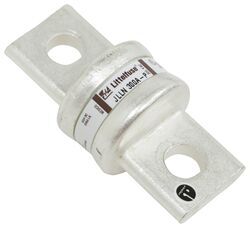
Apparently the large fuse for our Magnum MS2012 inverter is blown. There is 12+ volts on the battery right side and 0v on the left bolt. I recall it may have been replaced some years ago, but am not sure about what is the correct fuse, as there is more than one version. Some describe as “fast blow” and others as “slow blow”, and sometimes adding in “time delayed”. Some are tagged as JLLN 300, and some as JLLN 300-P . The one in the coach now has the “-P” suffix. Can you advise the difference, whether it matters, and what fuse is correct for our inverter?
asked by: Joel A
Expert Reply:
Thanks for letting us help Joel. Based on the voltage readings you provided, it definitely sounds like the 300 amp fuse protecting your Magnum MS2012 inverter may have blown. According to Magnum's installation manual, the MS2012 uses a maximum 300 amp Class T fuse with time delay characteristics when installed with the recommended DC wiring configuration. The Go Power Replacement Class T Inverter Fuse - 300 Amp # 34244366REVA is a suitable replacement for this application. We've actually recommended this same fuse for the Magnum MS2012 before.
The characteristics of these fuses can be a bit confusing. A class T fuse like is used for your Magnum MS2012 inverter provides very fast protection against major short circuits while still having some time delayed characteristics that allow it to tolerate certain brief current surges. This allows it to "blow" in a less dramatic way if there is a short as opposed to other "fast acting" fuse types. This is obviously helpful in enclosed spaces like campers to prevent fires while providing electrical protection.
As for the "-P" suffix you mentioned, that can have different meanings depending on the fuse manufacturer. The JLLN 300-P number you referenced is associated with Littlefuse and appears to identify a manufacturing or compliance variation related to lead free or RoHS compliant construction. The important thing is that the suffix does not change the 300-amp rating, Class T designation, or physical dimensions needed for your application.
Did the fuse blow while you were running a particular appliance through the inverter, or did you simply discover that the inverter had stopped working?


(click to enlarge)

Product Page this Question was Asked From
Go Power Replacement Class T Inverter Fuse - 300 Amp

- Accessories and Parts
- Power Inverter
- Fuses
- Go Power
more information >

Continue Researching
- Q&A: Replacing a Magnum MS2812 With a Victron MultiPlus II or Quattro II Inverter Charger
- Q&A: Can the Mach-C Everest Variable Speed RV Air Conditioner System CM35MR Be Used Top-Down?
- Q&A: Wiring Diagram for Advent Air Conditioner ACM135
- Q&A: Best Replacement For Progressive Dynamics PD9280A
- Q&A: Replacement for a Atwood AFMD35131 Furnace
- Q&A: Recommended Replacement for the Parallax 7455T
- Q&A: Replacement Brake Assemblies for a Lippert 4,400 lbs Axle
- Article: Trailer Wiring Diagrams
- Article: Wiring Trailer Lights with a 6-Way Plug (It's Easier Than You Think)
- Article: How to Install a Roof Rack
Joel A.
10/20/2026
I replaced that fuse many years ago but don’t remember the reason it blew. The last few years the coach has been parked by the house and I’ve had issues with squirrels somehow getting in the bays and finding the inverter a warm place to set up camp. They damaged it on more than one occasion, and a while back I tried finding and plugging access with anti-rodent expanding foam. That worked until a few months ago when I found the inverter not charging the batteries, and not on in fact at all. I thought I might have messed it up when I tried resetting it while plugged in, a big no-no. Then the other day I noticed a couple feces droppings on the bay floor, and a pile of dead leaves and grass atop and in the wire looms next to the inverter. I think they’ve been there awhile, but then the unit has been out of service since sometime last winter, if not before. I just figured if it wasn’t on anyway, it wouldn’t attract vermin to its warmth. I got the batteries up with a new Noco (sp?) portable charger, then the solar system has worked all summer. I just haven’t had time to do anything with it until last week when I tested the fuse - 12v on the right side, 0v on the left. I touch-jumpered the fuse and got a good spark, so I presume the inverter is shorted again, probably from pest urine leaking down into it, but I don’t know. I first need to get the inverter on my workbench, to see if it’s something I can rectify, as parts for Magnums haven’t been readily available for years. That means the shop in Portland that helped before May have their hands tied this time around. Regardless, a fuse will be needed eventually. If I have to get a new inverter altogether, it may be a different fuse, however.