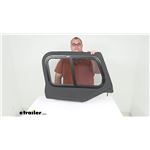
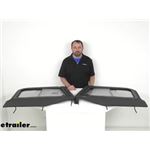
Swap your setup to match the season with options from soft uppers to tube and half doors. Glass slider uppers make daily use easier and improve visibility versus zip-up vinyl, while they can reduce airflow and highway wind noise. Check top compatibility—square-corner uppers suit soft tops, rounded-corner styles can work with hard tops but sealing may not be perfect. When removing hard doors, plan separate mirrors.
It's often not compatible. Mounting pegs and interfaces can differ, so matching uppers and lowers from the same system helps avoid issues. If you try to mix, be prepared to modify. Also verify your latch setup, like needing a striker pin and a rotary style paddle handle if that's required by the lowers you're using.
Sometimes, but check the corner shape. Options made for soft tops often have square corners; hard tops may need rounded corners and the seal may not be perfect. Check the curvature match at the upper rear portion against your top. After install, hose-test or check after a hard rain to verify sealing and make adjustments if needed.
Plan for mirrors before you swap. Removing hard doors takes the factory mirrors with them, and some soft doors don't have a way to attach mirrors. Certain tube doors include cylinders to mount manual mirrors and may require using factory screws. If your setup doesn't accept mirrors, add alternate mirrors that are designed to mount to the body or door tubes.
Sliders make daily use simpler. No more zipping and folding to pass things in or to get fresh air, and glass sliders can improve visibility, especially at night. They can reduce wind noise on the highway. Note that sliders can cut down airflow significantly, which is nice in cooler months. Check seal condition over time and avoid hitting the window with the seatbelt to help prevent damage.


 Jeep Doors Parts or Accessories
 Filters