


To see if this custom-fit item will work for you please tell us what vehicle you'll use it with.


Thank you! Your comment has been submitted successfully. You should be able to view your question/comment here within a few days.
Error submitting comment. Please try again momentarily.


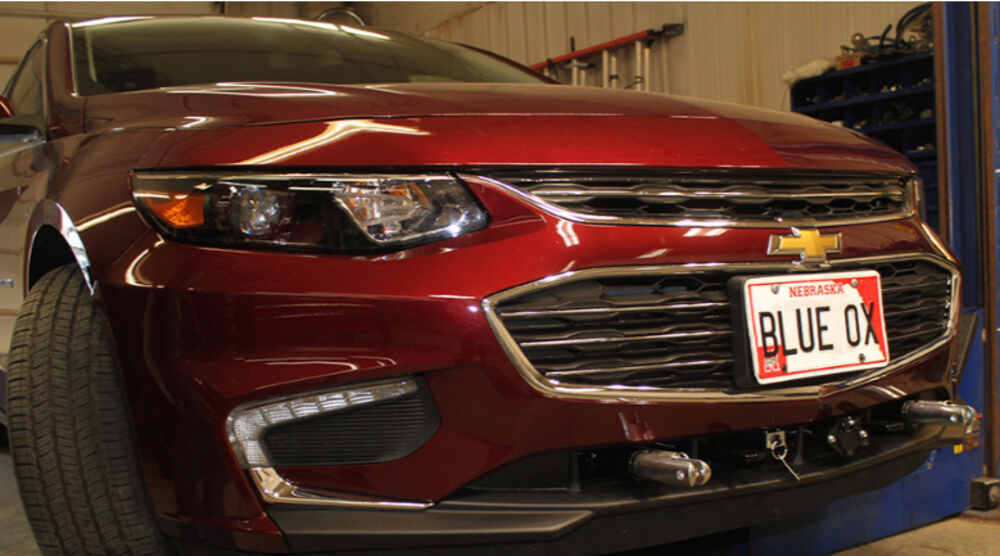


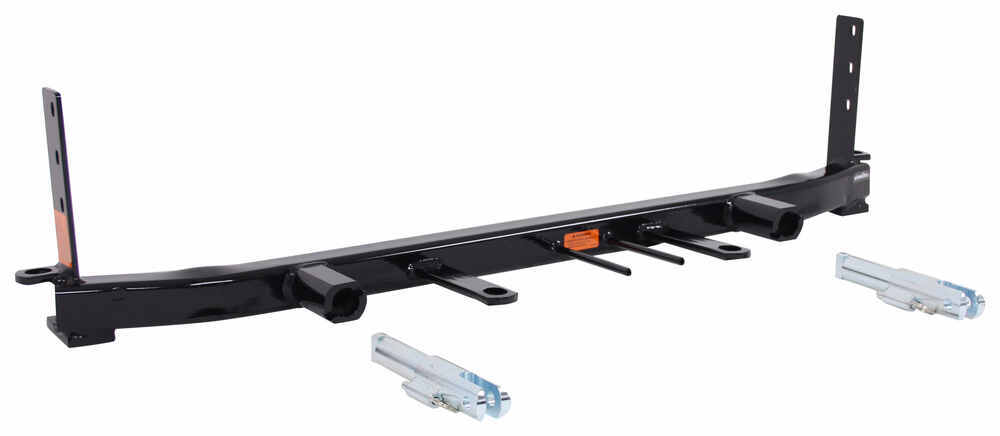


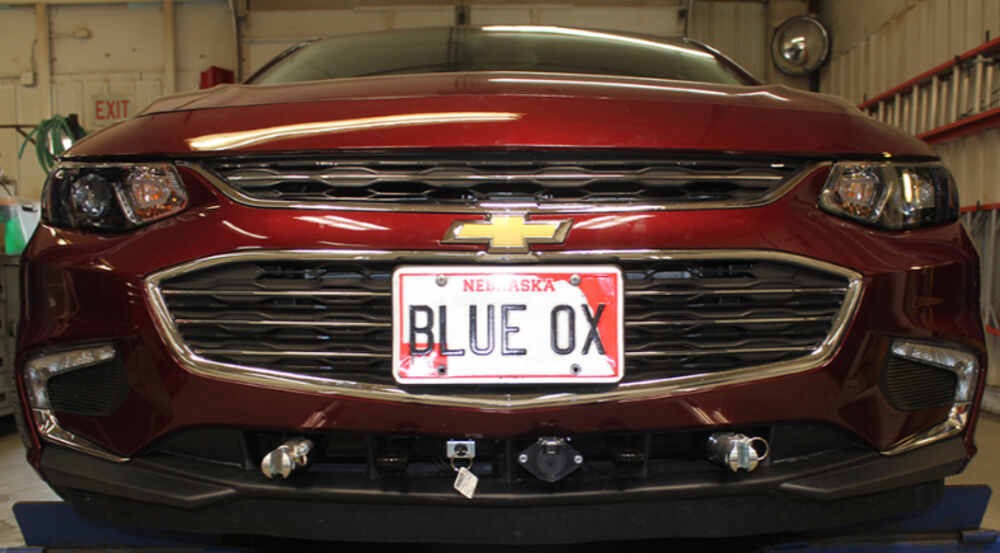



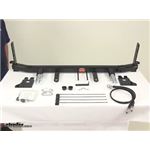
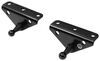
When you’re not towing, this base plate practically disappears. The hidden design keeps the front of your vehicle looking factory clean, and the removable arms twist off in seconds so there’s nothing protruding past the bumper. Snap-in receiver covers keep dirt and debris out of the sockets, so the arms slide in smoothly every time you hook up.
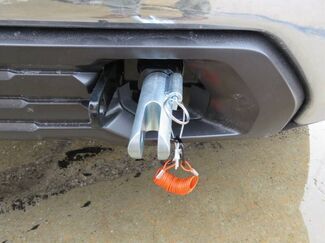

Connecting your tow bar doesn’t get much easier. Each arm inserts into the receiver, twists to lock in place, and secures with a simple pull pin. When you’re done towing, just reverse the process—pull the pin, twist, and remove. It’s a straightforward setup that makes solo hookups fast and reliable.

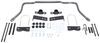
This base plate bolts directly to the chassis using the included mounting hardware—no welding required. Its sturdy steel build spreads towing forces evenly across the frame to reduce stress on your suspension during long hauls. The powder coat finish resists rust and corrosion, keeping it solid mile after mile.
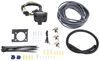
Already have a tow bar you like? This base plate pairs directly with Blue Ox tow bars for a secure connection. It’s also adaptable for use with Roadmaster tow bars when you add adapter RM-031 or RM-031-5, or with Demco tow bars using adapter DM9523041 (each sold separately). Integrated mounting points make it easy to attach an electrical connector plug and bracket so your wiring stays neat and accessible.
With a 24" distance between brackets and a 12" bracket height, this kit gives you clear reference points for leveling your towing setup. Whether you’re dialing in your tow bar height or planning wiring runs, these exact specs make it easier to get everything lined up right from the start.


Videos are provided as a guide only. Refer to manufacturer installation instructions and specs for complete information.
Hi John with etrailer. Today we're gonna be taking a look at Blue Ox Direct Connect Base Plate Kit with Removable Arms that we've installed on our 2018 Chevrolet Malibu LT. Now when it comes to flat towing, you're gonna need more than just a base plate. There's actually a number of components, especially if you're gonna be flat towing the Chevy Malibu. I mean you're going to need a tow bar, you're going to need diode wiring, some sort of supplemental braking system, some safety cables, and of course the base plate. And namely, this is what we're gonna be looking at specifically today, in this video, is the Blue Ox base plate.
Now if you've already got a Blue Ox tow bar, this is a great matchup for it. Blue Ox is, in my opinion, it's one of the top brands when it comes to base plates. This kit in particular has the removable arms, and I'll show you how they work right now. If you get into your location, and you want to disconnect this, simply gonna pull a pin, remove your safety cables, your diode wiring, your supplemental braking system, breakaway switch, and you're ready to roll. Now if you want even a more streamlined look, then you can take the removable arms off.
I do like the way that this kit fits the Malibu, and they have everything that you need as far as studs for your diode wiring already included. They also included a bracket for your breakaway switch for your supplemental braking systems as well. And this kit is going to include some plastic plugs that you could put inside of the base plate to keep dirt and moisture out. And it's just gonna make your life a little bit easier when it comes time to replace the removable arms in and when you're ready to hit the road. Now as far as installation of the Blue Ox base plate or any base plate on the Malibu, this is a very large and involved project.
The entire front fascia has to be removed. There's gonna be cutting and drilling, but the end result is nice. Blue Ox did a nice job integrating this base plate kit into the front. You don't have to trim the actual front of your fascia. There's just some minor trimming on the backside.
Now if you wanna see what it takes to get this base plate installed or if you're gonna bring it to a shop and see what they have to go through, stick around and we'll show you what we went through installing this base plate. Now to begin our installation, we're gonna need to remove the front fascia. In order to do that, we're gonna begin by removing eight T15 Torx screws from the front. (tool buzzes) Now there'll be a series (tool buzzes) of these running across the front. We're mainly interested in the ones that are holding down the fascia. You'll notice this one on both sides isn't holding the fascia down, so we'll leave leave that one alone and move on. (tool buzzes) Now once you have the Torx screws out, you can come to where the fascia meets the quarter panel here. You're going to have a 10 millimeter bolt that's holding these two together. Probably a ratchet wrench is gonna be your best option to get this out. You are gonna have one of these on both sides. (tool buzzes) Now we're basically working our way from the top down. Once we get the 10 millimeter bolts removed, come to the wheel wells, the instructions will tell you it's a T15. In our case today, it's gonna be a seven millimeter socket. There's three fasteners that we need to remove out of both sides. (tool buzzes) Now you can take the inner fender well liner, and we're gonna peel this back. Just push it off to the side a little bit as best you can, right here, holding these two pieces together is gonna be another bolt facing down, so we need to get that removed, same deal on both sides. Next, we can go underneath the Malibu all the way around the edge of the front fascia here, we're gonna have 15 seven millimeter fasteners that we need to remove. Now you're gonna see a lot more fasteners under here. They're all the same size. The ones with the clips, we can leave alone. We're just getting the ones that don't have clips on them. (tool buzzes) Okay, now we're ready to pull our fascia off. You may have noticed that I've already got blue painters tape down on some of these edges and that's just gonna keep us from accidentally scratching the paint. Up here at the top, when we first took these off, this little plastic trim can pop off and this might be a little bit easier to see what's going on when we remove the fascia. So these will just pop off with little clips. One thing we can do is come in the middle and the one screw that we didn't take out earlier, we're gonna lift the fascia up and over that on both sides here. Now over in the corners where we took that 10 millimeter bolt out, this gonna have a plastic plate here. It's kind of held in with a clip, and if you don't hang onto it, it'll slide back there but it's not that big of a deal. But we're gonna pop this out on both sides, and what that's gonna do is allow us to pull this front part of the fascia out. I've already pulled the tab on this side. Okay, so now the top part of the fascia is free. Now we can work our way to the wheel wells. I've got my hands underneath. I'm gonna slowly pop out and that'll release these clips here. I'm gonna go do that on the other side. While we're doing this, we're gonna be taking a look and seeing if there's any electrical connectors that we need to disconnect at the corners. (plastic pops) Now at this point, it's gonna be a good idea to have some help. I've got Joe here with etrailer and we're gonna pull this out and we're gonna be checking for electrical connectors. Now over here on the driver's side, we do have an electrical connector that needs to be disconnected. Now this is gonna have a red locking tab on it. Sometimes these things can be pretty tough to slide back. Once you get the red tab slid back, just push down on the black tab and it should disconnect. Now over here on the passenger side, we're gonna have a similar connector, but this one has, it's upside down and then it has a cable holder that we also need to disconnect (plastic pops) like right there. Now we can set the fascia off to the side. Now with the fascia removed, we need to remove the passenger side headlight assembly. It's gonna be 4 seven millimeter screws, (tool buzzes) one on the side, (tool buzzes) and the last one will be up in the front underneath it. (tool buzzes) Now with the screws removed, the headlight will be loose and we can get it out of its position here. We gotta find the electrical connector so we can disconnect it. It'll be on the backside and again, it'll have a red locking tab. Slide that to the back, disconnect it, set the headlight off to the side. Now with the headlight removed, we can access the 10 millimeter bolt that's holding the air baffle for the air intake. (tool buzzes) Now if we come to the front of the baffle, it's gonna be held on by one push pin connector. You can use a trim panel removal tool or a flathead screwdriver to get this removed, and just work the baffle out and set it off to the side. Now you still have your trim panel removal tool. You're gonna see the wire loom that's coming across over here on the frame. We're gonna be working here, so we need to get this removed and just kind of set off to the side. So pry these off. We will get this loom set off to the side and out of our way. Next we can remove the styrofoam off of the front bumper here, set this off to the side. We're gonna have two screws here on the air dams. We need to pull these off, (tool buzzes) seven millimeter on the front. We'll just stick with the passenger side here for right now. And on the other side of this, down on the inside is another push pin that we need to remove. This can be pretty tricky. Pull out the center, then you can pull the edge out here. Then we can take it. We're gonna feed it, kind of bend the front down here, and we're gonna lay it flat. And right here on the seam, we're just gonna cut it. This isn't gonna get reused, and we could use snips or if you got some aviation shears, whatever you need to cut this, this stuff cuts pretty easy, so just like that, just cut the whole thing off and do this on both sides. Now on the driver's side, we have a electrical connector that is tied in with this, with this shield here and we just need to disconnect it for right now away from the shield so that we can trim it. This is about the only difference from the passenger side. Now we need to remove the washer reservoirs. There's a few things going on here. Number one, we're gonna have 3 10 millimeter nuts that are holding it on. We're also going to need to disconnect this wiring harness, disconnect the switch, and disconnect the pump, and then we're gonna have to plug this pump. In our case today, it's worst case scenario, our reservoir is completely full. So we're just gonna take this a little bit at a time. First thing we're gonna do is we'll remove the wiring harness. You wanna be careful with this plastic. It's flexible, but it could be brittle if your car's a few years old. Just be careful about that. We can come to the coolant reservoir sensor here. This has got a red tab around it. Slide that back and then push the tab on the inside and that'll disconnect. Now for the washer pump itself, you take a small flat head screwdriver and just insert it right here and kind of just gently push up. It's gonna slide that tab and allow us to disconnect it like that. Okay, now we can remove our 10 millimeter nuts. (tool buzzes) Now the neck of our reservoir is hooked at the top so we're gonna have to lift it to pull it out. But before I do that, I'm going to pull the tubing out here, slide the reservoir, at the top, I've grabbed the neck of it. The neck will come out. So you can set that off to the side. Now with the neck back on, we set our washer reservoir kind of off to the side and zip tied it to the fender panel here. The only other thing we have to do is get this wiring harness off of the frame. The directions would have you disconnect a pump on your washer fluid reservoir and it's just not necessary. This is gonna give us more than enough room to work on the frame right here. Now we can take a straight edge and I'm gonna run this even with the frame. What we're gonna be doing, if you can see, the edge of the bumper extends past the edge of the frame here. So we're gonna be trimming the bumper on both sides. So the straight edge will keep us flush with the frame. We're gonna get this mocked up on both sides, and we can use the reciprocating saw to trim the edge of the bumper. (tool buzzes) Now with the sides cut flush with the frame, if you look straight down, you're gonna see a frame extension on both sides. You're gonna need to take a half inch drill bit, and we need to ream out this lower hole to a half inch. In order to do that, we can kind of bend this plastic panel out of the way (tool buzzes) and just get it from the bottom. (tool buzzes) There we go, so get this done on both sides. Now when it comes to installing the side plates, what we need is an 18 millimeter socket, and we're gonna remove the front two bolts here. (tool buzzes) Also, if you scratched up the frame at all when you we're cutting this flush, I hit mine with just a little black spray paint to eliminate any corrosion. You don't have to worry about the front up here, this is aluminum. Now these plates are not side specific, but we do need this front hook going down like this. So these are gonna set over like this and something that doesn't come in your kit that is recommended is gonna be Red Loctite. We sell this here at etrailer or you can pick it up at just about any auto parts store or home store. So this is recommended for all the fasteners when we go to reinstall everything. When we set this back up here, we are gonna have a little bit of, we're gonna need to level it and it's basically just gonna be eyeballing it with the top of the frame here. I'll get these snugged up while we're eyeballing. (tool buzzes) And once these are snug and we're happy with the orientation of it, we can torque this down to the specs that we can find in our installation manual. (tool buzzes and beeps) And you wanna do this same process on both sides. Next we need 1-1/4" hole saw, and using our side plate as the template, we're gonna drill 1-1/4" access hole into the frame. (tool buzzes) Now with our access hole cut, we can take a 3/8" drill bit and we're gonna ream out these two holes for our new hardware. (tool buzzes) Now we're just going through the one side of the frame here, we're not going all the way through. (tool buzzes) Now the hardware we need for this step is gonna be the 3/8" by 1-1/4" hex head bolts, lock washers, and then we need two of the handle nuts. We can come to our new holes that we've drilled here, and we can set the lock washers on our bolts. Then we're can apply the Red Loctite, we will slide that in. And then if you need to bend these, which we're gonna need to do for access, do whatever it takes to make it easy. Sometimes these things are pretty challenging to get on. It really comes down to making sure you have enough room in here to make the turn. So I'm looking down through, and I can kind of see that I've got it lined up. Okay, we've got this one on so we can torque these down. I like to do these one at a time and then clip this wire and then we'll start the other one. So we'll get these snugged up and torque down to the specs in our installation manual. Now these are 14 millimeter, (tool buzzes) gonna trim these. You can either bend them a lot and they'll snap that off or you can cut 'em. I'd like to snap those off, that way, we have a clean surface and work down for the next one. Now we can take our windshield washer reservoir and reinstall it. Okay, so I have the base plate pinned up on the passenger side with just one set of hardware here. Lemme show you what we have. You need total of six. These is gonna be the 3/8" - 16 by 1-1/4" hex head bolts, flat washer, lock washer, nyloc nut. So put the lock washer on and then the flat. And then, we're just pinning this base plate for right now. Just gonna set this stuff loosely in here. So we'll do this on both sides of the vehicle where we do all three on the sides, but leave them loose. Now we've got the sides pinned on both sides. What we wanna start with tightening is gonna be this 1/2 hardware that's on the bottom. So you're gonna have the flat washer, lock washer, your half inch hardware, and then a spacer block. The spacer block is gonna go in this frame extension right here. With ours, yep, we're gonna have to get a pry bar in here and open this up. But as far as this goes, got the lock washer and a flat washer. This is gonna come in from the bottom and I'll get a pry bar on the bottom of this and open this up for our spacer block. I will run this up. Now this block that's welded to our base plate is threaded and honestly this is gonna be the tough part is lining these up. So I've got a dead blow hammer, I've got a pry bar. So we're gonna use all of these probably to get these to line up. Once we do get 'em lined up and threaded in, then we'll tighten these, this one bolt here, and the one on the other side to the torque specs in our installation manual, and then we can torque the smaller 3/8" hardware on the sides. (tool buzzes) Now in getting the other side of the base plate lined up over here, I wanted to let you know that we did have some troubles getting these bottom bolts to line up. Whether it's manufacturing variances or if your vehicle may have been involved in a collision of some sorts, we're dealing with tight tolerances here, and ultimately, what I did was to pull these side bolts out first and then I was able to line up the bottom here just a little bit easier for me anyway, it was easier to have the bottom tight, and then align the three pins up here on top with a pry bar. So no matter what you do, if you're having issues with this, you can try loosening up the bottoms or pulling the pins out. The only thing that you really need to know would be that you want to torque the bottom, the two bottom bolts first, and then come in and torque the sides afterwards. And that's really what we did here. So we've got the base plate tight, and we've got everything torqued down, so our next step is gonna be to put the safety cables on. Now in your kit, you're gonna get two safety cables and two quick links. And so it's easier to show you over here on the passenger side. We're gonna hook these up the same way on both sides. But on the other side, the windshield washer reservoir blocks what we're doing. So I'm gonna show you on this side how we run this around. The only rule really is that we wanna keep this away from rubbing on things like charge cooler or getting caught up in the belts on the motor side. So we wanna come around, there's core support here because these really are just in the event something catastrophic happens and we have a disconnect up here. This is gonna hang onto it and still have this frame back here to hold everything together. So the quick link can come through, and just run this through and tighten up the quick link. Okay, and then you can take zip ties, that's what we're gonna use, and I'm gonna zip tie these quick links together so they don't rattle when you're going down the road. And I'm gonna zip tie here just to keep this cable nice and tight and down and away from the belts and the hoses. Now once you're done on the driver's side, if you still have your zip ties out, the connector that we had with the wind dam that we cut off down here, I'm just going to take this and secure it to our cable. If it ever needs to come off again, that's fine, but that way, this is secured. Now another nice feature of this base plate it does come with an optional breakaway switch bracket which we will be installing today. We'll need a 1/4" drill bit and on the front of this bumper here, there's a lip, about an inch or so. And for us, we'd like our breakaway switch right here. We can take our 1/4" drill bit (tool buzzes) and drill through the lip and the kit will have hardware included with it to bolt this up. (tool buzzes) Then we can just use the supplied hardware and this is a nyloc locking nut on the backside. Lemme get this bolted up. It's gonna be 11 millimeter. (tool buzzes) Now as far as trimming the fascia, in the directions, they're actually talking about the styrofoam bumper here. And in particular they're talking about the two lower tabs on either side. And when we fit this up to the bumper, we're gonna see what they're talking about is that the tab right here is hitting where the base plate is now bolted up, so I've marked it down here. What we need to do is just cut this flush, and you can cut this with a razor knife, but cut this on both sides. Now once we had the styrofoam trimmed, we reinstalled it back on our fascia. It's really just a matter of two clips on either side and then a center pin. Yours may have stayed on the whole time. Ours just came off when we pulled the fascia off. So from this point forward, the actual physical installation of our base plate is complete. We would only then just reinstall the headlight and all the other stuff and put the fascia back on. But if you're doing a full flat tow setup like we are, now is a great time to do the diode wiring, to do your supplemental braking system, because the entire front end's open here, you're gonna be, it's gonna make it easier for you to run the wires and get everything hooked up. So that's what we're gonna do right now. We're gonna run both the braking system and diode wiring, and then we'll come back and we'll reinstall the fascia. Okay, so we have our supplemental braking system installed and our tow bar wiring, I'm going to tidy up these wires along the front of the Malibu, I'm gonna install the air box and then the passenger side headlight, and then we're gonna get the fascia installed. If we run into any fitment issues or any problems along the way, we'll be sure to point those out. Okay, so the fascia for the Malibu went on relatively without a hitch. As long as you keep everything in order, like putting on the air box and then the headlight and then the fascia, you wouldn't, you're not gonna run into any problems. I will say that if you're doing diode wiring and a braking system, you wanna keep all of these components off until the very end. We did have to bend down our breakaway switch just to clear it, but otherwise there is no trimming on the front of the fascia to get this thing to fit. So that's gonna do it for today's look at Blue Ox's Direct Connect Base Plate Kit with Removable Arms on our 2018 Chevrolet Malibu LT.
Ratings & Reviews

This Blue Ox Baseplate was easy to install and fit great. etralier sent me a video of my same make and year car showing the baseplate installation. Armed with the knowledge the video provided really made my installation job easy. Quality parts and quality service by etrailer.
An added bonus was that the baseplate and tow bar I ordered arrived in 2 days.
Instructions could have been better but was straight forward and easy to figure out. Had to widen two holes on vehicle a tiny bit to align up with plate. Was shorted two connectors to attach the safety cables to the vehicle and base plate. None mentioned on inventory but two were included. Picture showed using four.
Installation was fairly straightforward. Only thing I would add the video doesn’t mention. The hole that needs to be drilled on passenger side. I put a piece of 1x4 wood between the radiator hose and the frame when I was drilling as the hose is pretty close to the frame and could be damaged if you drill too deep. I also put the bolt heads inside engine bay with the threads sticking to roadside as I felt again to close to radiator hose. I removed washer bottle completely to give easier access.
I wasn’t real happy about how much bumper I had to trim . The activ model has a different bumper c er than the RS. The studs for mounting wiring connector wound up really gut under the tag bracket so that was a win.
The bracket seems heavy duty and well made . Follow directions in the etrailer video. Very simple install. Drilling the hole was the hardest part.
Well designed and solidly built base plate. Very good product support from Etrailer and Blue Ox.
The four 1/2 inch by 1 3/4 inch bolts are category 5 bolts. I had a bag full of identically sized bolts which were category 8. But I did not have any whizz nuts that were category 8 nuts so I stayed with the standard Blue Ox Hardware. We used POR 15 rust preventing paint at every location where we cut the steel or drilled holes. The distance from the center of the attachment tab assembly holes to the ground is 20 inches on our 2025 Wrangler Rubicon JLU with "Xtreme" 35 inch tire package. Easy five stars for Blue Ox and etrailer.
The 2025 Trax license plate frame sits lower than shown in the instructions provided with this kit, to the point where it obstructs access to the 7-way electrical connector. An alternate scheme for mounting the plate will be required if your state requires the front plate to be displayed.
The Blue Ox base plate kit was installed without a hitch on our 2024 Maverick Hybrid. It was a perfect fit! It was installed by Fantasy Truck, a referred installer of etrailer, in Odessa, MO. Brett was very easy to work with and did an excellent job! I highly recommend the Blue Ox baseplate and Brett @ Fantasy Truck!
Fits my 2013 mini cooper non turbo. Does take a few hours to install this Fit was good. The hardest part is removing the front bumper and reinstalling it. You do have to cut the lower bumper grill in three places take your time locating the exact spots for cuts. I have pulled Mini Cooper about seven thousand miles now with this Blue Ox and has worked great
The safety Cable installation left a little to be desired. I'm not sure if I installed it as designed. The cables we're really long enough to go aroiund the frame rails on our Jeep, under the Radiator mount, Aluminum Frame, I was only able to go around the Raditor mount on both sides. Didn't really seam like it was the right way, but I suspect it's only for if something comes loose that there isn't a catastrophic breakaway.
I was given a Blue Ox Tow Bar and needed Base Plates for my Ford F150. In my online search, E-Trailer had the best price, so I ordered them. Delivery was a few days earlier than expected. I read the installation instructions and it sounded fairly simple to install, so I decided to tackle it myself. I began it about six pm and had the job completed and cleaned up in just over two hours. The job required removal of the bumper and tow hooks and drilling of two holes. Also William at E-trailer was of great help in the correct parts and keeping me informed of the delivery.
After installing over 500 baseplates on various vehicles, this one was probably the toughest one . It had the off road package on it . But it fit great after I had to remove a lot that had been bolted up for 27yrs.
Tried to install this baseplate. It was a challenge to say the least. It did not fit the frame of my Jeep YJ without making modifications to the mounting plates on the driver side. I had to use a cut off wheel and remove 3/16 of an inch from the driver side spacer (which is too long. See pictures) in order to get it to clear the frame. Also, instructions say to drill an additional 1/2 inch hole in the frame for a third mounting bolt. BUT....the internal frame construction doesn't allow the nut on a stick to pass under the existing reinforcements for the bolts that mount the steering gear to the frame. Nut is way too thick to pass under the internal tubing in the frame from manufacturer (AMC).
This was instilled on a 2024 Chevrolet Colorado Z71 truck. I watched your video online with this exact model truck and the words I remember most was “and we did not have to do any trimming”. Well my truck was certainly different than what was on video. Guess it’s because it’s a late build 2024 (end of September 2024) and the grill system was maybe what would appear on the 2025 models? There was lots of trimming involved. I also will tell you the mounting holes both for the frame and the bumper back plate did not line up and required some modifications to fit. I would like to say this job is not for the faint of heart. I luckily have a mechanical/machinist background so was able to get the job done. Have not tested it yet but will be soon. Good luck to those of you who are planning on installing it yourself. Just remember it can be done. Just take your time.
Items arrived in 2 days, free shipping. All appeared in new undamaged condition.
The Blue Ox base plate for my 2015 Kia Soul is well manufactured and, with a little bit of mechanical skill, easy to install. It fit perfectly without issues. Brad from etrailer provides a step-by-step installation video that is outstanding and nicely guides through the process from beginning to end. I highly recommend this Blue Ox base plate from etrailer.
Well the blue ox base plate actually fits my turbo engine. The Curt didn't fit as advertised.
Super high quality baseplate for towing by Blue Ox. Instructions, videos, shipping (one day!) and overall experience was awesome. A bit pricey but their quality and the additional support by E Trailer cannot be beat! BTW (E Trailer) the baseplate fits three different Jeep configurations but did not call out the Recon package. After looking at other brands which showed there's to fit the 3 variations AND the Recon, I figured it would fit and it DID. You should definitely upgrade to include the Recon Edition.
lways great to shop at etrailer, especially the tech experts. Royce did an awesome job with our order. Everything fit perfectly and the help video provided the guidance I needed.
We installed the baseplate on our 2023 Encore GX AWD as well as the light harness and breakaway switch. A couple of items were incorrect but Royce corrected the issues with no problems.
Thanks again etrailer!
2019 Ford Ranger baseplate worked and fitted fine for me. 73 yrs old took me a couple hours but took many breaks. Younger could do it less than hour I'm sure.
Also works fine with my Blue Ox tow bar.
Good Quality, You hardly see it
Great delivery time. Clear directions. Friend and I installed it in about 2 hrs and saved couple hundred bucks. As always you have come thru with a great item. Thanks.
Great service, got what I needed and shipping was quick.
Originally was scheduled to arrive a week earlier than it did. Upon looking at the track/route it was shipped is a little confusing. It went from Missouri to western Canada,BC then all the way back to Canada’s east coast to PEI. Hard to understand why it was not shipped to Toronto, Ontario or in Quebec. Would have received much sooner. I do understand there are delays from time to time. I think it would have been cheaper for eTrailer also and possibly I could have saved on the shipping cost. However we did receive the baseplate. Box did look like it had a rough ride!
Awesome service.
I have purchased a few products from etrailer and all have been excellent.
Always fast and efficient service.
I will continue to buy the products I need from them.
The tow bar and wiring fit perfect and it looks great.
This is probably the best engineered product I have ever had the pleasure to install! It is not hard. They say 3 hours to install. Well...maybe if you do it for a living but for the common home garage mechanic, it takes a bit longer (2 days) Looked great when finished and I am SOOOO happy to not have to use a dolly anymore.
Jim H.

1/2/2021
Still working great! So great, I installed one on my friends Equinox as well.
Do you have a question about this Tow Bar Base Plate?
Info for this part was:
At etrailer we provide the best information available about the products we sell. We take the quality of our information seriously so that you can get the right part the first time. Let us know if anything is missing or if you have any questions.



















Katrina D.
9/14/2023
I apologize for the delay in your order arriving. I wish we had more control over this, once it leaves our shipping warehouse, it is all up to the courier on how they transport the items.