


Solution For Powering An ARB Fridge While Dry Camping
Updated 10/21/2019 | Published 10/19/2019
Question:
My current primitive arrangement causes alternator/regulator failure. I assume it is overheating when seeing two discharged Interstate SRM29 batteries after 5 days of dry camping. I am also using the two parallel batteries for cranking. I know thats not proper use of them and should swap one for dedicated cranking. I need the current storage capacity to run the ARB fridge/freezer located in the tow vehicle for 5 days minimum. I could place one storage battery on the trailer tongue and feed it back to the car. Please help me set this up properly. Heres my specs: - 140 amp alternator: TuffStuff 7069ABull6G https://www.tuffstuffperformance.com/i-24486276-silver-bullet-alternator-140-amp-smooth-back-1-wire-6-grove-bullet-pulley-chrome-7069abull6g.html?ref=search:https3A2F2Fwww.tuffstuffperformance.com2Fsearch.html3Fq3D7069ABull6G26go3DGo - batteries: Interstate SRM29 Reserve Capacity = 210 minutes @ 25A 80°F. x two I calculate 52.5 Ahr. each @ 50 discharge - refrigerator: ARB fridge/freezer https://www.amazon.com/ARB-Portable-Freezer-Electric-Powered/dp/B002Q1INDM Thanks,
asked by: David G
Helpful Expert Reply:

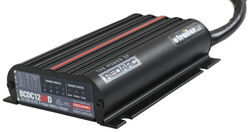
I recommend the Redarc In-Vehicle BCDC Battery Charger # 331-BCDC1250D, the main reason for this is controlled current draw. By using a BCDC, this charge current will be regulated to a specific amount. The current draw from the starting battery would be limited to 55-58amps.
The BCDC should be mounted no further than 5 feet from the batteries it is charging. This ensure the output voltage is not effected by voltage drop.
Some other steps to consider include changing your battery setup to have only one cranking battery and one auxilliary battery with the BCDC in between. The BCDC will charge the auxilliary battery and not allow the auxilliary battery to drain the starting/cranking battery because it's acting as a battery isolator.
To really provide power for 5 days and more of dry camping, a 100 watt solar panel to keep the battery charged or start and run your vehicle for a time every day until the BCDC charges the auxilliary battery would be a good practice.
Finally another auxilliary battery or going with more solar panels maybe in order to cover the power draw of that refrigerator.
Included is a video resource with more information.


Product Page this Question was Asked From
Redarc In-Vehicle BCDC Battery Charger - Dual Input - DC to DC - 12V/24V - 50 Amp

- Battery Charger
- Battery Charger
- RV/Camper
- Trailer
- 12V
- Charges and Maintains
- AGM
- Calcium
- Gel
- Lead Acid
- Lithium
- Solar Panels to Auxiliary Battery
- Vehicle Battery to Auxiliary Battery
- Smart Charge
- Trickle Charge
- Redarc
more information >
Featured Help Information
Instructions
Miscellaneous Media

Continue Researching
- Q&A: Recommended Soft Start for a Furrion AC Unit
- Q&A: Will Timbren Severe Duty Kit Fit 2022 Ford F-350 with Camper Package
- Q&A: Charging Lithium House Battery with DC to DC Battery Charger
- Q&A: Does Timbren Severe Duty Kit Fit 2024 Ford F-350 Tremor
- Q&A: Which Inverter Charger Should I Use For My Keystone Montana RV?
- Article: 4-Step Guide to Installing RV Solar Power
- Q&A: Recommended Plug And Play Replacement For A Dometic RV Rooftop Air Conditioner Unit
- Q&A: Best Way To Charge A Lithium Battery With A 7-Pin Trailer Plug On A 2021 Ram 2500
- Article: Towing a Trailer? Let's Talk About Brake Controllers
- Article: How to Charge a Dump Trailer Battery
- Article: 30-Amp and 50-Amp RV Service: What's the Difference?
- Article: How Much Solar Power Do I Need For My RV?
- Article: Best Vehicles to Flat Tow Behind an RV
- Article: How to Charge a Trailer Battery While Driving: 3 Common Problems (And How to Fix Them)