


Setting Up Weight Distribution Hitch on 2015 Yukon XL SLT with Air Shocks
Updated 06/08/2016 | Published 06/07/2016
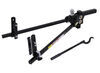
Products Featured in This Question
Question:
I have a 2015 Yukon XL SLT with Max Towing Package, I have a 2015 Aspen Trail 2810BHS trailer. I purchased a 1000lb weight distribution hitch and had it installed by my trailer dealer where I purchased the hitch. He did the standard process, level trailer, measure height to top of the trailer and added two inches, then went and set the hitch to that height on the vehicle. He was unaware of what to do with the air shocks though, and I noticed the compressor was going on and off all the time and allowing the vehicle to sag and recover in the rear end. I called both the GMC dealer and the trailer outfit and neither seems to know what they are talking about I even called GMC direct and they said to talk to the trailer people. The owners manual says in one discrete spot once you get rerouted from one section to another to another... if a weight distributing hitch is being used, it is recommended to allow the shocks to inflate, thereby leveling the vehicle prior to adjusting the hitch. I saw your post on the Yukon regarding putting a slight load in it to set off the airshocks, then hooking up the trailer, and perhaps I am just not getting it, but I am not sure how that would work. Where do you set the height of the ball to begin with? Do you put the full load of the trailer and let the air shocks level and then find some way to adjust the ball height? Whatever you can tell me would be appreciated, I am getting the run around from my local folks. Mine looks just like the E2 hitch although I could swear mine said EZ Hitch. Much appreciate,
asked by: Dave B
Expert Reply:
Different manufacturers sometimes have different philosophies about the set-up process of a weight distribution system on a vehicle with factory air shocks. I can share with you the process we have found to work well for us when setting up a weight distribution system in this situation.
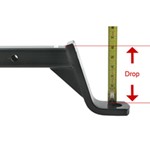
First, with the vehicle and trailer level, take the measurements of the vehicle hitch receiver height and the trailer coupler height. You will want to take these measurements while the vehicle and trailer are both on level ground and not hitched to each other. The hitch receiver height is measured from the ground to the top of the hitch receiver. The coupler height is measured from the ground to the bottom of the trailer coupler. I have attached a help article on finding the correct ball mount, which will further explain these measurements for you.
You will want to use these measurements to do the initial set-up of the weight distribution system's rise/drop. The difference between the vehicle's hitch receiver height and the trailer's coupler height will let you know at what rise or drop the hitch system needs to be set.
Then, you can install the weight distribution system in the vehicle's hitch receiver and hitch the trailer to your Yukon XL. Don't yet install the weight distribution system's spring bar arms, only hitch the trailer to the vehicle.
Next, let the air shocks on your Yukon level the vehicle as they are designed.
Once the air shocks have done their job to level the vehicle, then install the spring bar arms of the weight distribution system. This will distribute the trailer's tongue weight as this system is designed. Depending on how much weight is shifted when the spring bar arms are installed, it is possible that the shocks will adjust again. As your Yukon XL owner's manual stated, now that the vehicle's air shocks have had time to level the vehicle with the trailer hitched, you can make any fine tune adjustments necessary to the system.
Keep in mind, a weight distribution system should be chosen based on the trailer's loaded and ready to tow tongue weight. If you find your trailer's loaded and ready to tow tongue weight, plus the weight of any cargo carried behind the rear axle of the Yukon XL to be more than the 1,000 pound tongue weight rating of your existing system, a larger system will be needed to be effective.
I am a fan of the Equal-I-zer Weight Distribution and Sway Control systems, and they offer a system with a 1,200 pound tongue weight capacity # EQ37120ET that will work well for you if you need to step up your system.
I have attached a help article on frequently asked questions regarding weight distribution for you. I have also linked all of the weight distribution systems we offer.


Featured Help Information
Miscellaneous Media

Continue Researching
- Search Results: hitch cargo carrier
- Search Results: weight distribution hitch
- Search Results: scissors jack
- Search Results: scissor jacks camper jacks
- Video: Review of Utopia RV Faucets - Bathroom Faucet - UT55RR
- Search Results: jack drill adapter
- Q&A: Can ST225/75R15 Tires Replace Westlake ST235/75R15 Tires On Camper?
- Shop: PopStep for MORryde StepAbove - 3 Step - 19-1/2" Treads
- Search Results: grease gun
- Search Results: dust caps
- Shop: Terran Industries 2" Trailer Hub Lube Style Dust Cap for 2K to 4.4K Axles - Qty 1
- Shop: Utopia RV Bathroom Faucet - Single Handle - Black - 1.2 GPM - Compact Vanity Fit
- Shop: Utopia RV Vessel Sink Faucet - Single Handle - Matte Black
- Shop: Lippert Heavy Duty Rubber Wheel Chock for RVs and Trailers
- Shop: Stromberg Carlson 60x23 Hitch Cargo Carrier for 2" Hitches - 500 lbs Capacity - Matte Black
- Shop: Goodyear Endurance ST225/75R15 Radial Tire w/ 15" Eagle Aluminum Wheel - 6 on 5-1/2 - LR E
- Video: Breaking Down the LubriMatic Mini Grease Gun Kit with Multi-Purpose Grease
- Video: All About the LubriMatic Standard-Duty, Lever Action Grease Gun
- Q&A: Street Tire Recommendation to Replace ST235/75R15 that is Quieter
- Q&A: Black Exterior Range Vent For Greystone 22" Range Vent
- Q&A: Does Brophy Rigid Mount Spare Tire Mount Have a Weight Rating
- Q&A: Can Curt Multi-Purpose Ball Mount be Used for Extra Height for Cargo Carrier on 2008 Honda Odyssey
- Q&A: Best Cargo Basket And Hitch Extender For 2019 Jeep Wrangler Unlimited
- Q&A: Can Lets Go Aero Hitch Cargo Carrier be Used in RV Hitch