
 Product Experts Available Now!
Call 1-800-940-8924


Thank you! Your comment has been submitted successfully. You should be able to view your question/comment here within a few days.
Error submitting comment. Please try again momentarily.


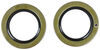
Keeping dirt and debris out of your hub is an easy way to help protect bearings and grease. This dust cap kit provides a secure fit and corrosion-resistant construction to help maintain reliable hub performance.
Videos are provided as a guide only. Refer to manufacturer installation instructions and specs for complete information.
Hi everyone. Steven here with etrailer. Today we're taking a look at some Lippert Standard Dust Caps. Folks, these are going to measure 2.45 inch, so make sure that you are matching those up with the same size you're replacing with. And as you know, the dust cap cover here covers the hub opening, helps protect the bearings, grease and inner hub from contaminants. These are built for traditionally between 5,200 to 6,000 pound axles.
And again, it's a 2.45 diameter that this fits. So this is going to make sure, again, make sure that this fits and matches up with what you're replacing it with. I recommend if you don't already have one, a dust cap driver tool sold separately, item number 290-992. And that basically goes over the top of this, has a long metal bar, and you can tap that and safely put this in all at once. So again, folks, these are a drive-in fitting.
The zinc plating helps keep that steel from corroding over time. And that's going to wrap up our look at this. You're going to get quantity two. Again, Lippert Standard Dust Caps, 2.45 inch. Thanks for watching.
.
Customer Satisfaction Score:
83% were satisfied with this product
17% of customers were not satisfied
Ratings & Reviews

Info for this part was:
At etrailer we provide the best information available about the products we sell. We take the quality of our information seriously so that you can get the right part the first time. Let us know if anything is missing or if you have any questions.





















Mike L.
10/29/2026
Using a dead blow hammer or a mallet works best. Focus on the edges, and aim your strikes to drive that cap toward you, if possible. The good news is that you're replacing the existing cap, so there's no need to be terribly gentle when removing it.