


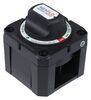
When battery posts get crowded with ring terminals and inline fuses, this 1,000 amp DC busbar gives you one fused distribution point for up to four circuits. Front-facing LED fuse indicators show what's blown, so troubleshooting stays visible.
Battery terminals get crowded fast once you start stacking multiple ring lugs, inline fuses, and accessory leads. This unit replaces that cluster with a single 1,000 amp DC busbar that routes power through one organized distribution point. By moving connections off the battery posts and into a dedicated enclosure, wiring becomes structured and easier to manage when adding or isolating circuits.
Inline fuse holders scattered across cables make troubleshooting and layout messy. This busbar supports up to 4 DC fuses directly within the unit, consolidating circuit protection into one location. With protection built into the distribution block, you can manage multiple circuits without chasing fuse holders across different cable runs.
Finding a blown fuse usually means pulling covers or testing each circuit. This unit uses front-facing LED indicators tied to each fuse position, so you can check fuse condition at a glance. It cuts down on guesswork when something stops working and keeps troubleshooting contained to a single access point.
As systems grow, adding new loads or power sources often forces a wiring redo. This busbar connects into the Lynx modular distribution system, creating a structured layout where components align and expand without reworking the entire setup. It keeps future upgrades contained within the same distribution architecture instead of pushing more cables back onto the battery.
Mixed setups across 12V, 24V, and 48V systems can limit where a distribution component fits. This unit operates from 9VDC to 60VDC, covering common system voltages without requiring separate hardware for each configuration. It stays consistent across different builds, so you are not swapping distribution components when system voltage changes.

Videos are provided as a guide only. Refer to manufacturer installation instructions and specs for complete information.
Hey there, neighbors. Kevin here with etrailer. And today, we're gonna be taking a look at and showing you how to install the Lynx distributor from Victron Energy in conjunction with a bunch of other components. But we'll be mostly breaking down the distributor for you today. So our Lynx Shunt is gonna be the first thing that's coming off of our battery and this is going to be relaying all of the info about any kind of current that's going to or from our battery. And it's also gonna give us our state of charge and communicate with our GX device, which is either gonna be that Cerbo or maybe the Ekrano depending on your setup.
Now these are gonna come in two different options here. You can see right in the front of this one says M10 and that's gonna be the stud size for our busbars here. So we went with M10 for our current setup. Now this busbar essentially we've got our power coming in from our batteries, we have our negative coming in as well. And that's just riding down these large busbars, which are rated for 1000 amps.
As you can see, pretty simple for the shunt installation, but you are gonna need some kind of distribution. So next to that we have our distributor. You could also potentially use a additional distributor or the Lynx power in as well. And what this is doing is just sending all of our power from the battery over to our MultiPlus system. So you can see all these cables right here.
And then this also has our solar coming in. You can see just down over to the right. And what that is doing is allowing our solar to come into our system, communicate with our Cerbo, or our GX device I should say, and then properly charge your batteries based on the state of charge. You can see that on the distributor it has mega fuses, which isn't something you're typically gonna see in most cases. This is a little bit more heavy duty.
So those will be something you'll have to pick up separately. Those are not currently offered here, but hopefully will be in the near future. Going from our shunt over to our distributor is that physical connection with the busbar, but then it also has a little communication wire that we're gonna pop in there as well. So that way the two can properly communicate and tell us exactly what's going on with our flow of current. And the distributor has gonna have four ports for you to use with your power side or hot legs essentially being on the top. And then just down below on the lower busbar is going to be all of our neutrals. So what you'll need to do is just pop this little tab off of the little connector here. You can either lift it up or you can simply pop it off as well and it'll pop right back on. But you'll get all your neutral wires tied in down below, put your cover back over it to kind of separate it from the power and then put your power on here along with your specific mega fuse that you need based on whatever kind of amperage rating you're gonna work with. From there, like I said, all that is gonna travel over to our MultiPlus and then be also powered over to our GX device. So you can monitor all of your current going in and out. Now both the Lynx Shunt and distributor are gonna have just four bolts screwing them in to whatever you are mounting it up to. And then from there, you're gonna have two screws for your covers. Once those covers are on, you can see they have an indicator light to give you different readings or information. Obviously the shunt is just the power on and off and then the distributor is gonna have power whether or not that's on. And then also it's gonna tell you for your loads if those are running. Right now we don't have anything on, we don't have anything running, so we aren't seeing any lights come up on our distributor. Now installation of this requires a lot of other components, like you can see we have the MultiPlus system. We also have our Ekrano GX device in the interior of our trailer. So this can be an easy install if you have everything kind of in one small compartment, but maybe you're having to kind of trace through walls, pull walls out, run new wire, get over to your power center and then also get it over to where you wanna mount up the GX device. And that can sometimes turn into a much, much harder install depending on how your trailer's set up and if you have access into all of these different areas. So if this is something where you just feel like it is way over your head and you don't wanna put in all that effort just to confuse yourself while you're going through the pro installing, you wanna make sure it's done right. Then you can definitely feel free to use our dealer locator and enter in your zip code to find a shop near you and get it professionally installed. If you are wanting to do this yourself, then stick around and I'll help show you how we did it. So to start off our install, I had to do a little bit of the work beforehand just so I can kind of have stuff ready and figured out because this is a new product for us. We've done a lot of Go Power stuff and that is exactly what our neighbor had before. We had a full Go Power IC 3000 inverter charger system all in here. So I had to remove all of that stuff first, removed his solar charge controller, which is in our passthrough right behind here. And then I've kind of gone through and figured out what cable is what. So that way we can start to kind of reuse some of that because this is a lot of heavy gauge wire that we're gonna be using today. So starting out, I've already mounted up our distributor and our shunt just because it's a little bit harder to sit there and show you guys with it, but there's gonna be four screws on each one of these. So once you pop off the two screws that hold on the cover, I'll start out with the shunt because this is where we're gonna run from our batteries. So both batteries are gonna be paralleled together and then we're gonna come through these holes that I drilled through to passthrough those wires. And then these are gonna go on the left side of our shunt. So one of the big important things is you always want the energy traveling from left to right across these busbars. And the importance of our shunt is to track all of that movement so we know what's going in to our batteries and what's coming back out of 'em. So that way we can really fine tune how many panels we need so that way we can really enjoy ourselves if we're out boondocking. Now following that, you can see here these giant lugs. Now I've just loosely put 'em on right now, but that's the cool thing about this system is you can easily just tie in a distributor. There's also a power in which looks pretty similar to the distributor, but would essentially want to mount up on that left side there. Now we don't have as much that we're wiring into this system, so we just stuck with just the shunt and the distributor because we're gonna have two of these run over to our MultiPlus system, which is the inverter charger for it. And we'll have two power legs because this is a 50-amp system. And then we'll have just down below, we'll have our negative running out as well, which I'll show you in just a bit. But kind of getting back to mounting. So if you look, there's some small holes, like I said, four of them per device here. And I just ran some bolts through and threw some nuts on the backside to help hold that up just 'cause this is a little bit of a wobbly metal here. It's stiff enough for our purposes, but just wanna make sure it was nice and secure. On the other side of that wall we have our batteries, which is gonna be our important factor here because we need to figure out what our output is for our batteries. So if I look at the top of this battery right here, it says it has a max output of 200 amps. So we need to make sure that our cable is sized properly enough to actually handle that amount of current. Now I've also done all of my cables the same length. That's a very important thing here. So my parallel cables, which are four amp in this case just 'cause of how much battery we have are both the same length. So that way we can hook those up together to our batteries, have them paralleled. And then coming off of that, I've got some longer cables which are, once again, both the same length. And what we're gonna do is we're gonna pull the negative from one side. So down below because of how the busbars are ran on our shunt, the bottom side is our ground or negative. And then the top is gonna be that hot leg. So I'm gonna pull from the negative on my bottom battery because you don't wanna pull from positive and negative on one battery and not the other. So we'll have negative down here running out to our shunt and positive up here running to our shunt. so that way, we're getting it pulled from both ends of the battery. 'Cause once we parallel these, these are essentially one battery. Now from there, we also have our inverter, which I said the MultiPlus-II. And you can see I've already put up the bracket. So first thing you wanna do is figure out your spacing with this. All of your cables are gonna come down through the bottom, so you want to have this up pretty high. So that way, you have enough room for all that to get in there and a little bit of extra space to kind of work with. Now, I stuck this bracket on here. It's super important that you double-check what material you're tying into and if there's anything behind it. So once we get to our passthrough, you can kind of see all those screws I have poking through. I'm gonna end up having to cut the tips off there and kind of cap 'em off. But literally like two inches over is our water purification system here. So all of the filters are on the wall right there. So if I had to drill into that, I'd have been drilling right into the filters. So it's super important. Go check exactly what you got behind the wall before you start drilling through it. Now once you get that bracket up, there's gonna be four more screws that are gonna go into that MultiPlus. So you want to hang it up first. Once on the backside, we'll match up with that bracket. Once that's in, you can then take whatever kind of hardware you need depending on the material you're screwing into and shoot those screws here. Now, there's gonna be one in each corner if you look. (tool whirring) Put back in. (tool whirring) And then, we can put our faceplate back on, which is gonna have four screws starting up at the top, working its way all the way down. After that, it's also gonna have a bottom plate, but we're gonna leave that off right now because we still have to make all of our wiring connections. But this is also, you can see our On/Off button right here. Or if you wanted to set it to just a charger only and not use the inverter, maybe you're the person where you're not really boondocking too often and you mostly are just gonna use it to recharge your batteries when you are at a campsite. Now one other thing I did wanna state is that when you are pulling the panel off for your MultiPlus-II, there's this board right here, which it has a bunch of LEDs so that it can tell you what's going on with the system. Now, if you look on the other side, it's gonna have to connect into this blue port right here. So when you're pulling this off, be super careful you don't yank on that 'cause this is pretty thin wire. You wouldn't want to end up damaging it, and then not having the circuit board here function properly to display what's going on with the system. So I just popped it off. It is just a push-in connector. There's no little clip or anything you need to squeeze on. So just easily just pop that right off. You can pull the panel off and be all good. But in my case, I'm not gonna need this open anymore. So I'm gonna pop that back in and we can start screwing our panel back into place. So my first step here is going to be, aside from the mounting process, is gonna be just getting our batteries in parallel. So I'm gonna get my first cable on here. And like I said, we also have our cables that are gonna run over to the shunt. So let get my singles ready first. That one up here. That one there. And I'm gonna throw my cable in going towards our shunt. There, better. I'm also gonna kind of have to bend these in a bit more too. But we can get these tightened down first, and then start doing that just so when we close our little compartment door here, it's not gonna fight us. And same thing up top. Like I said before too, make sure you're pulling your positive and you're negative from different batteries if you are tying multiple together. If you are doing more than two, obviously you'd want go from the first battery in that line up to the last battery in the line up. Swing these down. You get that battery on a little bit tighter as well. For this one, I might push a little bit more in. So before we hook up power and ground, we're gonna wanna put on a fuse. Or in our case, we're just gonna be using the busbar that was included with the shunt. So essentially, what you're wanting is 1000 amp or maybe a little bit under CNN-style fuse. And that's gonna run between the two posts here and complete that circuit essentially so that everything's communicating properly. All right, now I've got my battery connections made here. I've got my negative down below. You can see the little LEDs on just saying that we're connected to power now, positive too. And then, also ran over my solar cables. So those we inchesre already ran before to the previous system that was in here and it was real easy just dropping back over. So I'm gonna do those first. And then, we will start making our connections to the MultiPlus. But I just wanted to give you an example. So we'll start with the negative. And when you're looking at this, there is a little tab. I've busted them off of the first three just 'cause we are gonna be using those. This tab on here, literally just kind of wiggle it back and forth, it'll fall off on you. And then, you can use this as your divider. But I tourqed this little nut off below. It should have a washer and a split lock washer too. We'll get those off where we can make our connection. We'll drop down this little black cover and we can put on our positive as well. I am gonna try to kind of bend the wires to make 'em conform to how I'm mounting this up to. And then any excess, I'm just gonna kind of pull back into the walls so we can hide it and not have it really eaten into the storage space. I'm gonna just pop that off right now so I can see what I'm doing here. And then we're gonna tort this to the specs that they list in our instructions. (tools creaking) All right, that's torqued. Pop my little cover back on. And then same thing with our positive. Next I'm gonna tie into the MultiPlus. So once again we're popping off the nuts, washers and split lock washers on these posts. And you'll see one of 'em is red. So this is gonna be our two hot legs and these will be our two negative legs here on the right side. It's a little hard to get that to pop off. There we go. We'll get our first one on. Let me get my second one now too. And we'll tourqed those down as well. I might need to have a larger extension here, but we'll see. (tools creaking) As you're tightening these down, I would also keep a hand onto the cable itself so it doesn't try and turn with it as you're tightening it. All right, now we're gonna get those negative cables lined up on the bottom like I was talking about previously. Washer, split lock washer, nuts. And these are gonna get torque down as well. Now the torque settings should be listed in the specific manuals for each one of these components. There's not a overarching manual at least that I have found yet, but we are gonna try to get to a point where it's a little bit easier to understand all this so that way you at home can also do it yourself. That one's there. (metal clanking) That one's there. Now it's time for our power wires. Same deal. Going up onto these two hot leg posts and then back over to our distributor. All right, I'm gonna get both of them put on here first. We are fighting that plastic over there. To pull a little bit more in, you get this past that and we can pull it back. All right, now on a distributor side, same thing, flat washer, split lock washer and then our nut. And then we will, once again, torque it down. All right, that one's tight and I did that so that I can kind of have all that cable pushed up out of the way. I'll probably zip tie it or electrical tape it or something to kind of tighten that up even more so that way we get a little bit more room here, 'cause previously we had our whole Go Power system right here taking up a half of our storage space. So not really convenient for our neighbor. All right, our next thing we're gonna work on is our AC, so our 120 volt service in and out. And then also we need to add a ground to this. Now if you look in the instructions, they're gonna tell you that they typically want you to use the same gauge wire as what your main DC cables are, which in our case is 4/0. They do say that you can work down from that. You can go down one size. So we're gonna go with 2/0 instead 'cause that's a lot easier to work with and is gonna cover our bases here. So I've already popped off the little grommet that they have and I'll pop another one out so I can show you. But they have these different levels to 'em so that way you can cut it exactly to the right fit. So you can see each one of these gets wider and wider and wider. So what I've done with this is just snip off what I felt was the right size, which ended up being right. I'm gonna pop that through and then we're just gonna run this straight to the frame right here. So that way we have a nice chassis ground for our system. Now with the AC 120 service coming in and out, we have different terminal blocks we need to go to. So right here is AC-IN, AC-OUT one, AC-OUT two. We're not gonna be using two today. And if you we inchesre using two, you would need to do some programming in order to get that to function properly. In our case, we are gonna be just sticking with these two blocks here. This is my in, this is my out. And if you look at it real closely, it's got L1, which is gonna be line one, that's one of our hot leads; PE, which is gonna be a ground; L2, which is hot two; and then we have a N for neutral. So when we look back at our wires here, I don't know what is going to be a hot leg and what isn't gonna be a hot leg. So we're gonna wanna look at the panel. Now there's another thing also with this being stranded wire. We want to have a solid wire to put in here. So unfortunately I don't have the ferrules that they recommend. And if you are looking for ferrules, it's F-E-R-R-U-L-E for that. And then you're just gonna wanna get the right gauge. That's something we're gonna pick up here and have available for you. But at this time, I just currently don't have it. So what I've done is I've just dipped these in some solder so that way we can get these all kind of tied together and have one solid strand kind of going in there instead of having a bunch of 'em where it could kind of maybe slip if there's a lot of vibration in the trailer. So let's go over, we're gonna look at our power center and we're gonna see what is our hot legs. I'm gonna assume it's gonna be red and black, white being our neutral and copper being our ground. But it's never safe to just assume, so you should always verify. Now with the cover off of our panel, you can look for the 50-amp breaker. Since we have 50-amp service, there's gonna be two power legs, which you can see down here is our red and our black like I assumed. And then we have our neutral coming into the neutral bar and our copper wire going into our ground bar. So now that we've verified it, we can go back over there and get our cables put into the correct inputs. Now I'm gonna pop these into place. And one of the things you're gonna need to do is just take a small screwdriver right above the circle port that our wiring is gonna go into. There's a little square one and that is gonna be the release for the teeth that are into this, which doesn't wanna cooperate too much. There we go. So that's gonna unlock those teeth so that we can get this in a little bit easier. Now the first one is neutral. So take my white wire here and put this heavy gauge. It's not really wanting to cooperate. I'm gonna bend these down, getting out of my way. All right, with that released, we can then push our wiring up into there. And you'll notice right behind where I'm working, there's a little sign that tells you how much they want the sheathing pulled off in the ferrules. So they want .7 inches taken off of the casing to go into here in a full inch honestly is what I did. Just to kind of pull it all the way in there without having to fight the casing. We'll get that in there nice and tight, pop out my screwdriver and then we're gonna tug on that. And if you see just like that, it didn't fully bite on there. So that's exactly what you wanna do. Pull on it, make sure that isn't coming back out. There we go. A little bit better. Get one more tug. It's not coming out. So teeth actually bit into it now and we're just gonna keep doing this. Next one's gonna be line two, so I can use this red one here. Okay, wiggle that in a little bit better. Flat out, let's see if this bit. Yeah, we're good. It's not coming down. Next one is PE, which is our ground. Should be a lot easier since it's a much smaller gauge. Not getting there. There we go. All right, it's in there. Finally, we have our other hotline. All right, so once you get that how you want it, you can then tighten up that strain relief. I also need to pop my grommet back in because that has popped out. And then we're just gonna repeat this same process over here with the out. Just make sure that you're going to the correct terminal block. 'Cause like I said, this back one right here is gonna be terminal one. This other one out here is gonna be number two. And we don't wanna use number two in our specific setup today. All right, I got my AC in and out wired all up here. So like I said, back to the ground here, right on that post. And this is gonna have a star washer, a flat washer, and a lock washer and a nut. Also have this grommet. And then, I'm just gonna shoot a self-tapper right into the framework here. (tool whirring) All right, now just a little bit of a recap. So we have our batteries paralleled together. We have our cables running from the batteries over to our shunt. The shunt is hooked up to our distributor. And from the distributor, we have our wiring going out towards our solar panels, which is going into our passthrough for the solar charge controller, which is gonna be the next thing that we touch. And we also have our hot and negative legs running into our inverter as well as our 120-volt service in and out and a ground added into our MultiPlus-II. So at this point, we're gonna walk away from all of this. We're gonna get into that passthrough and get started with our solar charge controller, which luckily all the wiring's already ran for us. So this is gonna be a really quick portion. Just popping in our wiring coming from the solar panels down to that solar charge controller. All right, now I have this mounted up, just with two screws just to start with. I'm gonna obviously have to come back and add a little bit more, but the mounting pattern's pretty easy. There's just a slot up top here that you can hang it from. And then at the bottom here, you can see I've already got a hole drilled through but I just didn't have the right hardware yet. I'm gonna run that through down there as well and fully lock this into place. But I kind of just wanted to go over the wiring. So if you look at the top here, this has a maximum of 150 volts or 85 amps. Now we have a smaller panel system here, so we're still using some 10-gauge wire. And with the way that we wired it, whether you wire it in series or in parallel, that's gonna kind of change what gauge wire you need to use for this. And that's also gonna kind of change what ground wire you're gonna need because you wanna match the same gauge as the wire that you have here. So we have 8-gauge wire running down from our panels. And we have these two are coming from the panels. These two are coming from our battery. So I ran some tape over 'em just to not have them touch it all. There shouldn't be any power coming from our solar panels 'cause we're inside. We're not getting any UV. But we, oh, don't wanna take the risk. Once we get these off, you'll see there are Phillips head screws in this portion of it right here and it's also labeled positive and negative with the positives being towards the outside. Now, PV is gonna be coming from our panels so it's panel voltage. And then, obviously battery's gonna run your battery. So what I wanna do is just simply push that up in there. And then, we are gonna tighten this up until it is nice and snug. All right, each one of these, give 'em a nice tug, make sure they're not gonna come loose. And then our next step, like I said, is gonna be that ground. Now second problem I have here is I don't have any steel. I've got all aluminum right here, so I'm gonna have to trace this up. So if we look over on this side past the aluminum, we have that same steel that I drilled into for the ground on the other side. So I'm gonna bring that over, lay a ring terminal over here and just shoot a self-tapper right into it. That way, it's running into that steel so it tied into our frame 'cause aluminum's not gonna be a good conductor for us so we can't use that as our ground. All right, now I've got one side of my ground wire hooked up to our solar charge control. The other side, I'm just putting right into the steel like I was talking about. (tool whirring) And then, for the excess here, I'm just gonna stick some loom clamps on this and have that hold the wire up. So that way, it's not interfering with our storage. So the last thing we did was hook up the wiring for our solar charge controller. Now, I'm inside the camper. I had a decent discussion with our neighbor just trying to figure out the best place to actually mount up the Ekrano, which is going to be essentially our control panel here and that's gonna have all of our information allow us to change our settings, do a whole bunch of different things with our system here. Now, you're gonna have to find a spot that is gonna be suitable. On our wall over here, there just wasn't enough room without having it in an awkward spot. It either have to be really low or it'd have to be over on the side, which then has us kind of stepping on the steps to see it. Not a big fan of that. You shouldn't have to kind of lean over to see it or anything like that. So this space right here ended up just being perfect for us because this drops right down into our passthrough area where all of the wiring and black tank, everything all kind of is hidden in there. And then, it just passes right on through over to where we have the rest of our equipment. So I had just enough length to make it over with the VE.Direct cable which is gonna go over to our solar charge controller. And then, we have two RJ45 cables. One is gonna go to our smart shunt or the Lynx Shunt I should say. And then, the other one's gonna go to our inverter. Now, I've marked them out here and I just stuck them in. So that way, I wouldn't end up pulling too much cable to where it would pop out. But we can go over actually mounting that up into the correct ports once we are ready for that. But as far as cutting a hole out, there's a couple different ways to mount it. I'm gonna go with the springs. So I've seen these a lot with like LED lights for ceiling mounts. Usually, you can have that and just kind of grips onto like drywall. Same thing or same concept at least with this. Once I get this in, I'll have to kind of bend these back, pop the Ekrano in there. And then, it'll grip onto the backside of our wall here. Now really take into account, you might have studs or something else that's in the way, especially before you start drilling some holes. So I did quite a bit of investigating from the inside of the wall on the other side here just before I ended up doing anything and found out that that was going to be a good spot for it with enough clearance. They also give you a little flush mount cutout dimension in the instruction. So that way, you can use that and kind of guide your way to cutting out that hole. Now, the other thing for the Ekrano is also gonna be a power wire. I'm gonna be snipping off these ends 'cause this is not gonna be enough to make it all the way to the battery. And I'm actually not gonna go to the battery because just down on the floor over here on the other side of our wall is our power center, and we have plenty of fuse ports that are still open. So I'm just gonna run it down to one of those fuse ports and we're gonna pop in a 5-amp fuse. So coming in, like I said, right through our wall here, you can see I got that VE.Direct cable. That's this guy right here and that's gonna plug right into the bottom of our solar charge controller. I'm gonna have to pull a little bit more out and we wanna make sure that we are turning it the correct way 'cause this is side-specific. You'll see there's two little nubs on the bottom here and those look like they're gonna face outwards. So now if that's in there, I'm gonna tuck this wiring in a little bit better. You can see I stuck a bunch of zip tie holders up on the stud here and I've got all my wiring kind of draped through. I'm gonna zip-tie that all real nice and tight and put in some wire loom too. But I got another hole and that is passing right in, coming up by our inverter. So same thing, I stuck some zip tie clamps up top there and I got one on the side. I'm gonna have these kind of come down in the corner. So that way, we've got a little bit more room for our storage space and I labeled my cables before I ran them through. So that way, I know which one is which, make it a lot easier to figure out where we need to put it in the Ekrano. But one of these is gonna come right over here to our shunt. And you can see, I've already got the terminating resistor in there. So if we had multiple components that we we inchesre gonna daisy chain together, we would leave that out. And then, we can add on another connector to that. I got it backwards, yep. But since we're not doing that, we're not adding another distributor or the Lynx power in. We can just skip that. I've already got a cable, data cable running between the two. So you'll see it says input, it's the Lynx bus input right here and we've got an input right over here on our shunt. So once you connect these two, the cases are still gonna fit over it. You might have to kind of finagle it just a little bit to get them to kind of sit in there nice and neat, but this isn't too difficult to get set perfect. Once that's all kind of tucked in there, like I said, we just also have those other ones running out to the Ekrano. But let's get the inverter one in. So this is just gonna come down. I'm gonna use this larger opening towards the right. Pop that in there, and I already put in that other terminating resistor. So this essentially just tells it: Hey, this is the end of the line. There's no other things that are being daisy chained to it. So we don't need to look for anything else. All right, now that's in there, we should be getting a data over to our Ekrano. But before we do anything else, we do need to also put in some fuses. I've left that off for just until the end here and we can actually start popping these out. So this is gonna be on the busbar for both of those battery legs that we had. And then, I'm also gonna need one for my solar. So these are gonna be mega fuses. This is something you can get from as well or your local auto parts store. You just wanna make sure that you have the appropriately sized one for your specific needs though. Now with that power log removed, we can pop on our fuse. And we've got a flat washer, split lock washer, and a nut for each side here. And then, we're also gonna torque it back to the specifications listed in the instructions. And then, we'll just repeat this again for the other power leg and our solar charge controller. All right, we're finally at a point where we can put our cover back on, which is just gonna screw in. And you can see, there's all these, like, little clear posts that are matching up on the backside here to show you that like LED. As you can see, we got power. Next, we'll pop on our distributor cover. And once again, that's just two screws. Now for the MultiPlus, I've already put the bigger panel back up but we need to get the bar little one at the bottom here in too. And it should have like a little groove here at the bottom to pop into, which I am apparently hitting. All right, once you get that lined up, there should be two screws left to pop in. And I'm gonna leave the inverter in the Off position, which it is. And you can see, it's got a little diagram. So if you push that button towards the back of the unit, it's gonna have it on On. Sitting in the middle is Off. And then, if you pull it towards yourself, that's gonna be charging only. So say you're hooked at shore power, you just wanna charge your battery up but you don't need to actually use anything, you can just have it on Charge. Now, there is one other thing that we want to add onto our Lynx Shunt and that is the temperature probe. So you're gonna see this, it's got two wires running up to a ring terminal. The other end of it is going to have a little green connector that's gonna match up with the connector that's right on this panel right here. It's only gonna go in one way. So pretty easy to spot. And then, I already ran it through the little grommet that they have for the casing. So kinda help keep it where we want it to be. And we're just gonna run this back up over to our battery. And then, we can add that to our positive terminal. (tools creaking) All right, I wanted to come back to the Ekrano and start talking about the back of it here. So we've got a bunch of different wires. This first one right here is a VE.Direct wire. This is the black one. This is a specialty style cable which is gonna run over to our solar charge controller and that's gonna go into VE.Direct 1. Obviously if you had multiple charge controllers, you could pop 'em into those other VE.Direct ports or you can also daisy chain those together. There's a way to do that as well. And then, have those all run back to the Ekrano. Now over here, we have VE.Can and we also have VE.Bus. So there's two of the cans, one of the bus, and we're gonna be putting our smart shunt or Lynx Shunt into the can. For the bus, that's where we're gonna be putting our MultiPlus-II. So our charger inverter is gonna run into the bus system. Now, down below, I've also got my power in. So you got your positive on the right, negative on the left. And like I was saying before, I did have to extend the wire just a bit and I ran it down to our power center. So that way, it tied right into the DC distribution panel and I just threw in a 5-amp fuse. Now, this does have a 3.15-amp fuse, I wanna say, or 3.5 glass fuse in line with the power wire. That's something that if he ever has an issue, he needs to check that first fuse that's in the DC distribution panel. And then, come over and check the in-line fuse as well if there was a big issue. Now, to complete the connection, we're gonna add in these terminating resistors just like we did over at the MultiPlus and at the shunt. And that's essentially just gonna end the line here. So it isn't looking for another component, it knows that this is the end of our communication. So now, at this point, what I'm trying to do is get the battery stuff all kind of set up for our neighbor. But there's a lot of other info that we need to kind of go through. So one of the first things they did was set our charge. So, over General. Right, not General. Let me see here System setup, we are gonna be using grid power. Oh, didn't need to hit that. We also need to change that our grid is 50 amp 'cause this is gonna show up starting out at 30 amp. So let's go to Device list. So Device list is at the top. That's gonna give you each of your components that are connected together. So you can see right now, since we're inside, we're not getting any solar. So that's at zero watts. The lighting in here is throwing it off where it's getting like a couple of watts just randomly. Now, you can see our MultiPlus, we have that turned on too. So it's charging up the battery. And you can see right here with the shunt, it's telling us our battery's at 100% because I resynced it already just to test that out. But once this battery is actually fully charged 'cause it's not charged at 12.74. This is a lithium battery, it needs to get back up to 14. So we'll do that, oh. That up top, you can't really change, it's just there is a visual state of charge, you got 100%. 'Cause I changed that, we had our battery temperature, it's showing up in Celsius. I did not currently see a way to switch to Fahrenheit. So that is something you'll have to figure out. And then, down here at the Settings, I'm clicking on Battery bank and our capacity and our voltage. So with ours being a lithium battery, it's set to 14.6 for our charged voltage. So that's what it should be when it's fully charged. Capacity, it started out at 200 amp-hours but we have a 400 amp-hour battery set up. So I switched it up to that. The rest of this kinda left alone. I don't know exactly what our neighbor is wanting to do just yet. So I will kind of go through it with him. But there's a ton that you can do on here to really just kinda get every little thing checked. Let's go back. Nope, not that way. We can also go into our MultiPlus. So you can see it's charging only. You can actually manually change that as well. You have it just On, Inverter only, Charger only, or Off. We're gonna switch it to just On for right now. And then, this is what I was talking about. So when you see Grid current limit, you'll wanna click on that. We have a 50-amp service hookup, so I set it to 50 amps. So a DC voltage right there is showing us what it's putting out towards the battery. So it's putting out 14.4 volts, kind of varying just a little bit, which that might not be perfect. There could be some variances between the data that's getting sent to our Ekrano but close enough that we can kind of get a good idea there. So with that being said, I am gonna take a little bit, we're gonna let the battery charge up, and then I'm gonna reset it. I should have stayed in there too 'cause then I can go back down, show you guys that. Let me go to the shunt. All right, now to figure out, or to reset your battery so that you can get it to 100% there for the state of charge so that you actually can see it on there, you're gonna go to Battery. Or the Lynx Shunt settings, Battery bank. And then, you can scroll down. And that Press to sync right there, that's going to reset the battery to 100% or at least the charge on here. So if I go back to the main page. Nope, not that page. So like brief, you can see that or the overview will also show you that it gives you a little bit more of a diagram of what else is going on with your trailer. 'Cause you can see, we have our reverted charger. Here's the grid coming in, and then sending that power to our battery. Now, we can push back our little tabs here and pop this in. All right, get that set in. There we go. All right, now we can double-check. Make sure all our devices are still popping up. We didn't lose a cable. Solar, MultiPlus shunt, everything's on there so all our cables stayed plugged in. Should be good to go. Well, it's gonna do it for our look at and installation of the Victron Energy Lynx Distributor. If you still have some questions though, definitely feel free to reach out to us via our Ask The Experts link, a comment on this video, or a phone call to our customer service department and we'd be happy to help you out on your journey.
Ratings & Reviews

Info for this part was:
At etrailer we provide the best information available about the products we sell. We take the quality of our information seriously so that you can get the right part the first time.















Thank you! Your comment has been submitted successfully. You should be able to view your question/comment here within a few days.
Error submitting comment. Please try again momentarily.