


How to Prevent Trailer Sway on a 26 ft 2011 Starcraft Autumn Ridge Towed by a 2011 F-150 Ecoboost
Updated 07/09/2012 | Published 07/05/2012
Question:
I recently purchased a 2011 Starcraft Autumn Ridge - 26ft travel trailer and took it out on its maiden voyage. The trailer sways terribly even at low speeds and one of the service guys I brought it in as soon as I returned even said it was not handling well. There was quite a bit of wind, however, other vehicles trailers seemed to be whizzing by me with no problem. I reduced my speed to 50 mph even though the limit was 65 mph I have a 2011 Ford F-150 Ecoboost truck that is the tow vehicle. What do you suggest might be the cause of this severe wandering? The service guy said it seemed to want to wander even in a slow curve.
asked by: Karen B
Expert Reply:
Many times adjusting the way that the trailer is loaded can help minimize trailer sway. Try loading the trailer so that more weight is toward the front of the trailer, and see if this helps. Too much weight in the back of the trailer and a light tongue weight will cause the trailer to sway. You will also want to make sure that your trailer is as close to level as possible.
If your trailer is loaded properly and you are towing it level, then I would recommend is adding a weight distribution system and sway control if you do not already have them. A weight distribution system should be used any time the trailer weighs more than 50 percent of the vehicles weight and, after some research, your trailer could weigh more than your 2011 Ford F-150 Ecoboost when fully loaded.
If you are using sway control, keep in mind that 2 sway controls are recommended for any trailers that are 26 ft or longer and/or for trailers that weigh over 6,000 lbs. We offer many weight distribution systems that include sway controls for you to look at. I have attached a link to all of our weight distribution systems with sway control.
The best way to determine which weight distribution system is best for your set up is to know the tongue weight of your trailer when it is fully loaded and ready to tow. Once you have your tongue weight, you should choose a weight distribution system that has a tongue weight range that encompasses your trailers tongue weight.
I have attached two articles on weight distribution and tongue weight for you to review. If you can tell me the tongue weight of your trailer when it is fully loaded and ready to tow, then I can make a weight distribution system recommendation for you.


Product Page this Question was Asked From
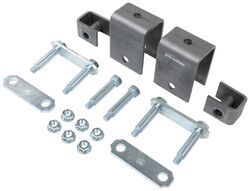
Single-Axle Trailer Hanger Kit for Double-Eye Springs - 3-1/4" Front, 7/8" Rear

- Trailer Suspension Parts
- Hangers
- Suspension Kits
- Boat Trailer
- Camper
- Car Hauler
- Snowmobile Trailer
- Utility Trailer
- Double Eye Springs
- Single Axle
- Dexter
more information >
Featured Help Information
Miscellaneous Media

Continue Researching
- Article: Double-Eye Trailer Suspension System Review
- Article: How to Tell the Weight Rating of a Trailer Axle
- Article: How to Accurately Measure Trailer Leaf Springs
- Q&A: Installing Leaf Springs on Single Axle Trailer
- Q&A: Orientation of Rear Hanger Installation on a Trailer with Double Eye Leaf Spring Suspension
- Q&A: Can Longer Trailer Suspension Equalizer be Replaced with Shorter One
- Q&A: How Does the CE Smith Single Axle Trailer Fender Attach to the Trailer?
- Q&A: How to Determine Where to Drill the 4 inch Hole to Install B&W Gooseneck Hitch # BWGNRK1257
- Q&A: How to Determine Spring-Center and Hub-Face Measurements when Building a Trailer
- Q&A: Can I Re-Drill the Spring Center Mounting Holes on the CE Smith Trailer Axle CE33201GA-HUB?
- Article: How to Measure a Trailer Axle
- Article: Slipper Spring Trailer Suspension System Review
- Article: How to Raise Your Travel Trailer Height
- Article: Where to Position the Trailer Axle?