


Is Wiring Conduit a Good Idea When Running Wiring of Roof Vent Fan Through Ceiling
Updated 01/27/2020 | Published 01/26/2020
Question:
I have a 6foot x 12foot Interstate Pro Series enclosed cargo trailer that Im turning into a mobile radio station/camper. Im a ham radio operator and belong to RACES Radio Amateur Emergency Service and ARES Amateur Radio Emergency Service. We get called up for communications during disasters and emergencies. I want to insulate the trailer and have questions Ive not been able to find reliable answers to. Im considering 1inch sheet foam but dont know what issues may arise with condensation. Im looking to mitigate and forestall any problems with condensation and potential fire hazards. From what Ive read, expandable foam isnt a good idea. Theres not much good information about the right way to do this. Everyone seems to have an opinion! One question I have is regarding wiring. When I pull the 3/8inch plywood off the interior and add insulation, do I need to do anything with the existing wiring? I notice that most of what I can see runs through some kind of flexible black split tubing not sure what the name is. I had a MaxxAir vent and fan installed in the roof and that wiring is not run through anything, its just bare insulated wire. Campout Inc. fabricated a frame for it and welded that in place. I live in Las Vegas, but could travel anywhere really. Summer days here get to 110 easily, and in winter, down to 28 or so overnight down in the Valley. Up on Mt Charleston, temps can get quite low up around 8,000 feet in some of the camping areas and there is a ski area at Lee Canyon on the mountain. Summer highs on the mountain at that level are around 80 degrees. Any advice or pointers you can give me will be very welcome. Im confused!
asked by: Rich D
Expert Reply:
The flexible plastic tube you are referring to is known as wiring conduit and is a really smart idea to protect wiring. Especially if the wiring will be difficult to access once the trailer is put together like what you are doing. I'd recommend using some 3/8 inch diameter conduit like the part # 39035 when running the wiring just as an insurance policy to keep the wiring more protected.


Product Page this Question was Asked From
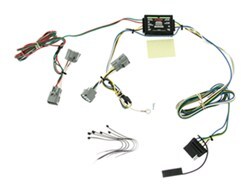
Curt T-Connector Vehicle Wiring Harness with 5-Pole Flat Trailer Connector

- Custom Fit Vehicle Wiring
- Trailer Hitch Wiring
- Vehicle End Connector
- Converter
- No Tow Package
- 5 Flat
- Plug and Lead
- Plug-In
- Visible
- CURT
more information >
Featured Help Information
Instructions

Continue Researching
- Q&A: Hitch Recommendation For A 2026 Honda Accord Hybrid Touring Model
- Q&A: Can a Surge Brake Actuator be Installed on a Swing Away Trailer Tongue?
- Q&A: Correct Hopkins Trailer Wiring Harness for 1997 Toyota Land Cruiser
- Q&A: Do You Know the Difference Between a 11033 Hub and My 11033L Hub?
- Article: Brake Controller 7- and 4-Way Installation Kit (ETBC7)
- Q&A: Availability of a 15 x 5 Inch Wheel with 5 on 5-1/2 Bolt Pattern
- Q&A: Converting Trailer from 5-Way Connector to a 7-Way by Function
- Q&A: Do You Have a Disc Brake Set for a Boat Trailer w/ a 5 on 4-/3/4 Lug Pattern?
- Article: Parts Needed to Add Hydraulic Disc Brakes to a Trailer
- Article: Trailer Wiring Diagrams
- Article: How to Clean Weld Nuts for the Installation of a Trailer Hitch | etrailer.com
- Article: Parts Needed to Add Electric Drum Brakes to a Trailer
- Article: How Much Does a Boat and Trailer Weigh?
- Article: Troubleshooting 4 and 5-Way Wiring Installations