
Air Lift LoadLifter 5000 Air Helper Springs - Rear Axle


To see if this custom-fit item will work for you please tell us what vehicle you'll use it with.


Thank you! Your comment has been submitted successfully. You should be able to view your question/comment here within a few days.
Error submitting comment. Please try again momentarily.


When heavy trailers or bed loads make the rear end sag, steering and braking can feel unpredictable. The LoadLifter 5000 air springs add up to 5,000 lbs of load-leveling support to keep your vehicle riding level. That means better handling, safer headlight aim, and even tire wear—whether you’re hauling a camper, a load of lumber, or a full trailer. By taking strain off the factory suspension, these springs help keep everything balanced and under control when the weight piles on.
Every load drives differently, so it helps to dial in your suspension for the day’s job. You can inflate each LoadLifter 5000 spring independently between 5 psi and 100 psi for precise support. Add more air when towing or carrying heavy cargo to eliminate squat and sway, then drop pressure when unloaded for a smoother ride. Manual inflation valves and air lines are included so you can mount them where they’re easy to reach, typically at the bumper.
Uneven pavement and trailer bounce can wear you out fast. These air springs use durable 2-ply, fabric-reinforced rubber to reduce sway and absorb road shock for a smoother ride. Air Lift’s exclusive upper and lower roll plates protect the air bags from contact damage while boosting their load capacity. The result is a steadier ride with less bounce, wobble, or bottoming out when the truck is working hard.
Reliability matters when you depend on your suspension every day. The LoadLifter 5000’s endcaps are made from high-strength Zytel nylon that’s lighter, stronger, and more corrosion resistant than steel—so they won’t rust or leak over time. Each kit includes heavy-duty brackets, hardware, manual valves, and air lines for installation. With Air Lift’s lifetime warranty and 60-day satisfaction guarantee backing it up, this setup is built for the long haul.

Videos are provided as a guide only. Refer to manufacturer installation instructions and specs for complete information.
We're going to be taking a look at and showing you how to install Air-Lifts LoadLifter 5,000 Air Helper Springs. Before you install your airbags, you want to make sure you take a measurement of your factory ride height because this is ideally where we want our vehicle to be at all times. So here at the back we are at about 43 inches. And then we are going to go check our front. And on the front we're measuring about 39 and three quarter inches.We've now got about a thousand pounds of water here that we're going to place in the back of our truck and we're going to see how our factory suspension handles it. So we are going to put this in here now and we'll see where we're at.
And now with all this weight in the back of our vehicle, we've dropped down to 41 and a half inches. So an inch and a half less with all this weight in the back than where we we're at before. Now I guarantee you when we go to the front, the front's also going to be lifted up. So what this does is it causes the tires at the front, the geometry of the suspension is going to change, which is going to cause you to have less tire road contact. So you're going to have decreased performance there.It's also going to affect your braking performance because of the less surface area you have on your tire contact to the road as well.
And your headlights are also going to be aimed up towards the sky. And sure enough, when we come here to check the front, we're a half an inch higher. And while that may not seem like much, a half an inch on your headlights, because the further the distance they go out, the further they're going to be up, it's actually quite substantial. And you'd be surprised how much of your visibility you lose at night when you've got the front end just a little bit higher.We've now got our airbags installed and I've placed the weight in the back of our truck once again. I've aired the bags up, let's recheck our ride height.
And with our airbags installed now, we're sitting just under 43 inches. So we're basically right back to that factory ride height. We're less than a 16th of an inch from where we're supposed to be. And in the front, we're going to recheck as well. We're right back to where we started at 39 and three quarter inches, which means our headlights are going to be pointing at the correct direction.
And the geometry over suspension is going to be correct, giving us the best contact between the road and our tires so we can ensure that we're going to have optimal handling and braking performance, regardless of what we're hauling behind us.We've now loaded up our vehicle with about a thousand pounds worth of water weight. We're going to take it out on our test course and we're going to see how it handles. So we're going to come into our uneven bumps section first. And you feel how it's thrown aside, aside a little bit. It does kind of not want to spring back as quick as I'd like it to because you can see it's really kind of thrown us around a little bit here. We're now coming into the normal bump section where it's kind of like simulating a speed bump in a parking lot. And every time we go over in the back, you can really feel it dip back down pretty heavy.Now we're going to go over to our slalom. We're going to see how it affects us in some evasive maneuvers. Oh boy, yeah, and I don't want to do it too much here. You can feel the weight, how it wants to side us to. One side almost wants to lean as we turn.So in the bump sections, it didn't feel too bad. The suspension on this truck's pretty stiff. But there in the slalom, it gets a little sketchy when you really have an invasive maneuver. It kind of wants to roll the body pretty hard. So let's get back in and get the airbags on and then we'll have to test course again and see where we're at.We've got our airbags installed. Now, we're going to head back out on the test course. We've loaded up from the back of the vehicle again with our thousand pounds of water weight and we're going to go into our uneven bumps section first. And I can already tell that with the bags installed here, the suspension does feel much different. It's not an uncomfortable amount of stiffness, but it is definitely noticeable. I can tell that on our own even bumps here, that we don't have as much rocking back and forth coming off of each bump. It returns to a straightness much faster, but it is just a little bit stiffer.So now we're going to go into the straight bumps, which is kind of like your speed bumps you'd have in an apartment complex. And the front feels nice and soft like it did before and in the back, I can definitely tell it is stiffer than it was before. The stiffness is a little bit uncomfortable, but it does keep our vehicle right where we need to be much faster. We don't have as much bouncing up and down in the back.Let's head over to our slalom now where I expect we're going to have drastic increase in performance. And now in our slalom, we're going to start turning. And oh yeah, this is really where you're going to notice this. We've got a thousand pounds back there and I don't feel like I'm being thrown around at all. It's still noticeable you're hauling that weight when you go over the bumps due to how the airbags are stiff and you do feel that weight going up and down. But man, in an evasive maneuver situation, I would feel so much more comfortable driving now than I did before.So in the end of our test scores driving with no air bags versus with airbags loaded up with a thousand comes of water, my overall feeling of the system is that it's going to be fantastic if safety is what your biggest concern is. Over on the slalom, I had much more confidence in the control I had in the vehicle. I just felt like I could take those turns and the weight in the back wasn't slinging me around. I just really felt like we had a good grip on the road.Now, when we came into our bumps section there with the airbags installed, it did seem a bit stiffer. It was not as comfortable as a ride as it was with no air bags. But to me we're going over a big bumpy course here. We've got all these set up in a row. Out on the road, you're going to hit the occasional pothole. It's one little minor dip of uncomfort is definitely worth it to me and my opinion on how much safer I feel, especially in those evasive maneuvers.Now, there are other suspension enhancement systems out there such as Timbrens which also replaced your jounce bumper. They're just a larger hard rubber that is somewhat similar to your jounce bumper but has better properties as it's designed to squish and act with your suspension system to work with it. What's nice about the Timbrens is that there's no maintenance. You never have to worry about air, checking them, because with your airbags here, they do fluctuate slightly with temperature, as temperature goes down, pressure is going to go down slightly. As it goes up, it'll go up slightly. You don't have to worry about any of that with Timbrens. They're never going to leak. But what I will say is they do have quite a bit rougher ride in comparison with airbags. And your airbags can be stiff if you air them up to a high PSI levels, but you often don't need to go above 40 pounds for most loads and at your lower levels, it's going to be much smoother of a ride than a Timbrens system.So you can look at it this way, with the Timbrens, they're going to be working regardless if you have a load in the vehicle or not. If you have a load though, the Timbrens are going to be compressing to help support the load. If you have no load, then the Timbrens aren't going to compress as much. So any impacts that you hit on the road are going to travel through those into the cab of the vehicle and you're going to feel it more.Whereas with our airbags here, since we can't adjust it, we only get the increased stiffness on our airbags when we've got it loaded down real high with a lot of air in our bags. We all load our truck, remove the air bag down to the minimum of five PSI and it feels like a factory truck again.And this is what our airbags look like when they're installed. They replace your factory jounce bumpers and install between your rear axle and your frame. The airbags are adjustable between five and 100 PSI and offer up to a 5,000 pound load carrying capacity. Each one can be aired up individually, left and right, so you can also adjust for offset loads.It's a double convoluted design, but you can see here we've got the lower and upper chambers there where our air goes. And this helps increase the burst pressure of the bag by increasing it's durability. You also see roll plates on the top and bottom and this will help offset for body roll and support the airbag to further increase the durability of the airbag.One of the nice things about airbags is that they have constant contact between your frame and your axle, unlike your factory jounce bumper, which hangs down, but it has a gap between the axle. So with your factory John's bumper, you get no support until your suspension is bottomed out. Where our airbag here is going to get support throughout its entire length of travel. It's also going to be adjustable. It seems like your vehicle's soft, you can stiffen it up a little bit to help keep it from bouncing too much. And if you overinflated it, you can always get a little bit of air pressure out to help soften the writeup too if you've made it too stiff.You'll inflate your airbags using the manual inflation valves in the back. You'll have one for the left and one for the right. If you desire, you can purchase a tee here @eachtrailer.com and route these lines together to a single fitting so you can air on bolt up simultaneously. This is more convenient and a lot faster faring up your airbags, but you do lose the side to side leveling support.And that completes our look at of Air-Lift LoadLifter 5,000 air helper Springs.
Customer Satisfaction Score:
97% were satisfied with this product
3% of customers were not satisfied
Ratings & Reviews


Ac

9/15/2026
Things are working well so far. I tow and haul during the spring,summer and fall. The most air I put in the bags was 50 PSI. The air still holds pretty good towing.Time will tell if the bags hold up as the bags age.




Mike L.
9/15/2026
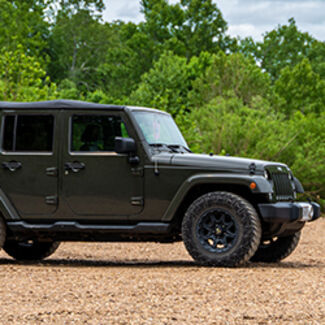
Nice job running the Schrader valves through the license plate, that's how I'd do it! '
Clay M.
7/29/2026
Works perfectly. Truck and trailer are completely level and towing is much better now. Highly recommend.

Mike L.
7/21/2026
Thanks for the photo Joe, nice lookin' setup there!

Brooke M.
7/7/2025
Definitely should get the job done! Thank you for including the photos - it's always nice to see what things look like in real life situations. Let us know what you think once you've been able to tow, we'd love to know! :)
Bradley
6/30/2026
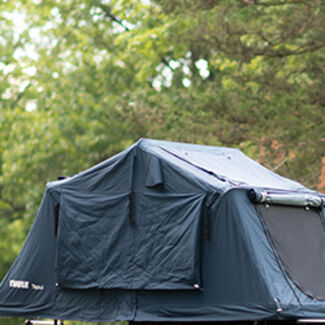
Excellent!!! This kit gave me a lot more stability and better ride while towing our 24’ camper. Highly recommend to anyone towing with a Tacoma
Lazer S.
1/27/2026
Glad to hear they are working well for you and they weren't too difficult for your mechanic to get installed, Matthew! Sounds like you have your Taco pretty tricked out! Are you doing an overlanding type thing?
Lazer S.
1/13/2026
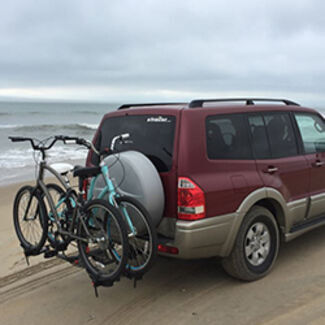
Glad we could make it go smoothly for you, Mary! Speaking of smoothly, had you had a chance to try them out yet?
Ray
9/14/2026
The Air Lift is working GREAT a year later. We just hauled a Generac 705 miles up north and brought a load of big rocks back for a guy that wanted to build a waterfall for his coy fish and the Air lift system was able to handle the weight just fine and rode great. Every one comments about how smooth the truck rides. The Air Lift system has handled everything we have asked it it to and has been trouble free. These will go on every truck I won in the future.

Nick S.
11/17/2025
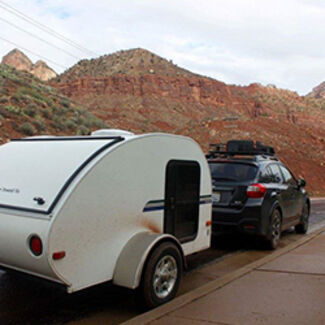
Besides the time it took, I am glad you were able to get these installed and notice a difference right away! They look nice installed. Are you towing anything other than your dump trailer?
Lazer S.
11/4/2025
Glad to hear you are still liking them, Zach! Are the picture you sent in before or after the bags were installed? If it's after, I think you could actually go with a little higher pressure to really level out!
Randolph
4/19/2026
So far, After a year of use, these air bag helpers I installed on our 21 Ram 1500 Laramie 4x4 Crew Cab are working just fine. Id recommend them in a heartbeat.

Gwendolyn Y.
5/27/2025
Sounds like the perfect upgrade for you, Randy! How often are you towing your 5th wheel?
Brooke M.
3/19/2025
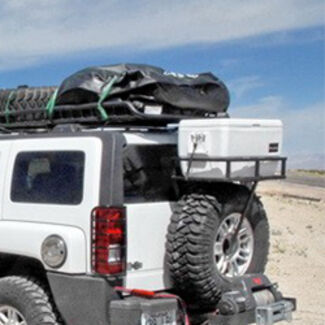
Wow, I love this review because you really show how versatile these air helper springs can be! Towing, hauling, off-roading...what else is there? This is great!
Joseph
4/29/2026
Airlift Bags have performed well, compressor does adjust more at low pressure 10 psi I assume for air temp change, I have checked for leaks multiple time and none found. 6500 towing miles at 80 psi with little auto adjusting pressure and no issues.
Richard
4/20/2026
Inflation valves tend to loosen. Must be checked regularly. Suggest some type of lock washers be supplied. The only way I found to improve the rear seat ride is to decrease tire pressure. I only do this when expecting passengers so I don’t wear the tires excessively.
Do you have a question about this Vehicle Suspension?
Info for this part was:
At etrailer we provide the best information available about the products we sell. We take the quality of our information seriously so that you can get the right part the first time. Let us know if anything is missing or if you have any questions.






















Brooke M.
5/30/2025
Would love to know your thoughts on them once you're able to try them out with the travel trailer, too! Thanks for sharing the different things you've used them with. Sounds like they are just the ticket for your scenario :)