


To see if this custom-fit item will work for you please tell us what vehicle you'll use it with.



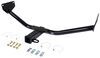
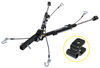
This base plate keeps things neat when you’re not towing. The completely hidden design leaves the front end looking clean, and the arms come off with a simple twist. Once removed, the brackets don’t stick past the bumper, so there’s nothing to bump your leg on. Receiver covers plug into the sockets to keep out dirt and debris and give the setup a finished look.

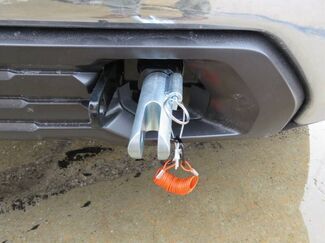
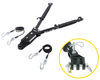
Hooking up is fast thanks to the twist-lock attachment. Each arm slides into place, rotates to lock, and secures with a pin so you’re ready to tow in seconds. When you’re done, pull the pin, twist to release, and store the arms until next time. It’s simple, sturdy, and reliable for daily or long-haul use.

The base plate bolts directly to your chassis—no welding required. Its sturdy design spreads towing forces evenly to help prevent stress on your suspension. Made from durable steel with a rust-resistant powder coat finish, it’s built to stand up to thousands of miles of flat towing without worry.
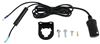
Already running a tow bar you trust? This kit pairs directly with Blue Ox tow bars for a secure connection. It’s also adaptable for use with Roadmaster (adapter RM-031 or RM-031-5 sold separately) and Demco (adapter DM9523041 sold separately) setups. Integrated mounting points even let you attach an electrical connector plug with a bracket (sold separately) so your wiring stays organized up front.
Everything needed for mounting comes in the box—no welding required. The base plate installs securely using factory attachment points and included hardware. Once in place, the distance between brackets is 28" and bracket height is 13", giving you clear specs for matching up your tow bar and accessories.


Videos are provided as a guide only. Refer to manufacturer installation instructions and specs for complete information.
Hey everyone, Ryan here at etrailer. Today on our 2024 Buick Envista, we're gonna be showing you how to install the Blue Ox base plate kit with removable arms. Before we get into that though, let's just take a minute, we'll check this out and make sure it's gonna be right for you. Before we jump right in, I do want to address one of the main questions that we get asked in regards to setting up your Buick to be flat towed. And that's what parts am I gonna need. So there's five major components.
You'll have your base plate, your tow bar, your safety cables, your tow bar wiring, and your supplemental braking system. And for the Envista, I also like to recommend the Roadmaster automatic battery disconnect switch. This is what the front of your Buick can look like whenever you're not flat towing behind your motor home, which is important, right 'Cause you're not always gonna be hooked up. And honestly I don't really think the appearance can get much better. It does an exceptional job of blending in and not really being too noticeable.
And matter of fact, on our vehicle we didn't even have to trim anything or create any additional openings for all of our components to fit. When you are ready to use it, you'll take your removable arms and put 'em into the base plate. So there are little caps that you can pull out, which I do I think is a nice touch. Kind of keeps debris and stuff from getting in there. And you'll take the arms, put 'em in, rotate 'em about a quarter turn until they lock into position.
Same deal on the other side of our vehicle. With those arms in, that gives us the attachment point we need to allow us to hook our tow bar up. So you'll just take the end, line it up there, put your pin and clip through, of course, hook up all your other components and the safety chain tabs, they're large enough to work with just about any size hook, even a large one like this and pretty easy to get to. As far as the compatibility, what tow bars are gonna work with this base plate, the Blue Ox ones like the Avail that we have here today, some of the Curt tow bars, some of the Demco and etrailer ones, a lot of 'em out there will be compatible. And even if you already have one that's not, let's say a Roadmaster for example and you'd like to hold onto it and use it, chances are really good that there's adapter pins available that allow you to swap 'em out and allow you to hook up that tow bar with this base plate.
This is what your setup can look like whenever you are hooked up to the back of your motor home. And I like it, you know, everything's easy to see, easy to get to, well organized with all the components being somewhat spaced out evenly so you can't really ask for too much more. It's gonna be a great way for those of you trying to flat tow your Envista down the road, you know, put the base plate on, get you that attachment point that you need. As far as the installation goes, it's not really super complicated per se, but it's definitely time consuming, easier than you might think on a vehicle like this. But still, still a little challenging, you know, if I'm being honest. So plan to set aside some time for sure and go from there. Hopefully our installation process can help you out if you're gonna do it yourself. If this is something you don't wanna mess with, you can always use our dealer locator network and that can help you find a shop in your neighborhood that can do this for you, but if you're going to get it done, hang around, we'll go ahead, pull into the garage and get started on it now. To begin our installation, we're here at the front of our Buick. You can go ahead and pop the hood. And on each side of our vehicle along this top edge we're gonna have four T15 Torx bit screws. And from this point on whatever we do to one side of the vehicle, we'll also do to the other side. That's because it'll be set up the same way. (drill whirring) Can move to your front wheel wells now and it helps if you turn your tire in one way or the other, gives you more room to get to the four T15 screws. (drill whirring) Just work our way up here and get 'em all removed. (drill whirring) Moving underneath the front of our vehicle now on each side we're gonna have three T15 fasteners here, three more here. Get them all pulled out. (drill whirring) This little piece will come off. (drill whirring) We'll just kind of set that to the side. We'll put it on, put it back together later. (drill whirring) (drill whirring) More towards the front of our vehicle, we're gonna have three more T15 screws. On each side of the vehicle. along the back edge of our fascia we're gonna have three seven millimeter head speeds. (drill whirring) Moving back to our wheel wells now where we're gonna be working and everything, I did put some painter's tape up here just so we don't actually scratch anything up. But if you kind of grab your fascia a little bit and pull it towards you, what I'm trying to do is take our wheel well liner, just kind of peel that out some, that way we can get in behind here because this little wheel well trim piece, we're gonna have to pop that off and there will be some plastic clips behind here that you can get to and squeeze to help get this piece removed. So I'm gonna come in behind here and once I get one or two of these going we can have a better look at it. But like I said, it's just kind of held in place with some plastic clips. Usually come out fairly easy actually. I'm just gonna have to feel around for 'em. We only really need to release this piece maybe about halfway, something like that. And so those are the clips I'm going after here. So when you come in from behind there you can kind of just pinch 'em together and while you're pinching it, put some slight outward pressure on this and that'll get 'em to release. That's about as far as we need to go there. Let's take a little piece of foam or a paper towel or something kind of jamming in there to keep it pulled away And we can disconnect this light too. So there will be a red tab on the top of it and pull back on it and push down in the middle. Disconnect it so there's a little red tab there. Just pull it back and down on the center of that clip to free it. Now we have access to this seven millimeter head screw which we need to pull out and do this on each side. Under the hood, right where the fascia meets a quarter panel, there's a 10 millimeter head bolt here, (drill whirring) you can pull that out and this little plastic piece will come with it. We can start to get our fascia removed now and we're gonna do this kind of in a sequence. I think we can start to get this part released and then the upper part that goes on top of our headlight. So one thing I like to do is just kind of grab the fascia and just start to kind work it a little bit, help loosen everything up. And then starting at the corner you should be able to unclip it so they're just snapped into place. Probably go to about there and this piece comes around. That'll have to kind of get pushed towards the front of the vehicle and get it loosened up some and we'll just continue to work our way around here. I'll get to about the same point on the other side. With an extra set of hands now, you can continue to kinda work this out. You wanna be careful, you don't wanna pull this too far away right off the bat because we'll probably have some wiring in here and there is a connector right there, you can disconnect it like we did the lights on our wheel wells. Just pull that red tab back. Push down on the middle of the connector and that's all I can see. So I think we're in the clear. Go ahead and set our fascia off to the side. You can remove this plastic shroud now in the bottom portion of our vehicle. On each side you got a push pin style fastener. You can just get in here with a flathead screwdriver, work that out and then it's gonna be kind of hard to see but on the bottom side there will be a little tab right here and if you push that up, the screwdriver will be able to release it and once each side is like that you can get this deal removed here. It looks like it's getting hung up behind the bumper. So instead of trying to pry down on all this, we'll just pry down on the top of that 'cause it don't really matter. This is not gonna be getting reinstalled so if we crease that plastic or anything, not a huge deal. So we'll get this out of our way. On top of our bumper beam we have this plastic shroud right and there's one plastic push pin on each side connecting it to the bumper beam. Since we have to remove the bumper beam, we need to remove this so pry up on the head and work the base out. You can grab a 15 millimeter socket now, we can start to get the bumper beam removed. So on each side of it there's four bolts. (drill whirring) Pull all those out. I got the ones on the other side removed already, that's why it moved so much and you can kind of get away with that because there's one more support here. So now you wanna hold the bumper beam, take a 10 millimeter, we can lower this down and set it off to the side for now. Over on your passenger side under the hood we have our washer fluid reservoir and by the filler neck there's a push pin. We'll pop that out and then you should be able to separate the filler neck from the reservoir. You can just kind of wiggle it around, pull up on it and get this removed. If you turn the bumper beam upside down, all the holes we're gonna have to open 'em up a little bit more about a eighth to quarter inch, give or take. We wanna open up the side that's towards the end of the beam so I'm just gonna use a little grinding bit and do that to each individual hole. (drill whirring) Once you get those holes opened up, if you have some bare metal exposed now from grinding that away, I'm just gonna take some spray paint, put a layer on there just to help protect it against rust. On our passenger side we are gonna need to get our washer fluid reservoir out of the way. They're wanting me to take it off completely but I think we can loosen it up and kind of pull it out the way enough to get to where we need to go. So we'll try that first. But there's some bolts holding in. One of 'em is right here, it's a 10 millimeter. (drill whirring) And then above it on top of our frame rail there will be a 10 millimeter nut. Definitely a little tight to get to. Looks like we'll have at least one more over on the side of our reservoir. Here's that other fastener. Get in here. There's not a lot of room but we'll make do. I believe this is the last one securing this down. So what I did, I took a reservoir just you know, lifted it up and removed it from the vehicle. I didn't unplug anything but I just took a bungee and kind of strapped it off to the side. I think that should be more than enough room to get in this area and do the work that we need to do. We'll grab our bumper beam now and for the time being we're just gonna resecure it to this little bracket with the factory bolt and just kind of let it hang in place. You can grab your base plate now and the way it's gonna work, you can slide it behind the bumper like that. And for now we're just gonna take one of the stock bolts and get it started hand tight. If we're on our driver's side, we're gonna have this electrical connector here and it's on a little bracket that's just kind of pushing to the frame. If you just kinda lightly pull back on it should be able to release it. We'll just kind of tuck it up out of the way for now. We're gonna have these side plates and how these are gonna work, this end will be towards the back of the car and the two holes on the front portion are gonna line up to the holes on base plate. And then you're gonna take two of these bolts, put 'em through like that. We'll just get the nylon lock nuts finger tight. Now on the side through this opening here, the side plate, the holes will line up. Sometimes they'll be off a little bit. In our case it looks like we can get top hole lined up without too much work. On your vehicle, you may or may not have to run a drill bit through that top hole to open it up some to get the hardware in there. Ours was already pre-drilled out to that size that we need so no worries there. But the hardware that you're gonna use can take a bolt, put on a split lock washer and then a flat washer. And then what I like to do is take a little paper towel and you can use a three quarter or 19 millimeter socket, put that in there on an extension. That way the bolt will stay in and not really fall out 'cause it is a little tricky trying to get all this stuff lined up but you'll take the bolt, push it through the bracket and out the other side, I'll probably leave the extension on to have some weight on it so we can get the nut going on the other side. Here's where it comes out and what you can secure to it. It's a handle nut here. There's really nothing to it. We'll just get a couple threads started on it and I'm just leaving everything pretty much hand tight. Eventually we'll come back and put Loctite on everything but you know, and if you're not ready to kind of tighten everything down pretty quickly that Loctite starts to cure, can be a real pain so just a heads up there and what my thought. With that bottom bolt not really lining up that great, I noticed that the base plate needed to go in more, you know, and so what I did, I just took another bumper beam bolt, put it in and I'm just gonna snug these up some and kind of draw everything a little bit tighter and that should really make it a lot easier to get everything lined up. After tightening those down and just kind of maneuvering stuff back and forth a little bit the best I could, was able to get that bolt through that bottom hole. And the handle nut started on the other side. It's the same exact hardware combination that we just used for the top one. Now you can grab the other two factory bolts for the bumper beam, with these you can take that Loctite that we talked about, put a little bit on the threads. Don't take a whole lot, you can grab this here at etrailer if you need some and we'll get these started. Snug 'em down. (drill whirring) Or remove these two. (drill whirring) That way we can put some Loctite on them. (drill whirring) I'll just go around to the rest of our hardware and make sure we get a drop on all the threads. Once you get Loctite on everything, tighten up these bolts with the three quarter inch socket. (drill whirring) For that top one too, if you use a little swivel there, makes it a little easier to get to. (drill whirring) That bottom one tightened down and then we can move to this hardware. And with these you can grab a 9/16 socket and wrench and get them snugged up. (socket whirring) With everything snugged, you just wanna make sure to come back with a torque wrench and completely tighten all the hardware down to the amount specified in the instructions. Once you got everything torqued, you wanna make sure to come back to the handle nuts and remove that handle portion. Sometimes you can just kinda work it off, this case, not a lot of rooms, it's kind of tricky. So I'm just gonna take a pair of snips and cut that extra off. What you do now, grab the safety cable that they give you and the quick link and the safety cable just goes around the base plate and then I wrapped it around this piece of the frame twice just to kind of shorten the cable up and then just connected everything together here to keep it secure. Same way on the other side. And something I like to do is few spots, just put some zip ties to help keep everything tight and prevent it from clunking around, you know, when you're driving down the road. At this point we can pop this back in as well as get the washer fluid reservoir reinstalled the opposite way. At this time it'd be a great point to install some of your other flat towing components like your wiring and your braking system, things like that. And say because of the fascia removed, a lot of times you have to run stuff to the base plate, right And so it makes it a lot easier to get to and see what's going on. So that's exactly what I'm gonna do. Once I have that wrapped up, we can touch base, you know, we'll hold our fascia up, see if and where we need to trim it to get it put back into position. I grabbed our fascia and just kind of held it in position to mock it up and honestly it almost kind of fell right into place. So believe it or not we didn't have to do any trimming whatsoever, which is really convenient. I will say the one thing to pay attention to is where the base plate actually comes through. It's a little tight so once you get it on you may have to kind of do one of these deals, you know, open it up just a little bit while you're pushing it back to get it to clear everything. But yeah, it didn't have to cut or do any modifications as far as the fascia goes. Now with that said, I'll continue to put everything back together the opposite way that we removed it and if I run into any issues or snags or anything different, we will touch base on 'em. I got everything put back together the opposite way. Didn't come into any issues or nothing along those lines. And so with all this wrapped up, that I'll do it for our look at and our installation of the Blue Ox base plate kit on our 2024 Buick Envista.
Customer Satisfaction Score:
89% were satisfied with this product
11% of customers were not satisfied
Ratings & Reviews

The Blue Ox base plate kit was installed without a hitch on our 2024 Maverick Hybrid. It was a perfect fit! It was installed by Fantasy Truck, a referred installer of etrailer, in Odessa, MO. Brett was very easy to work with and did an excellent job! I highly recommend the Blue Ox baseplate and Brett @ Fantasy Truck!
Two day delivery! I'm impressed. I have not installed yet because I just got them. It appears that everything is all there. I am excited to do the install of the base plate and the hitch and the wiring harness.
Was an easy installation. Only problem is instructions are vague on getting nuts in frame for 7/16 bolts.
After installing over 500 baseplates on various vehicles, this one was probably the toughest one . It had the off road package on it . But it fit great after I had to remove a lot that had been bolted up for 27yrs.
Fits my 2013 mini cooper non turbo. Does take a few hours to install this Fit was good. The hardest part is removing the front bumper and reinstalling it. You do have to cut the lower bumper grill in three places take your time locating the exact spots for cuts. I have pulled Mini Cooper about seven thousand miles now with this Blue Ox and has worked great
The safety Cable installation left a little to be desired. I'm not sure if I installed it as designed. The cables we're really long enough to go aroiund the frame rails on our Jeep, under the Radiator mount, Aluminum Frame, I was only able to go around the Raditor mount on both sides. Didn't really seam like it was the right way, but I suspect it's only for if something comes loose that there isn't a catastrophic breakaway.
I was given a Blue Ox Tow Bar and needed Base Plates for my Ford F150. In my online search, E-Trailer had the best price, so I ordered them. Delivery was a few days earlier than expected. I read the installation instructions and it sounded fairly simple to install, so I decided to tackle it myself. I began it about six pm and had the job completed and cleaned up in just over two hours. The job required removal of the bumper and tow hooks and drilling of two holes. Also William at E-trailer was of great help in the correct parts and keeping me informed of the delivery.
Tried to install this baseplate. It was a challenge to say the least. It did not fit the frame of my Jeep YJ without making modifications to the mounting plates on the driver side. I had to use a cut off wheel and remove 3/16 of an inch from the driver side spacer (which is too long. See pictures) in order to get it to clear the frame. Also, instructions say to drill an additional 1/2 inch hole in the frame for a third mounting bolt. BUT....the internal frame construction doesn't allow the nut on a stick to pass under the existing reinforcements for the bolts that mount the steering gear to the frame. Nut is way too thick to pass under the internal tubing in the frame from manufacturer (AMC).
Part fit like a glove, a tight one (a hammer gets it in place so no need to clamp after), but lined right up with the factory holes. I only had to do some minimal drilling to make the bolts slide through. Instruction guide was very helpful with only some minor differences, but it is pretty obvious what to do once you get into it.
First, the packaging is first rate - super-heavy duty cardboard box, stapled together, not taped! Filled w/industrial grade packing paper - lots of it! Way to go, Shipping!!! Secondly, after thoroughly reading the Installation Instructions before dinner this evening, I decided that at 76 years old, maybe I should drive down to my Chevy Dealer and have a chat with my Service Manager about an after-market, add-on job!!! Looks a bit too involved for me (these days, anyway)!
I looked into every brand/model available and this was the beefiest. There is cutting and trimming required on all brands, so why not get the strongest? If you're slightly handy with a toolbox, you can easily do the install yourself and save thousands.
This was instilled on a 2024 Chevrolet Colorado Z71 truck. I watched your video online with this exact model truck and the words I remember most was “and we did not have to do any trimming”. Well my truck was certainly different than what was on video. Guess it’s because it’s a late build 2024 (end of September 2024) and the grill system was maybe what would appear on the 2025 models? There was lots of trimming involved. I also will tell you the mounting holes both for the frame and the bumper back plate did not line up and required some modifications to fit. I would like to say this job is not for the faint of heart. I luckily have a mechanical/machinist background so was able to get the job done. Have not tested it yet but will be soon. Good luck to those of you who are planning on installing it yourself. Just remember it can be done. Just take your time.
Items arrived in 2 days, free shipping. All appeared in new undamaged condition.
The Blue Ox base plate for my 2015 Kia Soul is well manufactured and, with a little bit of mechanical skill, easy to install. It fit perfectly without issues. Brad from etrailer provides a step-by-step installation video that is outstanding and nicely guides through the process from beginning to end. I highly recommend this Blue Ox base plate from etrailer.
Well the blue ox base plate actually fits my turbo engine. The Curt didn't fit as advertised.
Super high quality baseplate for towing by Blue Ox. Instructions, videos, shipping (one day!) and overall experience was awesome. A bit pricey but their quality and the additional support by E Trailer cannot be beat! BTW (E Trailer) the baseplate fits three different Jeep configurations but did not call out the Recon package. After looking at other brands which showed there's to fit the 3 variations AND the Recon, I figured it would fit and it DID. You should definitely upgrade to include the Recon Edition.
I got a used set for a great price and it worked out well. my only caution is that some of the holes in my 2008 2500 suburban had to be drilled to 9/16 due to misalignment with the tapped holes in the brackets. This minor adjustment made it all go togehter easily though. Be aware, you won't have tow hooks anymore if that is something you use a lot.
lways great to shop at etrailer, especially the tech experts. Royce did an awesome job with our order. Everything fit perfectly and the help video provided the guidance I needed.
We installed the baseplate on our 2023 Encore GX AWD as well as the light harness and breakaway switch. A couple of items were incorrect but Royce corrected the issues with no problems.
Thanks again etrailer!
2019 Ford Ranger baseplate worked and fitted fine for me. 73 yrs old took me a couple hours but took many breaks. Younger could do it less than hour I'm sure.
Also works fine with my Blue Ox tow bar.
While the shipment was delayed but only by two days from the estimate. Never have an issue with etrailer products and service. Using a recommended installer to install as well. Website is a wealth of information.
Works and looks good the installation was perfect
Do you have a question about this Tow Bar Base Plate?
Info for this part was:
At etrailer we provide the best information available about the products we sell. We take the quality of our information seriously so that you can get the right part the first time. Let us know if anything is missing or if you have any questions.























Thank you! Your comment has been submitted successfully. You should be able to view your question/comment here within a few days.
Error submitting comment. Please try again momentarily.