
Air Lift 1000 Air Helper Springs for Coil Springs - Front


To see if this custom-fit item will work for you please tell us what vehicle you'll use it with.


Thank you! Your comment has been submitted successfully. You should be able to view your question/comment here within a few days.
Error submitting comment. Please try again momentarily.

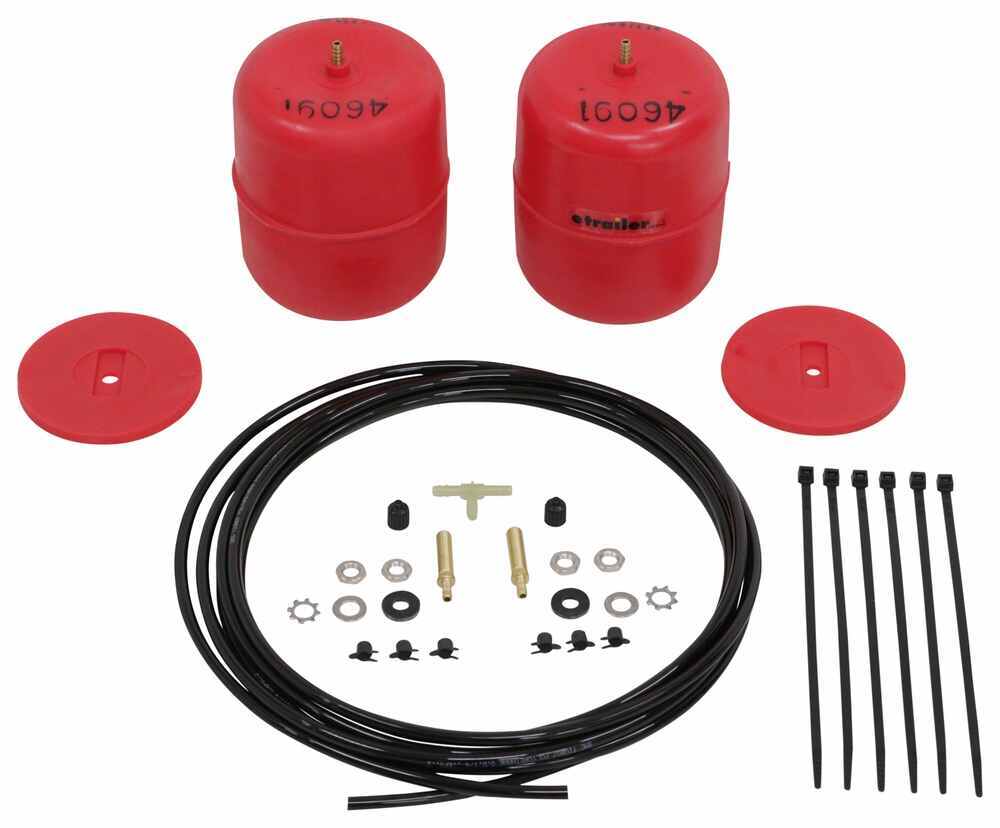
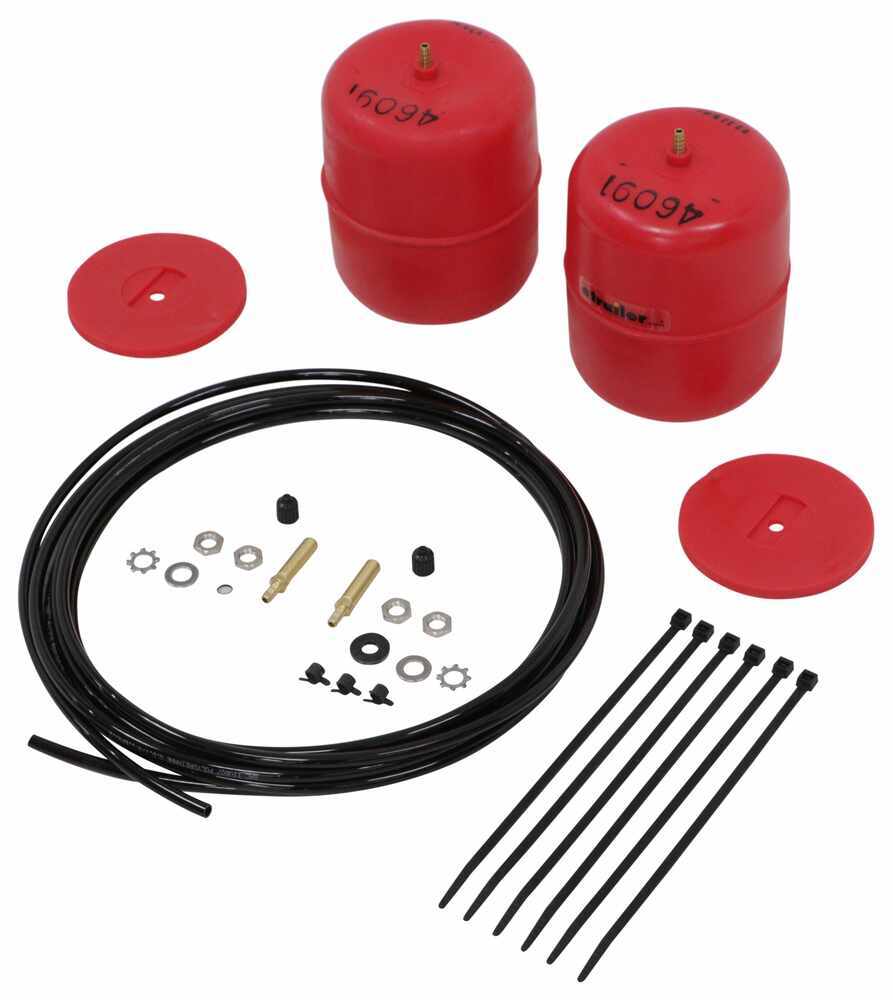
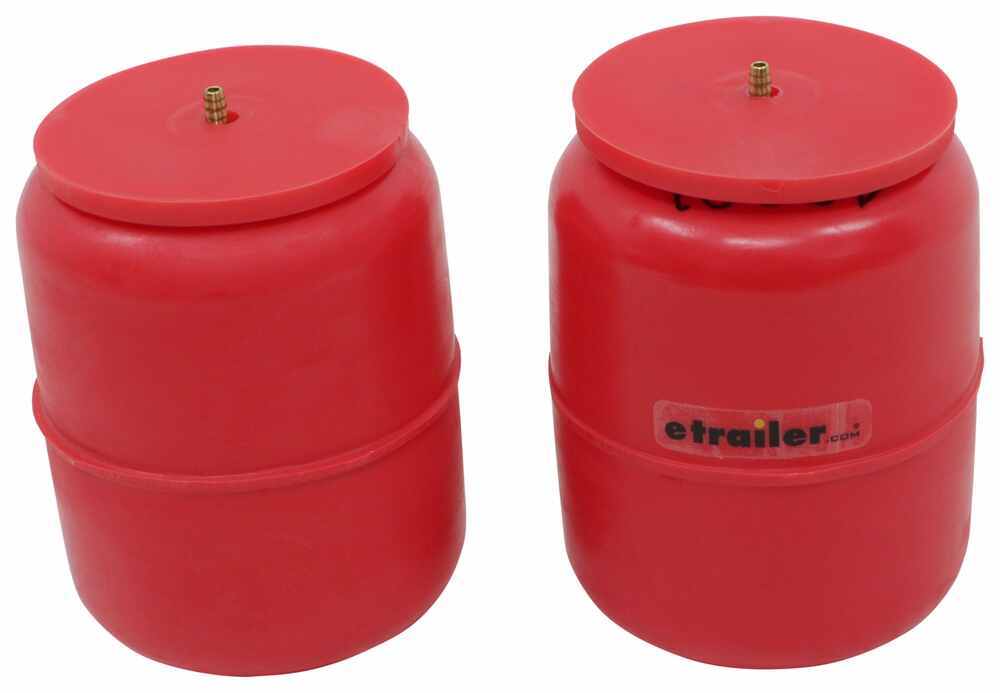
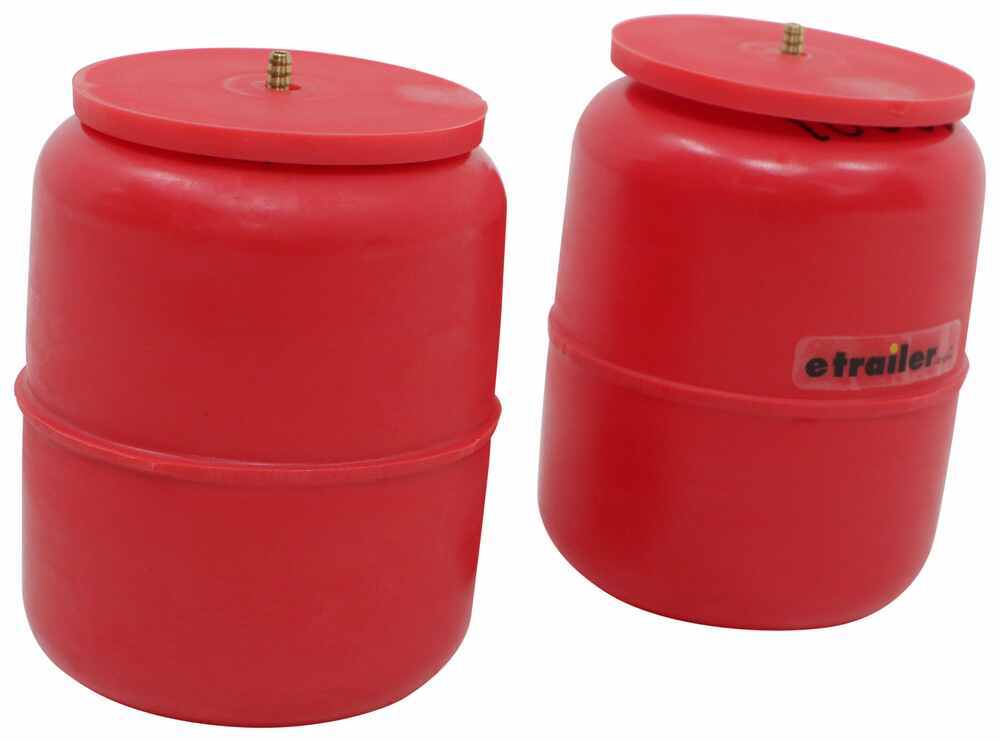
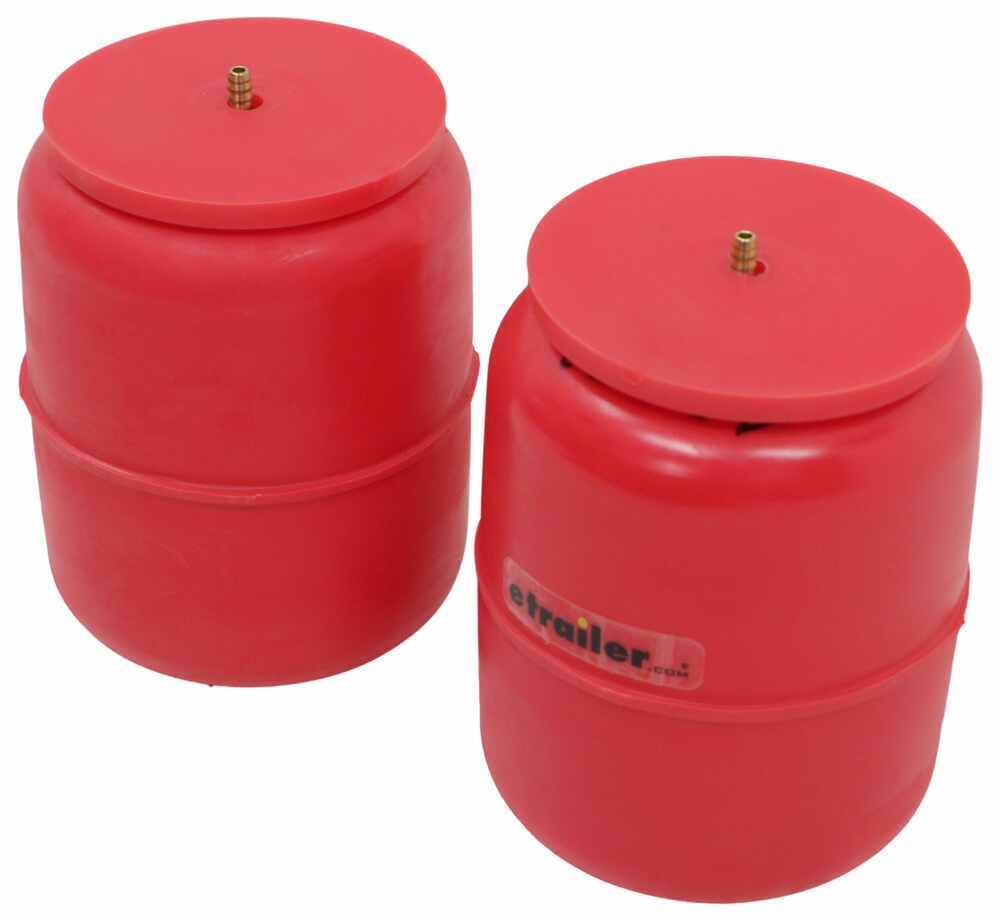

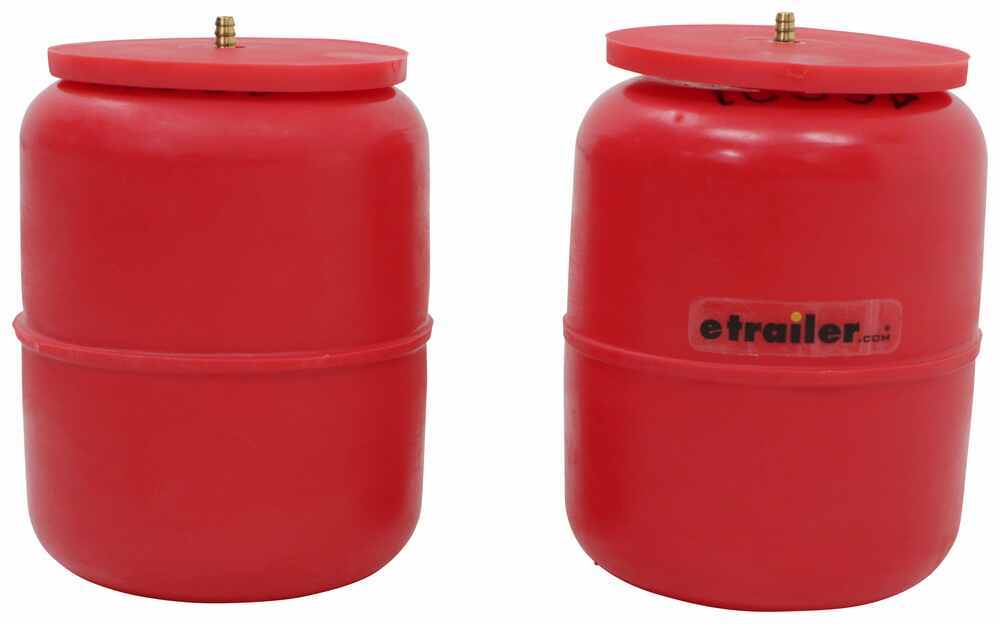

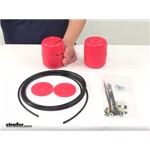
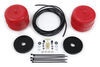
When you hang a snowplow, winch, or heavy grille guard on the front, the stock suspension can sag and throw off your steering and braking. The Air Lift 1000 air springs fit inside your existing front coil springs to add up to 1,000 lbs of load-leveling support. They keep the ride height normal so your steering stays controlled, your headlights stay aimed right, and your tires wear evenly under heavy front-end loads.
Every setup is different. With these adjustable air springs, you can dial in just the right pressure for your load—5 psi for normal driving or up to 35 psi when carrying extra weight up front. You can inflate each spring separately with dual air lines to balance off-center loads and keep everything level side to side.
Made from tough molded polyurethane, these air springs take up road shock and vibration so your ride feels stable even when the front end is weighted down. They help reduce sway and bounce, improving overall handling and braking confidence on rough roads or when working in tight spots.
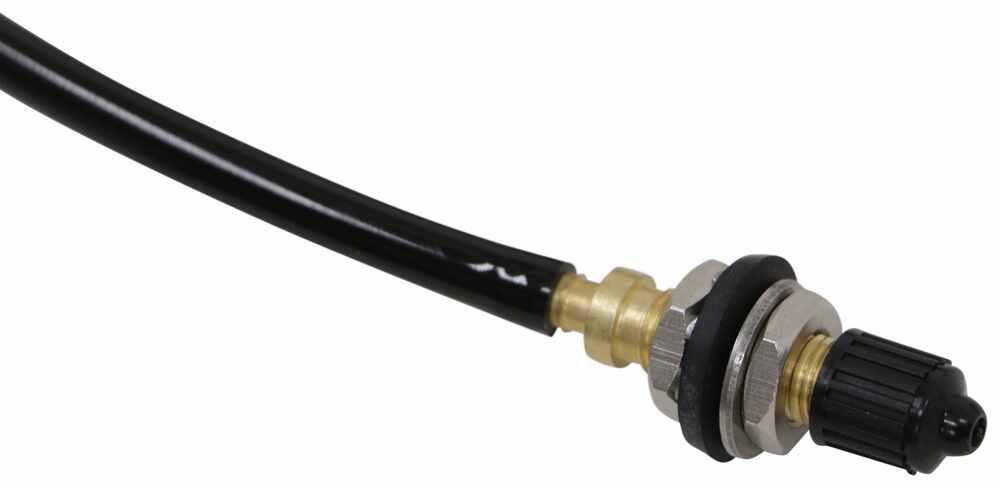
This system installs right inside your factory front coils using basic tools, with clear instructions included. Manual inflation valves for each spring are part of the kit and can be mounted in an easy-to-reach spot like the bumper. If you want even more control, you can add a compressor system later to monitor and adjust air pressure from inside the cab.

Videos are provided as a guide only. Refer to manufacturer installation instructions and specs for complete information.
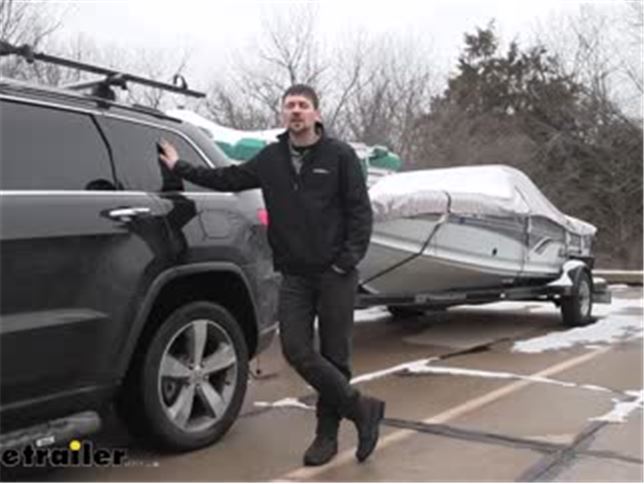
Connor: Hey guys, how's it going Connor, today, here at etrailer.com. We're going to be taking a look at the Air Lift 1000 Air Helper Springs. In order to give you a better idea of the benefits that our airbags are going to offer here for our vehicle, what we're going to do is, we're going to take some measurements. We're going to measure the stock suspension unloaded from the ground to the center of the wheel well here. Then we're going to hook up a trailer.We have a medium to small boat trailer here, which would be perfect for this Grand Cherokee that we have in particular. We're going to couple the trailer and we're going to see how much the stock suspension sags.
What we're going to do is, we're going to take that measurement and then we're going to fill the air bags that we have installed to see how much that's going to raise back to our factory suspension and our stock ride height.What we're going to go ahead and do here is measure from the ground. Keep in mind your results may vary depending on what tow vehicle you have. We're just using this as reference, a guide to show you. While our vehicle is unloaded and we're detached from the trailer, we're going to measure from the ground to the top center inside of our wheel well, 34 and a half inches. We're going to go to the front, take the same measurement.In the front, we're about right at 33 inches, so we have about an inch and a half difference.
Now we're going to go ahead and couple the trailer and retake these same measurements. From the ground to the top center of the wheel well is going to be about 33 and a half inches. Therefore, we dropped about an inch in the rear. From the ground to the top center of the wheel well again in the front, is going to be about 33 and a half inches. Overall, we went down an inch in the rear and we came up about a half an inch in the front.Offhand, these measurements may not seem like a lot to you, but you'd be surprised at what sort of effects this could have on your vehicle while you're out driving around.
Number one, our suspension in the front is obviously raised a little bit, this is going to mean a couple of different things. Number one, we're not going to have nearly as much stopping power, because we don't have as much weight on the front axle.Now in modern vehicles, say, about 60% of our stopping power is going to be on the front axle. When we take weight off that front axle, we're going to decrease our stopping power. In addition to the reduced stopping power, the raised front end is going to do a couple other things. It's going to point our headlights more towards the sky, which is going to reduce our visibility of the road and finally, last but not least, we're going to have some tire wear issues because the camber of our front tires is not correct with the weight lifted off of them.Therefore, we're going to have to replace our tires sooner because they're going to wear unevenly.
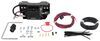
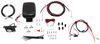
By putting more of a strain on the rear of our vehicle, our existing suspension components are going to wear out faster. We could experience a harsher ride and overall the tow vehicle won't feel as stable than it would unloaded. Now we're going to go ahead and put some air in our air springs, retake our measurements so we can show you the difference. Now we have our airbags filled, we have our trailer re-coupled, let's go ahead and take our same measurements that we took earlier.From the ground to the top inside edge of the wheel well, it looks we're about 34 and a quarter, not quite to 34 and a half inches, so we're about a quarter inch away from our factory ride height here at the rear. Let's go up to the front of the vehicle. If you remember, our factory ride height here with the trailer attached and our stock suspension was at 33 inches at the front, and we are back at 33 inches. We've actually came back to the factory ride height here at the front of the vehicle.Since we're back at the factory ride height or very close to it now, we're not going to have to worry about some of the issues we mentioned earlier about the headlight aim, the tire wear issues, or the decreased suspension longevity. Now that we've given you a visual of some of the measurements in the factory ride height, we went ahead and decreased all the air in the airbags again to the minimum five PSI pressure, and now we're going to take the vehicle on our two test courses we have at etrailer, the slalom course and the speed bump course.We're going to try to show you a representation of the ride quality when we have a load present with the airbags inflated and a load present without the airbags inflated. What we're going to do is, we have a couple of coolers in our hatch area here, not a terrible amount of weight, but enough to know it's back there. We're just taking our vehicle out on our test course now. As we can tell, without the airbags inflated, we are a little bouncy going over these speed bumps, as you would expect though.Yeah, it does feel like the vehicle is shifting around just a tiny bit side to side. Our steering isn't quite as responsive as it normally is. Now we're going to do some invasive maneuvers on our slalom course. Keep in mind it is wet here, so we are going to keep our speeds rather low. Again, we have a couple coolers in the hatch area here with our airbags deflated. Again, we can notice just a slight to slide rocking, more of a body roll if you will, while we're making these sharp turns here. I'm going to turn around, go the other way.Again, nothing real, real drastic, but we do sort of notice it a little bit, or at least I can anyhow. Yeah, a little bit of body roll, side to side. Now we go ahead, we went ahead and inflated our air springs. We put around 20 to 30 PSI in there and now we're going to leave the gear and the coolers in the back hatch here. We're going to go ahead and take our vehicle through our test course again, starting with our speed bump course.The suspension definitely feels a little bit firmer, but I don't feel as much body roll as we had the first time around. There's not as much jolting side to side. The steering is a little bit more responsive. Again, not a drastic, huge difference, but a minimal difference that we can still notice. Now let's go ahead and head on over to the slalom course and see the improvements over there. Now we're at the slalom course here. We're going to make some invasive maneuvers at speed, try to remain consistent with the speed of our initial run.I am noticing the steering's being a little bit more responsive. The weight is also not shifting around as much side to side, therefore we don't have as much body roll. These results are going to be the same whether we have heavy cargo in the rear of our hatch here or we're towing a trailer. The biggest difference I would have to say is just the weight transfer from side to side isn't severe with our airbags installed and inflated, therefore we don't have as much body roll.I would say that is probably the biggest takeaway of these Air Lift Air Springs here. Now they're going to help us do two things. They're going to help us, one, if we're towing a heavy load, number two, they're going to help us if we're hauling a heavy load. However, the stock suspension isn't necessarily designed to max out the payload or to max out our trailer weight ratings every time it's on the road, so that's where our suspension enhancements come into place.Again, they're going to do an excellent job helping to stabilize the heavy load, so we don't have that uneven, that harsh ride quality we would if we we're maxing out the factory suspension. Although there aren't any other options for this vehicle, I actually prefer airbags because the main reason is they're adjustable. What this means is, we can adjust the pressure inside the airbags, so we get the perfect level of support and comfort for any given load we may have at a time.The Air Lift Air Helper Springs can be installed in one of two ways, we can install them as a single pass system, which essentially means that we're going to have one inflation port, which is going to inflate both airbags. Now this is going to be the most common setup and what I recommend using. However, there is another option as well, called a Dual Path System Install. Essentially this means we're going to have two inflation ports, one to each of the air bags, so we can adjust the air bags.We can adjust the PSI in each airbag's different, so we have different amount of PSI and that's essentially going to be good for trailers if they're heavier on one side or we have more cargo in one side of the vehicle than the other. Our Air Lift Air Helper Springs here are going to have a 1000 pound weight capacity. However, keep in mind this isn't going to increase either the payload or the towing capacity of our Jeep.In regards to the fill rating of our airbags, this can be anywhere from five PSI, which is the minimum to 30 PSI, which is a maximum. However, again, the major feature, the major draw of airbags is that you can adjust the pressure for any given load you may have. Just make sure it never falls below five PSI or above 30 PSI. We need to keep in mind that with our air lift airbags, we are going to require access to an external air compressor in order to inflate the airbags.Now, if you're only going to be using the airbags every so often, then we can probably just suffice with finding an external air compressor, like at a gas station. However, if you find yourself to be towing or hauling heavy loads frequently, it's definitely going to benefit you to consider an onboard air compressor, like this Air Lift Wireless Bluetooth Air Compressor that we have here. This is actually going to be an excellent option for this vehicle because we don't have to run any airlines or wires into the cab, and the compressor is sized appropriately for our air springs. Now that we've showed you some of the benefits and features of our air springs here, that's going to do it today for the look at our Air Lift 1000 Air Helper Springs.
Customer Satisfaction Score:
94% were satisfied with this product
6% of customers were not satisfied
Ratings & Reviews


Robert
2/28/2024
Great

Jon
11/14/2021
The Insides of the Rear tires wore out within 2k miles of having these installed and aired up.


Rachael H.
8/1/2018
Thanks for the follow up, I might suggest using something that is less likely to slice the air bag like some heavy duty twine, or maybe some zip ties.
Jim
10/5/2023
Alls well


Happy C.
6/3/2022
After a year still very satisfied with these air lifts. Ive recommended them time and again to my fellow RVers

Doc
6/8/2020
Could not be happier, thanks eTrailer.
Doc
6/8/2020
Could not be happier, thanks eTrailer.

Walt
11/21/2025
Sorry to be honest with you I had a setback, with the RV, but very satisfied with the product, and will be installing in the near future.
Joee
8/18/2017
The products are still performing well.
Keith
7/8/2023
I’m very satisfied with the air bags. I used my air conditioner vacuum pump to collapse the bags for easy installation. Thank you,
Do you have a question about this Vehicle Suspension?
Info for this part was:
At etrailer we provide the best information available about the products we sell. We take the quality of our information seriously so that you can get the right part the first time. Let us know if anything is missing or if you have any questions.






















Mark
12/15/2025
It’s been bullet proof