


What Are the Frame Tabs Called That a 5th Wheel Pin Box Mount to?
Updated 04/29/2024 | Published 04/24/2024
Question:
Hi, I have my small fifth wheel at a local welding shop to get a quote. A previous owner cobbled together a goose neck ranch style hitch to the fifthwheel. In doing so, he butchered the ttrailer framing tabs that stick down into where the pin box or goose box would bolt up to. First question, what are those frame tabs called. Ive seen Reese installation manual call them wing sets. Id like to know their correct name for sure. 2nd - are there different standards or only one standard reguarding wing set hole placement. I seem to be finding evidence there are straight down, or angle forward mounts wing sets and differing number of holes per side. My current butchered setup has only two holes per side, wallowing out. I measured 9.5inch between hole centerlines, 12inch between wings. Are wing sets normally welded on or bolted to the trailer frame? If the shop cant make me a new setup that prevents bucking, I might decide to put the money into a Reese hitch. Your thoughts?
asked by: David P
Expert Reply:
Hey David, great questions! I'll answer them in the same order you asked them:
1 - There isn't an official name for those brackets that I know of. They are part of the trailer frame so I guess technically they are pin box frame brackets, but another common term for them is "wing brackets" since they look like wings without the pin box installed.
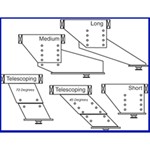
2 - There are different mounting hole patterns like you referenced and, consequently, there are different pin box sizes and weight ratings. Attached is a link to a helpful article about these measurements, but from what you gave me it looks like you have a mounting bolt pattern for a Fabex 560 pin box. This is an older pin box style and the only replacement we have for that is the Shocker 5th Wheel to Gooseneck Pinbox # SHK55MR, but this still has the gooseneck coupler so it wouldn't work if you're wanting to move to a standard 5th wheel hitch setup.
I recommend reaching out to the manufacturer of your 5th wheel hitch to verify which pin box number initially came with your RV and then you can use our article to have the weld shop install new mounting brackets if those are needed. Aside from that, it sounds like you're looking at a custom fabrication job so I recommend having a shop do the work that is familiar with this type of situation and is able to take into account all of the stress that comes with 5th wheel towing.


Product Page this Question was Asked From
Shocker 5th Wheel to Gooseneck Pinbox for Lippert 1716/1116/0115 and Fabex - 24K GTW - 6K TW
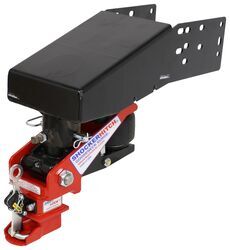

- 5th Wheel Gooseneck Adapter
- Adapts Trailer
- 5th Wheel Trailer to Gooseneck Hitch
- Provides Extra Clearance
- 24000 lbs
- Replaces Pin Box
- Shock Absorbing
- Fabex 500
- Fabex 503
- Fabex 520
- Fabex 530
- Fabex 560
- Lippert 0015
- Lippert 1116
- Lippert 1716
- Shocker Hitch
more information >
Featured Help Information
Instructions
Miscellaneous Media

Continue Researching
- Shop: Cummins Onan EC-AGS+ Auto Generator Start System - Bluetooth - Gas RVs
- Shop: RV Designer Safety Lock Pin - 1/4" x 3- 1/2"
- Search Results: camco rv sewer hoses
- Search Results: watchdog
- Search Results: cargo net
- Search Results: swing away coupler
- Search Results: cargo trailer side vent
- Search Results: 8330~752
- Search Results: blue ox
- Shop: Watchdog Power Center Mounting Bracket
- Shop: Sikaflex 252 Elastic Adhesive for Vehicles - Black - 10.5 oz
- Shop: Dicor Gunnable Butyl Rubber Sealant - Gray - Qty 1 Tube
- Shop: Victron Wall Mount Enclosure for BMV or MPPT Control
- Shop: Victron Battery Monitor BMV-702 - Black - 6.5 to 95 VDC
- Q&A: Will Waltech Vision 2.0 Work As Replacement For Dometic Thermostats On 2019 Open Range 3X 427BHS
- Shop: Base Plate for Tow Bar
- Video: In-Depth Look at the Hollywood Racks CrossTrack 3 Bike Rack
- Video: The Low-Down on the Roadmaster Rollaway Trailer Hitch Protector
- Q&A: Looking for Monitor for Thermostat, Batteries, Thermostat, Tanks ETC.
- Q&A: What Information Do I Need to Find the Right Gen-Y Gooseneck for My 2022 GD Reflection 367BHS?
- Shop: Brake Controller
- Q&A: Identifying Capacity and Replacement Parts for UFP Axle
- Shop: Trailer Wiring
- Video: All You Need to Know About the MB Sturgis Propane Hose
- Shop: Fifth Wheel Hitch
- Video: Checking Out the Ultra-Fab Steel Roller for RVs with 2" Trailer Hitches
- Video: Feature Breakdown: Bolt-On Skid Wheel for TorkLift SuperTruss Hitch Extension
- Video: B&W Companion Sliding 5th Wheel Hitch Step-By-Step Installation - 2023 Ford F-250 Super Duty
- Video: Fit Check: Yakima LongHaul RV Bike Rack on a 2015 Grand Design Reflection Fifth Wheel
- Shop: Gooseneck Hitch
Dave P.
4/25/2024
Thanks Jon for an excellent reply and a great attached article. To date I have advice from two local welding and fabrication shops. Each has recommended I purchase a new goose box and I could hire them to repair or fabricate new frame brackets to accomodate the new goose box. I will need help deciding which goose box I should buy, based on what can be done with my existing butchered brackets, either removed and new frame brackets put in, or new material welded to the existing bracket stubs. Over the next few days I will be reviewing what I can to help me make this decission, and I would love to receive advice and assistance from you and others at etrailer. I can send photos and measurements and describe my needs. First of all, I want to use a gooseneck hitch coupling, not a fifthwheel coupler. My truck has the goose ball directly over the axle. My truck has an 8' bed and the current configuration required a goose coupler with an 8" offset. I do not want to bring the trailer closer to the truck so I suspect I'll need a longer goose box than what is on there, to accomodate for the task being done now by the 8" offset. I will reread the article you sent and come up with the measurements I am targeting, but I may need your assistance along with it. I am currently at the critical height minimum of trailer to truck rail distance. It is 7-8" (8" at furthest forward height, and 7 at furthest rear contact height. Theoretically I could change tires and possibly wheels to give slightly more, but it is an old trailer and while I am building it for cool use, I will need to control spending somewhere. I already had a local shop build me a 6" subframe to raise it, and you might see from my past orders it has some fancy electrical jacks and stabilizers on it. So, that's kind of an opening. I'm leaning toward a Gen-Y dampened hitch, but am open to any ideas for safety and minimizing bucking, and reasonable pricing. My current butchered brackets are 12.5" wide, so I asume that means I'm looking for a goose box that is 12.5" wide. But, if plate metal is welded to the bracket stubs so as to provide more mounting holes, that distance would narrow, as the material would need to be on the inside, rather than the outside where support fins are welded. And if my box becomes longer as I described, as exists with the current coupler 8" offset, in a tight turn it puts the goose box within swing distance of the bed rails, so it cannot be too tall at that point (frame brackets point). Thank Jon. What do you think?