Determining Hitch and Weight Distribution System Needed for Towing Heavier Trailer with Ford F-350
Updated 06/06/2019 | Published 06/05/2019
Question:
Hello. My question is if I should upgrade my receiver to a Class IV or V receiver. My 2016 F350 gas has a Class III receiver. On the hitch, it indicates 5200 lbs with part number Ford BC3Z-17D826-G. When I look online, this part will tow conventionally at 12,500 lbs. Ford said, by my VIN, that the truck will tow 12,400 lbs. If I want to tow a stock trailer we have cows Ive read and have seen, that many stock trailers are bumper pull with no weight distributing hitch. The larger trailers are goose neck. Would it be safe to upgrade to a Class V and tow a bumper-pull stock trailer that maybe weighs, with cows, 6000 to 8000 lbs without a weight distributing hitch? How about 10,000 pounds? My hitch is rated at 10k with a 2inch and 14k with the 2 5/16. Thank you!
asked by: John
Expert Reply:
The factory trailer hitch on your 2016 Ford F-350 features a towing capacity of 12,500 pounds so there's no particular reason to replace it with a larger unit if you don't plan on towing anything heavier than 10,000 pounds. A higher-rated hitch is just going to give you a bigger safety margin but the existing hitch on your truck is still more than capable of pulling the type of trailers you mentioned.
As with any towing setup you will still just want to verify the limits on the truck itself as listed in your owner's manual. You are always limited by your weakest link so you need to adhere to whichever capacity is lower, the hitch's or the truck's.
To pull a trailer that's anywhere within the 6,000 to 10,000 pounds range that you specified in your question I definitely recommend using a weight distribution system. A system is recommended any time a trailer weighs more than half of the tow vehicle's weight, regardless of its capacity. This is certainly the case with the loaded trailers you plan on pulling. A properly rated system is going to create a safer and more comfortable towing setup by leveling the truck out with the trailer connected, re-distributing weight over the axles of both the trailer and truck, and fighting sway during travel.
When picking out a system it is important to determine what your total tongue weight will be, which consists of both the loaded tongue weight on the trailer along with any added cargo weight coming from behind the rear axle of your F-350. Ideally this number falls comfortably within the system's operating range.
Depending on how heavy of a trailer you end up towing, the Reese Strait-Line # RP66084 is a really good option to consider. This particular system features a tongue weight range of 600 to 1,200 pounds and features unique self-centering sway control that actually works to prevent side-to-side movement before it even begins.
If you find that your total tongue weight will be heavier than what this system is capable of working with please let me know and I will be happy to recommend a different system. I have attached a video demonstration on the Reese Strait-Line along with a couple of articles on weight distribution that you might find helpful.


Featured Help Information
Miscellaneous Media


Continue Researching
- Search Results: boat strap
- Shop: Gooseneck Hitch
- Shop: BoatBuckle G2 Retractable, Ratcheting Transom Tie-Down Straps - 43" Long - 833 lbs - Qty 2
- Shop: BoatBuckle Mini G2 Retractable, Ratcheting Transom Tie-Downs - 6' Long - 466 lbs - Qty 2
- Search Results: gooseneck hitch
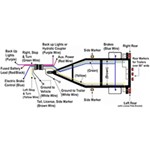
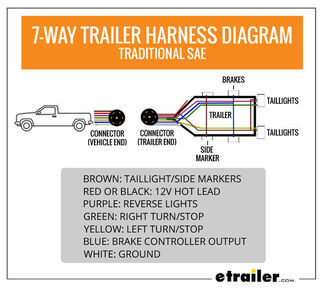
- Article: Trailer Wiring Diagrams
- Video: Firestone Ride-Rite Air Bags with Easy Mount Compressor Feature Breakdown
- Search Results: trailer hitch
- Shop: Trailer Hitch
- Q&A: Installation Time for Blue Ox BX1128 Flat Tow Base Plate Kit for 2016 Jeep Grand Cherokee
- Search Results: trailer tires and wheels
- Article: Brake Controller 7- and 4-Way Installation Kit (ETBC7)
- Q&A: What Is An OEM Prep Package And How Do I Know If I Have It
- Shop: Universal Installation Kit for Trailer Brake Controller - 7-Way RV and 4-Way Flat - 10 Gauge Wires
- Shop: Trailer Wiring
- Video: B&W Companion OEM 5th Wheel Hitch Manufacturer Breakdown
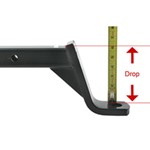
- Article: How to Measure for Trailer Hitch Drop
- Shop: B&W Turnoverball Underbed Gooseneck Trailer Hitch w/ Custom Installation Kit - 30,000 lbs
- Search Results: trailer wiring
- Shop: Suspension Enhancement
- Q&A: Does Truck with 6-1/2 ft bed Have to Use Slider Hitch for Turning Clearance with Fifth Wheel Hitch
- Search Results: trailer jack
- Video: In-Depth Look at the B&W 5th Wheel to Gooseneck Pin Box
- Article: Wiring Trailer Lights with a 7-Way Plug (It's Easier Than You Think)
- Shop: B&W Ball and Safety Chain Kit for Ford, GM, Chevy, and Nissan Titan XD Underbed Gooseneck Hitch
- Shop: Brake Controller
- Q&A: Recommended Lock for MORryde GooseTech 5th Wheel to Gooseneck Pin Box
- Shop: B&W Turnoverball Underbed Gooseneck Trailer Hitch w/ Custom Installation Kit - 30,000 lbs
- Q&A: How To Prevent Galvanic Corrosion When Installing B&W Turnover Gooseneck In 2026 F350 Super Duty
- Shop: Fifth Wheel Hitch

on Weight Distribution Hitch