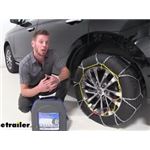
When packed snow and ice make R4 or turf tires struggle, tire chains add the bite you need on tractors, skid steers, and loaders. Choose ladder or H patterns with square links for a stronger bite, or twist links and lighter roller styles when you want gentler contact on new concrete. Match your exact tire size, confirm inside clearance without wheel spacers, and use rubber tensioners; commercial-duty sets suit skid steer work.
Chains are heavy and can be a bit of a wrestling match to install, so lay them out and work them on evenly. Check inside clearance to the frame, especially without wheel spacers. Zip tie the cross chains tight and place a small bungee across the tread at the closure point to help keep chains from hitting the frame. Re-tension after the first run.
Match the chain to your exact tire size from the sidewall. When correctly sized, cutting isn't required, and rubber multi-arm tensioners help keep them snug. If chains seem long, recheck size and tension before removing segments. If using cam-style tightening, confirm you have the cam tool. Use adjusters to reduce slop and improve fit.
Square link ladder patterns give strong bite on packed snow and ice, while twist link chains work but aren't as good as square link. For deep snow and mud, ladder patterns are a solid choice. On tractors with R4 tires that do poorly on packed snow/ice, rear chains help, and front chains with 4WD may be necessary for most snow removal.
Yes, when you choose chains intended for skid steers or loaders. They've been used on skid steers and backhoes without wearing down as fast as one might think. Avoid spinning tires on steeper driveways to help with longevity, as operator use is key. For commercial use, pick chains specified for that equipment type.


 Filters
 Forklift
 Grader
 Load
Load
 Skid Steer
 Tractor
 Heavy Equipment Tire Chains Parts or Accessories