
Roadmaster Crossbar-Style Base Plate Kit - Removable Arms


To see if this custom-fit item will work for you please tell us what vehicle you'll use it with.


Roadmaster's crossbar-style brackets are virtually invisible, easy to mount and simple to remove. Brackets install on your vehicle's frame to provide attachment points for your tow bar.
Features:
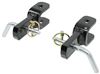
The drawbars, or front arms, on the crossbar-style series base plate kit are supremely easy to mount and remove. Just insert them into the brackets and twist to lock them in place. To remove, simply twist the arms back and pull them out. Once the drawbars have been removed, the remaining brackets are virtually invisible. On most automobiles, the brackets are mounted within the grille, where they remain not only unseen, but protected from scrapes and scuffs, as well.

California residents: click here
Videos are provided as a guide only. Refer to manufacturer installation instructions and specs for complete information.
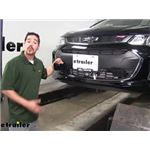
Rob: Rob, here, at etrailer.com. And today, we're going to be taking a look at the Roadmaster Crossbar Style Base Plate Kit with removable arms. And here's what it's going to look like once we have it installed. Our base plate is going to give us that secure connection point so we can hook our tow bar up to our Sonic and safely flat tow it down the road. It's also going to spread that towing force across the front end, so we are not putting so much strain and stress on the front suspension.Now, when we are flat towing, we obviously need a spot for our tow bar to hook up to, but let's face it, nobody wants this big black thing hanging out the front of their car and distracting from the looks of it. Well, Roadmaster took that into effect, and we can actually pull these out when we are not using them.
There's a small ring on the inside of the tab. If we pull outward on it, we can rotate the arm, and then, we can pull it completely out. Just that pull tab. It makes it really easy to get in and out. And then to put it back in, simply just make sure that that pull tab is on top.
Push it in. It will push that ring out. And we can rotate it. And it will lock it in place.Once the arms are removed, you can see how clean of a look it's going to have. The tabs are going to be recessed back a little bit.
Now, the safety cable connection points are going to stick out, but it does have that black powder coat, so it kind of blends in with the grill down here. The name that Roadmaster gave this base plate is the Crossbar Style, is because is going to use a quick disconnect, which is going to be a separate bar that's going to mount directly to the tabs. And it's going to span going all the way across. Now, it is going to be a separate piece, but it's going to make it a lot quicker where we can just lift the bar up and unhook our tow bar, and be on the road really quickly.And like most base plates, we are going to have a really easy-to-access safety chain connection point. It's going to be just to the inside of where our drawbar is, and one on each side of the license plate, here.
As you can see, we've got plenty of room to get our hooks on. We are not going to have to worry about damaging or scratching anything close to the grill. Now, one thing I do want to mention is that our other components here are electrical. And our breakaway switch, they are not included with the kit. This is just the rest of our flat tow set up with our braking system and our wiring.Now, our Roadmaster base plate is going to be compatible with quick disconnect, as well as all Roadmaster tow bars, and some other manufacturers' tow bars with adapters that are sold separately. And you can find those here at etrailer.com. Now, I would like to give you one measurement, and that's going to be from the ground to our attachment point on our base plate. And that's going to be right about 15 inches. Now, you want to make sure you measure from the ground to the inside top edge of the receiver tube opening on your motor home, so you can check those two measurements and make sure you have a nice level towing set up. And if you have too much of a difference, we are going to need to get a high low adapter.Now, when you're looking for a base plate for your Sonic so you can safely flat tow it, there are a lot of different options out there. But I really like the Roadmaster face plates, one, because they are pretty simple to install, and they require a lot less modification than the other ones do. Now, clearly, we are going to have to trim a little bit on the grill, but behind the fascia and everything else, there's not a whole lot of cutting or drilling that we are going to have to do. And it's just a fairly simple install.Now, Roadmaster does make a direct connect, which we are not going to have to worry about that crossbar or the quick disconnect on there. And that really is one of my favorite ones, because you just hook your tow bar directly up to it. But our Roadmaster Crossbar Style Base Plate is actually the same base plate, it's just the arms are different. So really, it's just going to depend on if you want that quick disconnect, or if you want to hook your tow bar directly up to the base plate.Now, keep in mind, this is only going to be one component of a complete safe flat tow set up. For a whole set up, you're going to need a base plate, a tow bar, tow bar wiring, a braking system, and safety cables. And specifically for our Sonic, we are also going to need a fuse bypass, because there are several fuses that we are going to have to pull underneath the hood and inside so we can safely flat tow our Sonic. And also, finally, a stop light switch so we can get the monitor light hooked up on our braking system. And you can find all these components here at etrailer.com.But now that we've seen how nice our base plate looks installed, let's go ahead and put it on together. To start out, we want to open up our hood, and then right above the grill here, we are going to have this plastic section. This is going to be attached using a lot of these plastic fasteners, as well as some bolts. So, you want to grab a 10 mm socket, and we're going to pull all the bolts out of the top here. Then we are going to have three plastic pushpin fasteners on either side of the latch. Take a flat blade screwdriver. We'll come underneath the small notch that's in the pushpin, and that will relieve some of the tension. Pop that center section up. Then we can come underneath the base and pop the base out. And we are going to repeat that for all the remaining pushpins that we have.Now, we're going to move to the front wheel well. Now, it will help if you turn the wheel opposite of the side your on. So, we're on the driver's side, so just turn the wheel all the way to the right. If we look in the wheel well here, we will have three fasteners holding it in place. So, we'll grab a T20 Torx bit, and we'll pull those three screws out. Now, if we come to right to where our fascia meets the fender, and we look up inside the wheel well liner, there's a small notch that's cut out. And we can see another bolt that's going vertically. We are going to take our T25 Torx bit, and we are going to pull that bolt out.And if you need to, you can just pull back the wheel well liner back a little bit. That way, you can have access to it easier. But now that these are removed, we are going to move to the other side, and remove all those, as well. Now, if we move under the very front, we are going to have this skid plate that's going to be right underneath. Now, it's going to be held on by two bolts on each side, so we can grab a 13 mm socket and pull those out. Now, we are also going to have three of these Torx bits that are holding it in place, as well. There's going to be one on each end, and then one in the center. So, grab that T20 Torx bit, and we'll pull those out.And there's also going to be one push pin holding it in place. We'll grab a flat blade screwdriver, and we'll pull that pushpin out just like we did with the ones on the top. Now, we are going to pull the shield down and set it aside for right now. Now, underneath that shield, we'll find this support here that's going to be attaching our fascia to everything else. We'll have two bolts that are holding it in place, as well as a hex bolt towards the front. We are going to remove these two, so we'll grab our T20 Torx bit, pull them out. Then, if we move towards the outside, you can see where our fascia is going to be attached again, this little triangle tab here. And then again, in the very corner of the fascia, attaching it to the painted section, right here.And the bolts out here are going to be a T15, so you want to make sure you grab the appropriate size. We are going to remove the other side, as well. Then, that small bolt that's holding each one of these brackets in place, we'll grab a 7 mm socket and pull that out, as well. Once we have the bolt pulled out, we'll pull the bracket out, and we'll take the other side out, as well. At this point, it's a good idea to grab an extra set of hands, because we are going to pull the fascia off. You want to start where the fender meets the fascia. We'll grab the edge, and we'll start pulling outward, and that will release the clips. And we are just going to be working our way towards the center.Now, once you do get towards the grill area, right at the corner here, you kind of want to lift up to get it past this little keeper. We are just going to be working our way out, until the fascia comes loose. Now, before you pull too far away, you do want to disconnect your fog lights if you have any. So, we'll push in on the tab. A little gray tab, we're going to squeeze and pull back. That will release it. And then we'll push down on the brown tab and pull the connector out. Then we can set our fascia aside, where it's not going to get damaged.Now, if you have another connector over on the passenger side, you want to make sure it's disconnected, as well. Again, just push in on the tab and separate the connectors. With the fascia removed, we are going to have this air shield that's going to be attached to the intercooler, here. We are going to pull that out, so we are going to need to remove the two pushpins that are holding it in place on each side. So, these are going to work just like the other ones. Just come underneath the center section, pop it out, and then we can pull out the base.Now, if we come just to the outside and down a little bit, we'll have our lower bumper structure, here. It's going to be held on by three bolts on each side. So, you want to grab a 13 mm socket, and we're going to pull all three of those bolts out on each side. Now, I like to leave one just a little loose on one side. That way I don't have to worry about it falling down. Now we'll remove the other side. With all the bolts removed, we'll pull this section out and set it aside. Now that everything's nice and loose, and we have room to move that shield away from the intercooler, we are going to need to trim out the section.Basically, if you come to that raised area, we come straight down, and then cut over, that's the area we are going to be trimming out. Now, if you are using any kind of power tools, you want to be extremely careful, because it is very close to the intercooler. But I'm going to be using a pair of tin snips. That way I don't have to worry about nicking anything, and I can just take my time. Once you have that area trimmed out, you can go ahead and remove the shield. It may be a little bit of a tight fit, but what you can do is, you can lift up and slide it over to the side. You should be able to pull that entire section out. And we'll set it aside.Now, on either side of our intercooler, we are going to have our hoses attached to it. We're going to grab a flat blade screwdriver. And there's a metal band that's going all the way around that hose. You want to take your screwdriver, come underneath that metal clip, and you want to pry up and out. And you can see how it releases that, right there. That way we can, once we get it released enough, we can slide the hose off and disconnect it from the intercooler. Now, whenever you do go to pull the hose off, you want to make sure that these clips are all the way out. So, if we look on the inside, on the back here, that's what's actually keeping it in place. You want to make sure that both of those clips are fully extended out. That will make it a lot easier to get it off. We are going to go ahead and pull the other one off, as well.Now, on the driver's side of our intercooler, we are going to have an 8 mm bolt that's holding it in place. So, we are going to grab an 8 mm socket and pull that out. We'll move over to the passenger side. And instead of a nut holding it in place, it's going to be this pinch tab. So, you just want to grab each side, squeeze them together. And that will allow our intercooler to roll forward. Then we can slowly work it out of the little channel that it's sitting in. It just has these small tabs that sit in this channel. And we are going to set this aside for now, where it won't get damaged.Now, in order for our main receiver brace to fit in place, we are going to have to trim this little flange off, to where it's even with the bottom of our bumper. Now, I'm going to be using an angle grinder, just so I can make quick work out of it. But you just want to cut as close as you can to the very bottom of the bumper, so it's going flush straight across. We are going to lose this tab, down here. Now, once you have the piece trimmed off, it's not a bad idea to come back with some spray paint. You want to cover up any areas that has exposed metal on it. That way, hopefully, it will prevent any kind of rust or corrosion from building up. We're going to go ahead and cut the same way on the other side, as well.Now, we can get ready to put our base plate in place. But we want to make sure that we have at least one place of hardware on each side, so it will hold itself up. So, we are going to grab one of the long bolts out of our kit. Now, you do want to put a small amount of Red Locktite on all the bolts. Just put a little bit on the threads. Then, with our bolt, we are going to follow it up with a split lock washer, and then we'll take a 1/2" flat washer, slide it over. Now, this bolt, if we look at our frame rail, here that attaching our bumper structure, we are going to have two holes that are going to be going through the bottom all the way through the beam.The one closest to the front of the vehicle, we are going to drop our bolt from the top into the hole. And it will pass all the way down through the bumper beam. And we'll lift our base plate into position. And then once that's there, we are going to follow it up with a flat washer and a hex nut. And that's going to be the same combination on each side in this location, just so we can get it up and hold itself in place. Now, with an extra set of hands, we are going to lift our base plate up. Kind of want to rotate it in, so you can get behind the bumper, here.And we are going to lift it up to where it's nice and flat against the bumper structure. Then we'll take our bolt, we'll drop it down through the top, make sure that it comes down through our base plate, and then we'll take the flat washer and hex nut. We want to make sure we get this at least hand tight, and again, one on each side. That way, the base plate will hold itself up, and we can work on getting the rest of the hardware in place.Now, with the hole that's going towards the back that's on our bumper structure, we are going to take another one of our long bolts, same combination of hardware, and we are going to pass the bolt down through, again, making sure it goes all the way through, and it lines up with our base plate. You may need to kind of wiggle stuff around to get that bolt to come through. If you need to, you can kind of loosen up your other bolts. There's still a little bit of play in everything. And instead of a nut washer, we are going to have a nut plate. You're going to make sure that the flat section is facing up. And let's get it lined up with our bolt. And it would probably be easiest to start it if you just hold the nut plate and push the bolt down until we can get it started and everything going through.With both bolts started, we'll come back with a 3/4" socket, and we'll tighten up that rear one. And we can grab a 3/4" wrench, and we'll hold the nut on the bottom and tighten up the bolt on top. Now, you want to repeat that for the other bolt on the other side. Now, on the bottom here, we are going to have one more attachment point on each side. Now, there is a hole in our base plate, and there is a small hole that goes through here, but we are going to need to get through all the way to the back side. So, we are going to take a 1/2" drill bit. We are going to use our base plate as a template, and we are going to drill all the way until it comes out to the back side, here.Once you have the hole drilled, we are going to grab one of the long bolts and pass it through. Make sure it comes all the way out the other side. And we are going to take one of our large plate washers and slide it over the bolts. We are going to take a lock washer, and then finally, secure it down with a hex nut. And with this side in place, we are going to drill out the other side and use the exact same combination of hardware. And then finally, we'll snug up the lower bolts, as well. I'm going to come back with a torque wrench and I'm going to torque all my hardware down to the specified amount in the instructions. You want to make sure you repeat that for all your remaining hardware.We can go ahead and grab our intercooler now. And you want to make sure that it is facing the right direction. If we are looking at it, the little GM symbol should be on the driver's side with the round hole, and the on the other side, we are going to have that square hole where it goes into that pinch tab. Now, I will let you know it's going to be a little bit of a tight fit to get everything in here, because if we just try to rotate it in, you'll see that that round tab is going to the base plate, right here. So, just going to try to sneak it behind the base plate. Make sure that you can get your tab lined up. You can get it in that little notched section. And then we can come to the other side, bring it in. Make sure this side lines up. You should be able to get them in that channel, and then rotate it in the position and put all the fasteners back in place.Now, we can take that bolt, and we can reinstall it. Now, I did find it is easier if you take a little piece of paper towel. It will hold the bolt inside the socket, because otherwise, you're going to have a real hard time trying to feed it through without dropping it. Now, we can reconnect our intercooler hoses. We want to make sure that it goes all the way on. There's a little notch there, you want to make sure it's pressed all the way in place. Then you want to make sure that both clips are pressed in all the way, and they are not sticking up. Go ahead and pull on it, double check that it's locked in place. Put the other one on the other side, as well.At this point, we can loosely reinstall all the bolts that are holding our lower bumper section in place. Then we can come back with that 13 mm socket, and tighten up all the bolts. Then we can put the air dam back in place. Once you have all your pieces back in, then you can put your fascia back on. But keep in mind, we are going to have to trim a spot out for the arms to come through the lower grill. But, if you're going to be adding wiring, or a braking system, or any other components to your flat tow set up, now would be the time to do it. Because is going to make it a lot easier to route any of those wires around here, rather than trying to go behind the fascia. So, that's what we are going to do.But now that we have everything installed, we are going to go ahead and hold our fascia up, see exactly where we need to trim out on the grill, and then we can reinstall the fascia. Now that we have our fascia back on, you can see exactly where we had to cut. Right where the arms and the tabs are going to go in, I just cut an oversized hole that we had enough room to get everything in there, but you can see how nice and clean it's going to look when the arms are removed.Then we can grab the arm. You want to make sure that that pin is on top. We'll insert it into our base plate. We are going to press in until that tab comes back. And then we'll just rotate it until it locks into position. We'll do the same thing on the other side. With everything back in place, we can close the hood, hook up to our motor home, and hit the road.

deffinetly will use again!
Do you have a question about this Tow Bar Base Plate?
Info for this part was:
At etrailer we provide the best information available about the products we sell. We take the quality of our information seriously so that you can get the right part the first time. Let us know if anything is missing or if you have any questions.














Thank you! Your comment has been submitted successfully. You should be able to view your question/comment here within a few days.
Error submitting comment. Please try again momentarily.