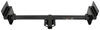
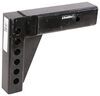
Reese Weight Distribution - RP66072
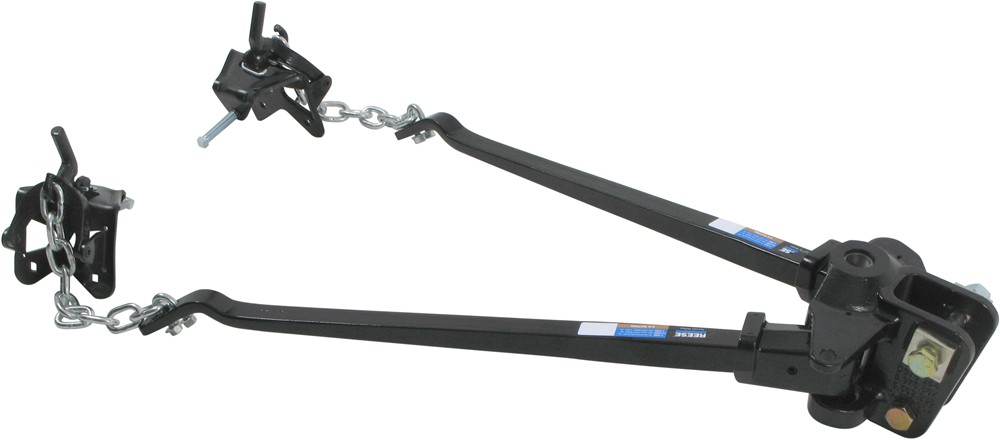
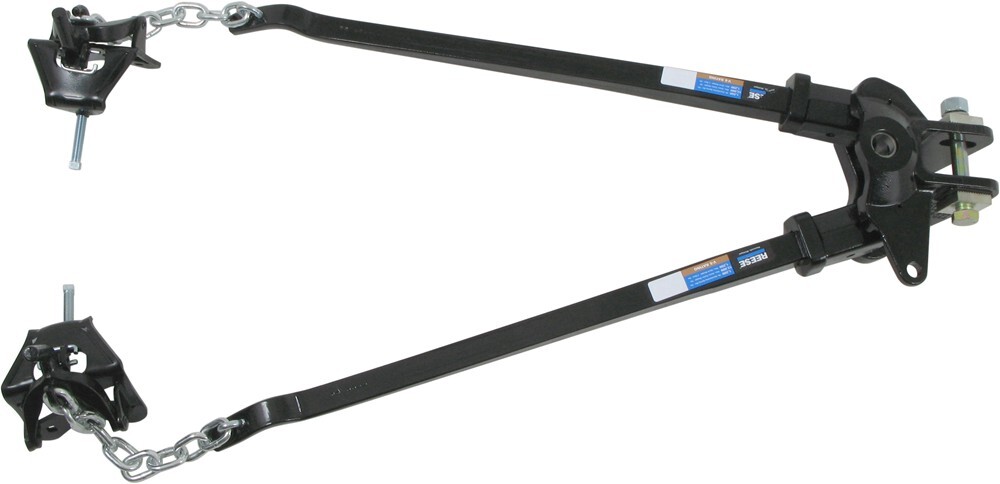
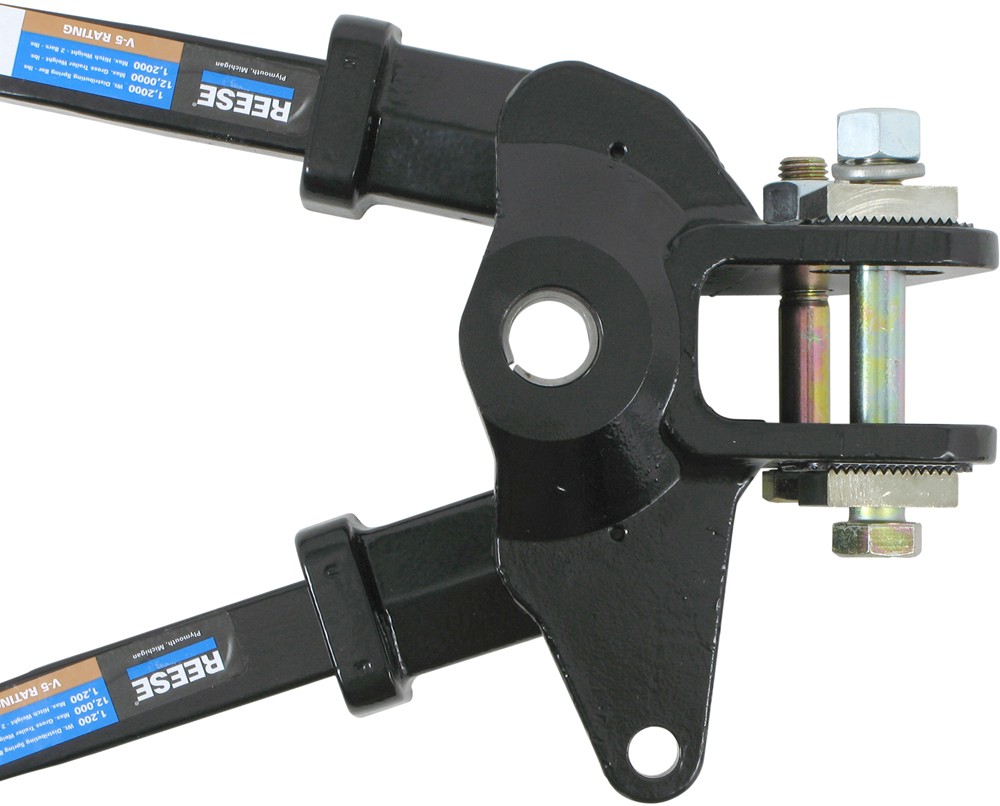
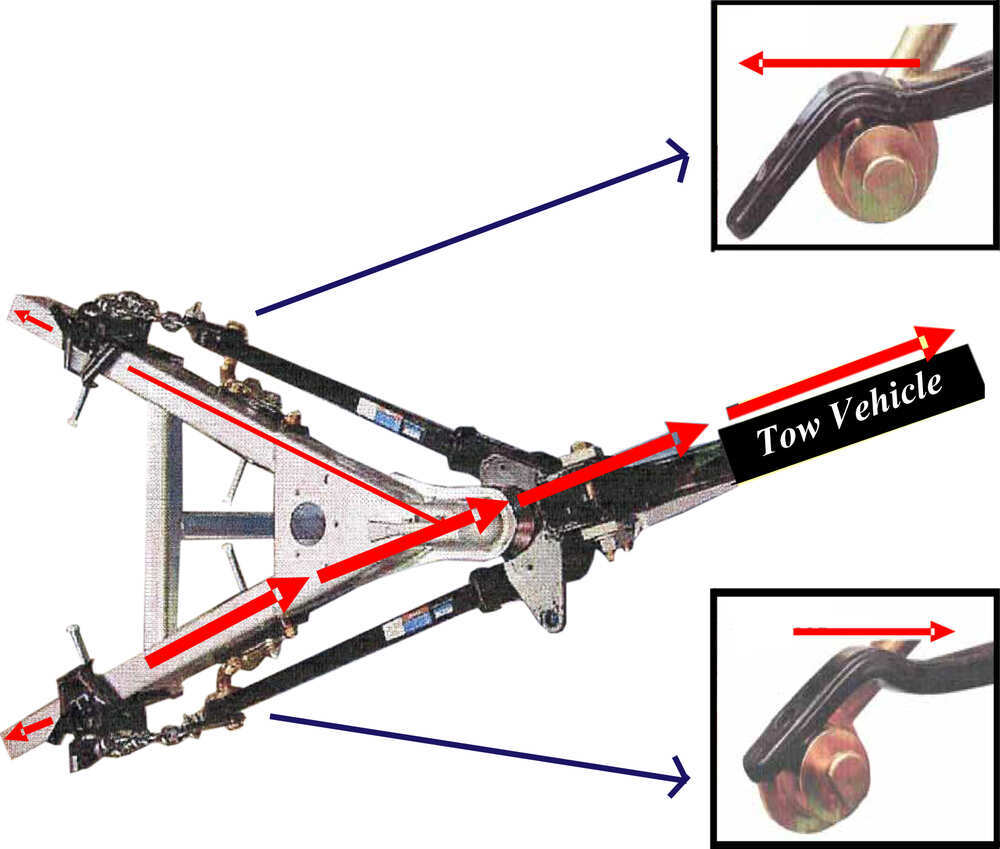
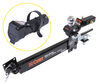
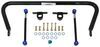
Featuring dual-cam sway control to stop trailer sway before it begins, this weight-distribution system has flexible, powder coated steel, trunnion spring bars that create a level ride for both your trailer and your tow vehicle. Shank sold separately.
Features:
- Evenly distributes weight over axles of tow vehicle and trailer for stability and control
- Creates a more level ride for both tow vehicle and trailer
- Automatically self-adjusting, self-centering sway control works in a variety of situations
- Straight-line movement - cams lock in position to hold trailer steady despite crosswinds
- Cornering - cams automatically unlock and slide to allow full-radius turns
- Sudden swerving - cams seek a straight-line angle to help stabilize trailer
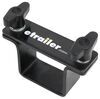
- Sway control bolts onto A-frame trailer tongue and attaches to lift brackets via chains
- No U-bolts or platforms to interfere with frame-mounted items such as gas tanks, toolboxes or generators
- Trunnion spring bars are hot rolled and tapered for superior strength and flexibility
- Bars flex appropriately over uneven terrain for a controlled, even ride
- Sway-control cams provide attachment point for spring bars
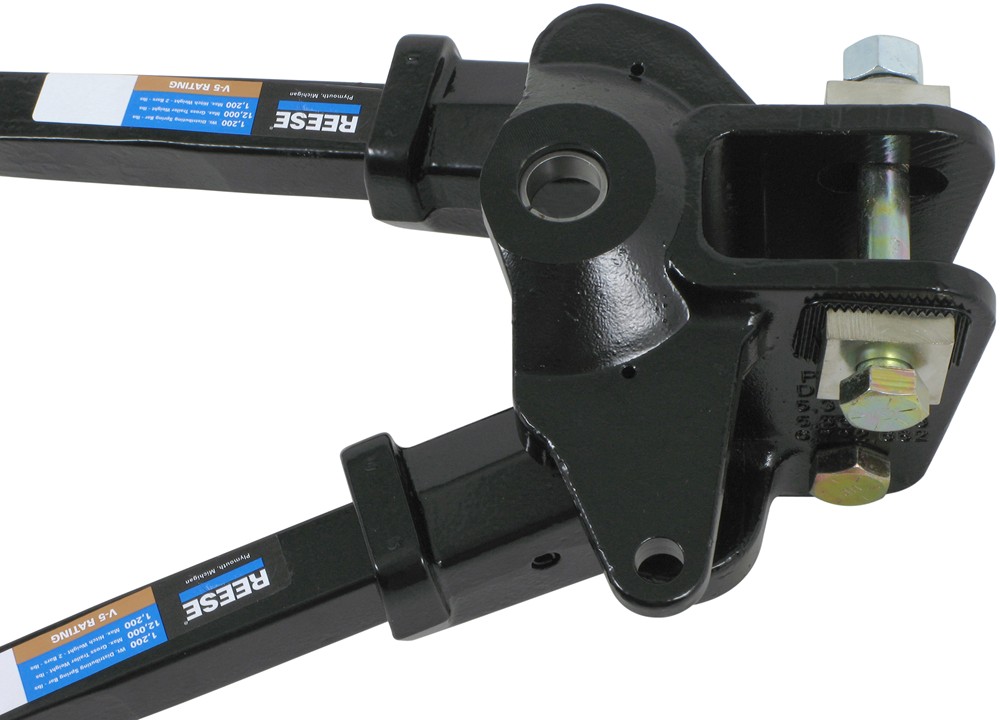
- Head assembly has a forged, raised ball platform - eliminates need for raised hitch ball
- Adjustable spring-bar tension - just switch links in lift chains to fine-tune
- Desired tilt is easily achieved with serrated-washer design - no more piling on washer after washer
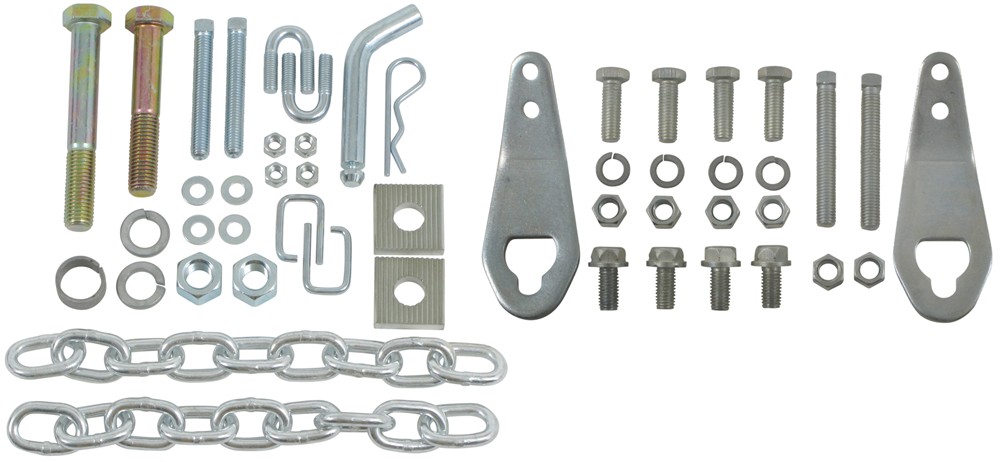
- System includes sway-control cams, head assembly, lift brackets, spring bars, lift chains and all necessary hardware
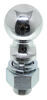
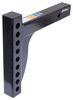
- Adjustable shank and trailer hitch ball sold separately
- Ball requires threaded shank with 1-1/4" diameter
- Made in the USA
Specs:
- Tongue weight: 200 lbs - 600 lbs
- Gross towing weight: 10,000 lbs
- Fits: 2" x 2" trailer hitch receivers rated for use with weight-distribution systems
- Lift-bracket positioning: mount about 30" back from hitch ball
- Requires approximately 5-1/2" of space along trailer frame
- Optional mounts (sold separately) that take up less space on trailer frame are available
- Will not fit trailer frames wider than 2-1/2"
- Limited lifetime warranty
| Included w/ RP66072 | Required - Sold Separately | Optional Add-Ons |
|---|
- System Head
- Sway-Control Cams
- Spring Bars
| - Adjustable Shank
- Hitch Ball w/ 1-1/4" Diameter Shank
| n/a |
Note: Dual-cam sway control cannot be use with surge-type trailer brakes and is designed for Class III and Class IV hitches only.

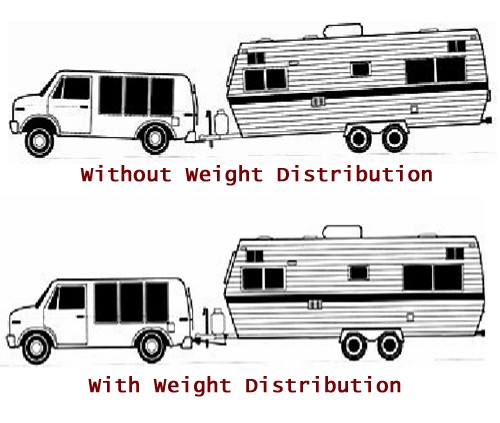
Create a stable ride for your tow vehicle and trailer with a weight-distribution hitch. Adding spring bars to your towing system applies leverage, which transfers the load that is pushing down on the rear of your vehicle to all the axles on both your tow vehicle and your trailer, resulting in an even distribution of weight throughout. The result is a smooth, level ride, as well as the ability to tow the maximum capacity of your hitch.
Selecting a Weight-Distribution System
The tongue weight rating is the most important factor in determining which size weight-distribution system you should use. If the bars of the system you choose are rated too high for your setup, they will create a rigid ride, which can result in a bouncing trailer. If, on the other hand, the bars are not rated high enough, the system will be unable to properly distribute the weight, rendering it virtually useless.
To determine the proper weight rating for a weight-distribution system, you must first determine your trailer's tongue weight. Then add to that the weight of the cargo behind the rear axle of your tow vehicle. These two measurements make up the tongue weight rating for a weight-distribution system.

Unique Features of Reese Strait-Line Weight Distribution
The easy-to-use, serrated washers on the Reese Strait-Line system make adjusting the tilt of the weight-distribution head a snap. This is a huge improvement over the standard pin-and-washer method, which involves piling washers - one on top of another - onto a difficult-to-access pin. The serrated-washer system lets you easily loosen, adjust and tighten a single washer and nut on either side of the head for simple, secure positioning.
The trunnion spring bars of the Strait-Line system slide into the weight-distribution head for quick, easy installation. With a tapered design and hot rolled steel construction, these bars offer superior flex, ensuring a smooth, controlled ride for both your tow vehicle and your trailer. These specially designed bars have rounded, hooked ends, making them the only kind of spring bars that can function with Reese's active-style, dual-cam sway control.

Dual-Cam Sway Control
Reese's dual-cam sway-control system stops trailer sway before it begins. This is a significant improvement over traditional friction-style controls, which help to correct sway only after it has already begun. This specially designed system uses unique sliding devices called "cams" to suspend the spring bars of your weight-distribution system. One end of a cam bolts onto your trailer's frame, and the other end attaches to the lift bracket via the lift chain. The rounded, hooked ends of the spring bars then sit in these cams. The controlled placement of the spring bars keeps your system secure while still allowing enough movement for free, easy interaction between your trailer and your tow vehicle.

During basic, straight-line towing, the cams lock in place and hold the trailer steady by applying constant, consistent pressure to both sides. This keeps the trailer from swaying in crosswinds. When you go into a turn, the cams unlock and slide to allow a controlled, full-radius maneuver. If you swerve suddenly, the cams will give to accommodate the movement while still working to obtain a straight angle, thereby maintaining control of the trailer.
66020 and 26002 Reese Strait-Line Trunnion Bar Weight Distribution Hitch without Hitch Bar
Customers compare RP66072 to these similar products
Customers Who Purchased This Weight Distribution Also Bought...
Replacement parts available for this product
Ask the Experts about this Reese Weight Distribution
Do you have a question about this Weight Distribution?
- Angle of hitch ball on Reese 1200 trunion hitch
- Tilting the hitch ball on your weight distribution system is a final adjustment to get the trailer perfectly level and apply the correct amount of tongue weight. You need to make this adjustment, if needed, after the the vehicle and trailer are loaded and ready for travel. If you are perfectly level, when fully loaded, and the ride is good with the hitch ball straight up no further adjustments are needed. If you need to add tongue weight for a better ride then you may find that you need to ad
view full answer...
- Availability of One Spring Bar for the Strait-Line Weight Distribution Hitch System
- Yes, we have the replacement spring bar for your weight distribution system. The Reese Replacement Trunnion Spring Bar, 1200 lbs, item # RP66009, will be the correct replacement spring bar for the Strait-Line Weight Distribution Hitch System 1,200lbs TW / 12,000 lbs GTW, item # RP66074.
view full answer...
- Which Weight Distribution and Sway Control System Should I use on a 1994 Chevy 3500 with Car Trailer
- In order to select the best suited weight distribution system for your setup, you will need to know the total loaded weight of the trailer, the 2,700 pounds for the car, 500 pounds for the golf cart, the weight of anything else in the trailer and the weight of the trailer itself. You would then select a weight distribution system based on this total.
The need for a Sway Control system is going to be based on how the weight is distributed in the trailer and the length of the trailer. Since you
view full answer...
- Hitch, Weight Distribution System, Sway Control, Brake Controller, Wiring for 2007 Toyota FJ Cruiser
- Weight Distribution is a good idea if you are pulling at least 50 percent of your vehicles weight. Many good WD systems come with sway control, too, so we will look at those. First, you will need a hitch.
I recommend the Curt Trailer Hitch, # 13367, which is a custom fit item for your 2007 Toyota FJ Cruiser, unless your FJ is equipped with the auxiliary fuel tank. The hitch will bolt to the frame and this one will install in about 30 minutes. I have included a link to the instructions below.


view full answer...
- Best Weight Distribution and Sway Control Option for 1998 Durango
- Typically, we figure trailer tongue weight as being from 10 to 15 percent of the weight of the fully loaded trailer. You have provided me with the weight of the items placed on the trailer, but not the weight of the trailer itself. When figuring tongue weight, the weight of any items placed behind the rear axle in the tow vehicle must be considered as well.
We have an online page that shows how to determine the tongue weight of the trailer using a length of pipe, some scrap lumber and a bathr
view full answer...
- Adjusting Reese Strait-Line Hitch, # RP66072 to Reduce Trailer Hitch Ball Grating
- Adjusting the ball on the head unit of the Reese Strait-Line Hitch, # RP66072, in order to change the number links in the chains is going to require some trial and error. This is because each vehicle/trailer setup is different and there is not a universal formula for how many notches on the ball adjustment equal how many links on a chain. Most likely several adjustments will need to be made.
Start by parking the tow vehicle and your trailer, loaded and ready to travel, on a level surface. Mea
view full answer...
- How to Alleviate Sag on the Rear End of a 2005 Ford F-150 Towing a Toy Hauler
- Toy hauler trailers are notorious for having very heavy tongue weights, often up to 15 or 20 percent of the loaded trailer weight. Just because the F-150 itself is not made for very heavy duty loads, you will probably see some sag with whatever you do, but there are some things you can do to relieve some of the pressure on the rear end. I would try moving your load back from the front of the trailer to see if that alleviates some of the sag you are experiencing.
For an example, even with the
view full answer...
- Weight Distribution Hitch Recommendation for a 1998 Ford F150 Pulling a 4700 lb Trailer
- For you setup I would recommend a Pro Series RB2 Round Bar Weight Distribution Kit with Shank, 800 lbs TW / 10,000 lbs GTW, part # 49569. This system has a max tongue capacity of 800 lbs, and is a round bar setup.
The most notable difference between trunnion and round bar setups is how they attach to the head of the weight distribution system.The round style bars slide up into the head and are held in place with clips. The trunnion style bars slide into the head from the side or back.
view full answer...
- Weight Distribution with Sway Control and Transmission Cooler Recommendation for 1998 Ford F150 4.6L
- The Strait-Line Weight Distribution with Sway Control, part # RP66072, you referenced would work very well as a weight distribution and sway control system for pulling your 1987 21 foot Sunline Camper with your 1998 Ford F150. I have included a link below to installation instructions and an FAQ page that you might find helpful.
I would strongly recommend you upgrade your transmission cooler also. I would recommend the Derale Transmission Coolers for the 1998 F-150 and F-250 Light Duty by Ford
view full answer...
- Weight Distribution Recommendation and Information for a 2010 Ford Flex FWD 3.5L
- Yes, I can explain what the tip up brackets are. They are the brackets that are mounted to the top of the trailer frame and that the chains, at the end of the spring bar in a weight distribution system, are attached to. The tip up brackets are lowered, the chains are attached and then the brackets are tipped up, applying pressure to the spring bars, which in turn distributes weight to the trailer and vehicle axles and reduces the tongue weight on the ball mount and trailer hitch. This weight dis
view full answer...
- Are The Pin Clips Available For The Lift Brackets On The Reese Weight Distribution # RP66072
- On the Reese Strait-Line Weight Distribution, part # RP66072, you can use the Reese Replacement Clips for Weight Distribution Uplift Brackets, part # 58029. These clips are used to lock the yoke of the snap-up bracket in the raised position. They come in a set of two clips.
I also have the Reese Replacement Lift Bracket, part # RP21501, which is the whole lift bracket with set screw bolt and the safety pin clips.
view full answer...
- Weight Distribution and Sway Control Recommendation for Towing a 5800 GVW Heartland FX23 Camper
- To haul a trailer with the weight you listed, I would recommend that you use a Strait-Line Weight Distribution with Sway Control, part # RP66073. When you pick out a weight distribution system, you want to make sure it has weight capacities that encompass the weight of the trailer you are planning on towing, as well as any weight that will be loaded behind the rear axle.
With that being said, I can not safely recommend you pull a trailer that weighs more than what your manufacturer recommends
view full answer...
- Recommendation for Weight Distribution on 2008 Honda Odyssey Towing a 3,500-Lb Jayco Travel Trailer
- Thanks for supplying all of the critical information of the trailer. This helps in choosing the correct system for your vehicle.
To choose a weight distribution system you will need a system that has a tongue weight capacity range that encompasses the trailer tongue weight loaded and ready to tow, plus the weight of any gear in your 2008 Honda Odyssey EX, behind the rear axle. I am including a link to a FAQ page on weight distribution.
With the gross trailer weight rating of your trailer a
view full answer...
- How To Attach Reese Weight Distribution # RP66072 To Travel Trailer With Propane Tanks in the Way
- On the Reese Strait-Line Weight Distribution, part # RP66072, the lift brackets for the spring bars are positioned on the frame about 30 inches back from the center of the hitch ball on the coupler. If you have anything in the way on your 2012 Kodiak 200QB travel trailer that will keep the lift brackets from being attached over the frame you can use the Reese Bolt-On Chain Hangers, part # RP58305, which would allow you to bolt the chain hanger to the side of the trailer frame.
The bolt-on cha
view full answer...
- How to Choose a Weight Distribution System for a 2007 FJ Cruiser Towing a Horse Trailer
- To ensure that you choose the correct weight distribution system for your horse trailer, we will need to know some information about your trailer. The most important factor to consider when purchasing a weight distribution system is the tongue weight of your trailer when it is fully loaded and ready to tow.
Each weight distribution system that you look at will have a tongue weight capacity range. You will want to choose a system that encompasses the tongue weight of your trailer. For example
view full answer...
- Trailer Hitch, Weight Distribution and Accessories for a 2008 Honda Odyssey and Airstream Trailer
- First, the towing capacities of a vehicle are set. Even though a trailer hitch may be rated for use with weight distribution and the rating when using it is higher that still does not allow the vehicle to tow more weight than what it is rated for. You will need to get the tongue weight below the 350 pound limit of the vehicle to safely tow the trailer. You can do this by moving weight towards the back of the trailer if at all possible.
For a trailer hitch the most popular option is the Hidden
view full answer...