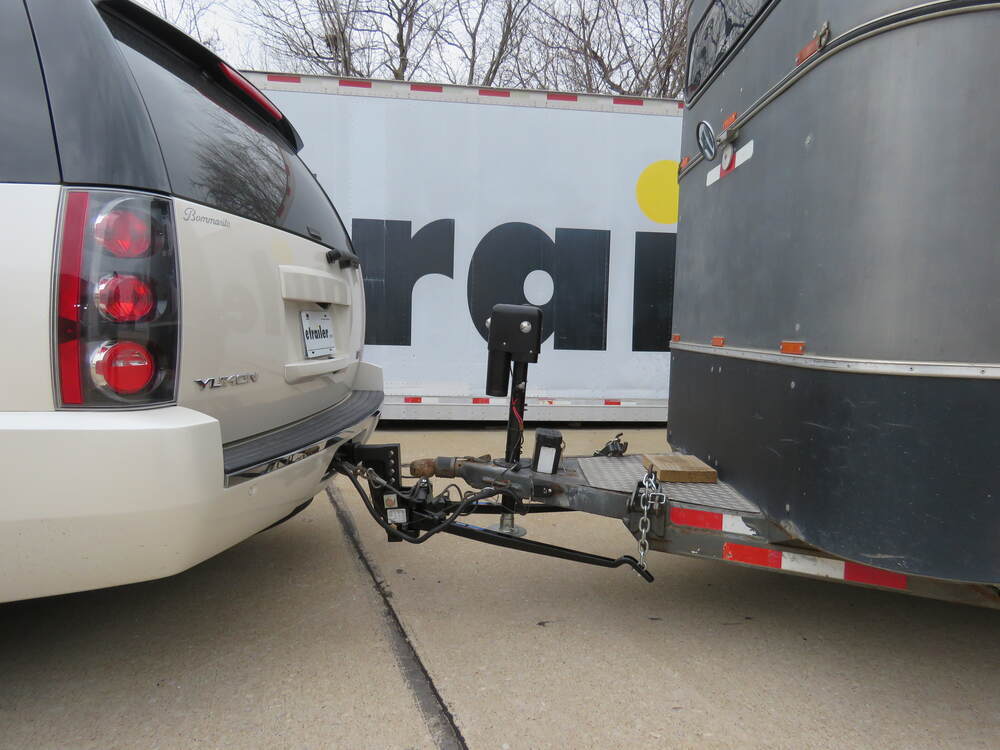
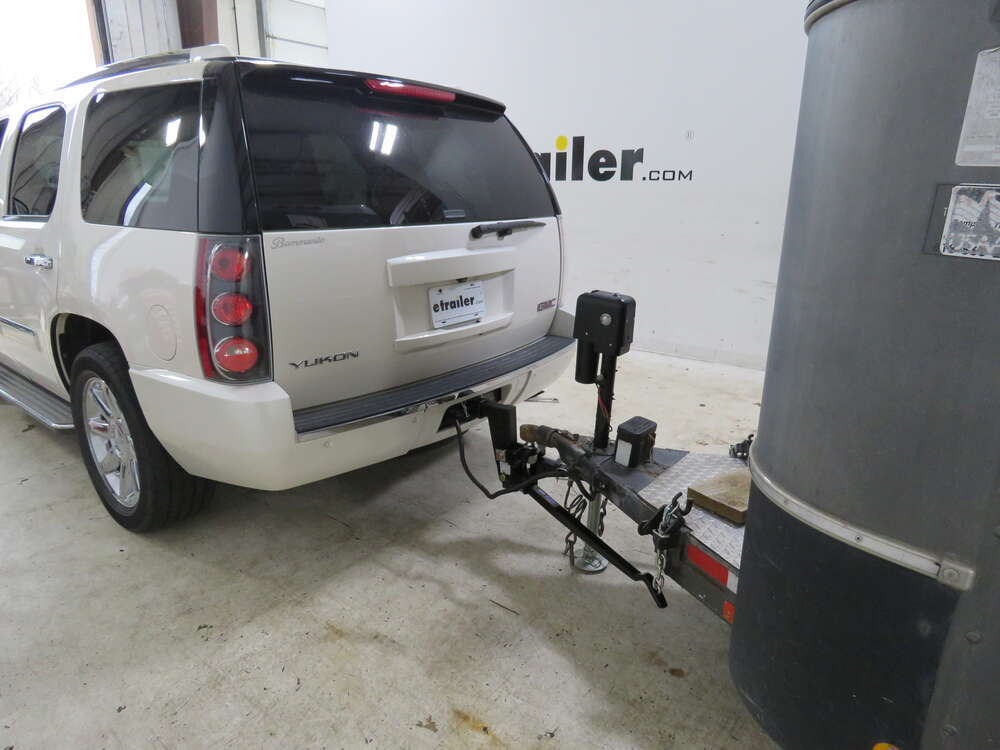
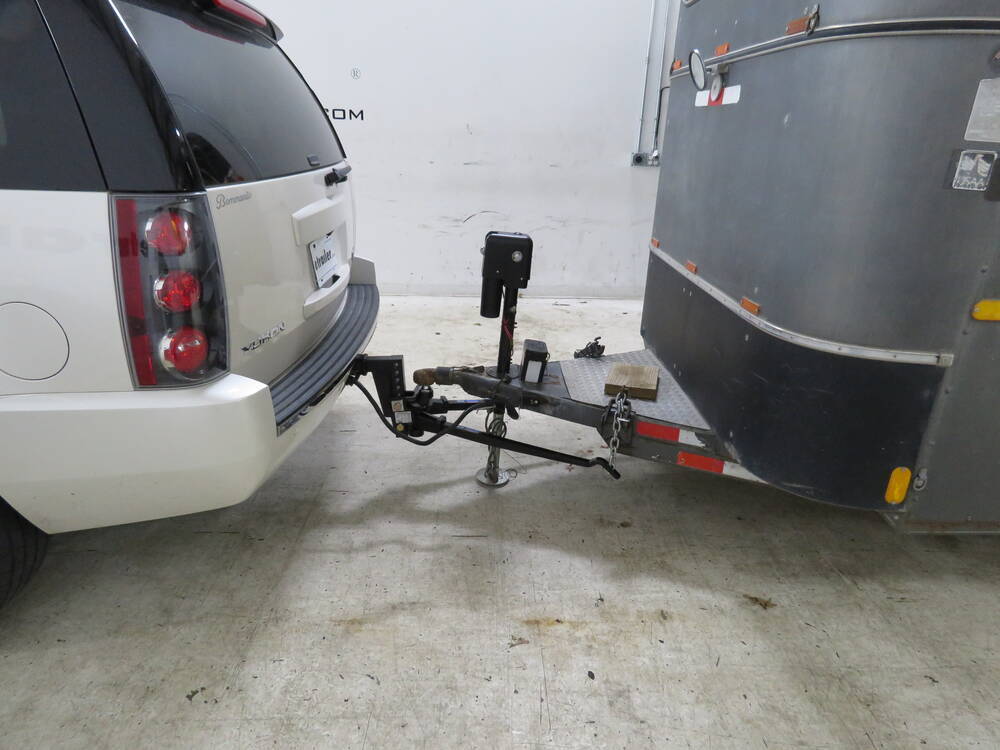
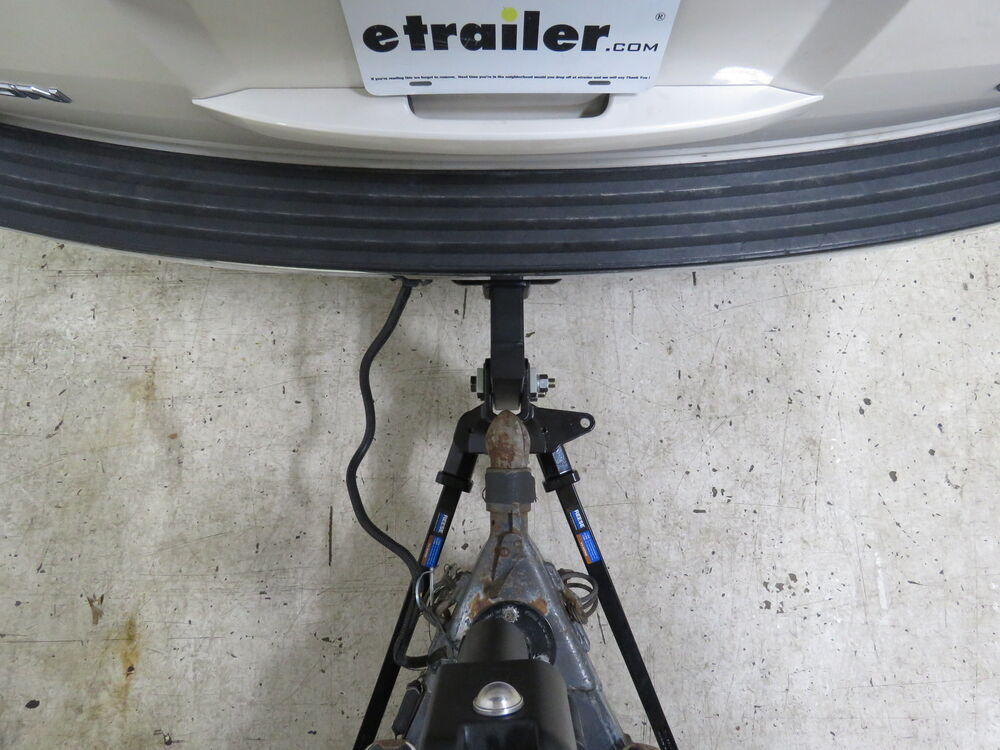
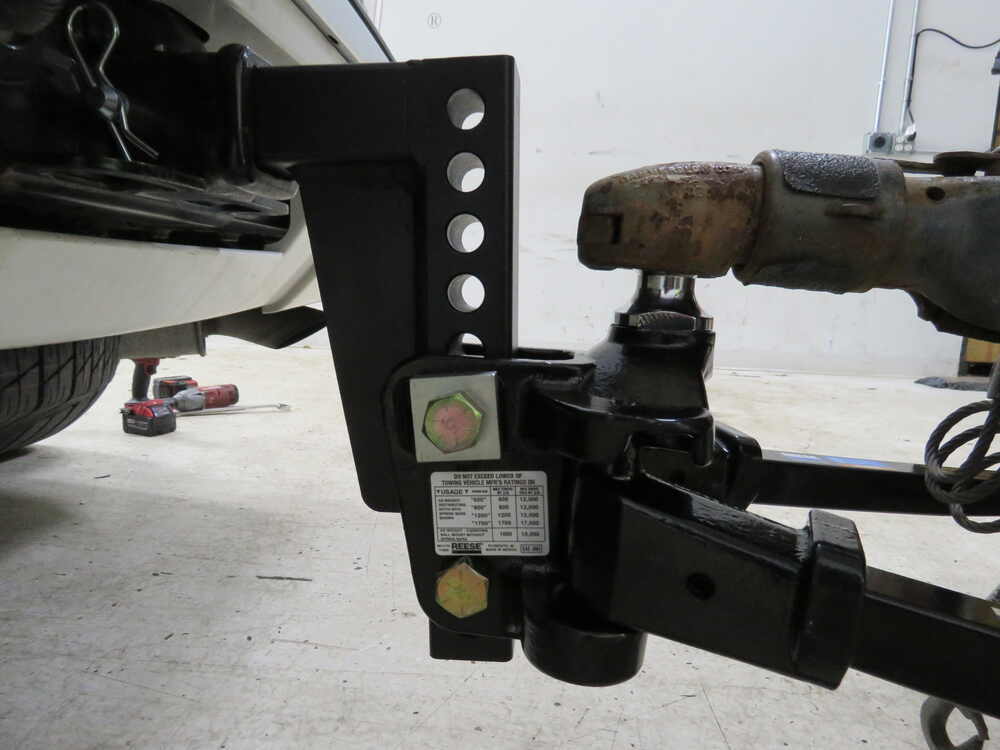
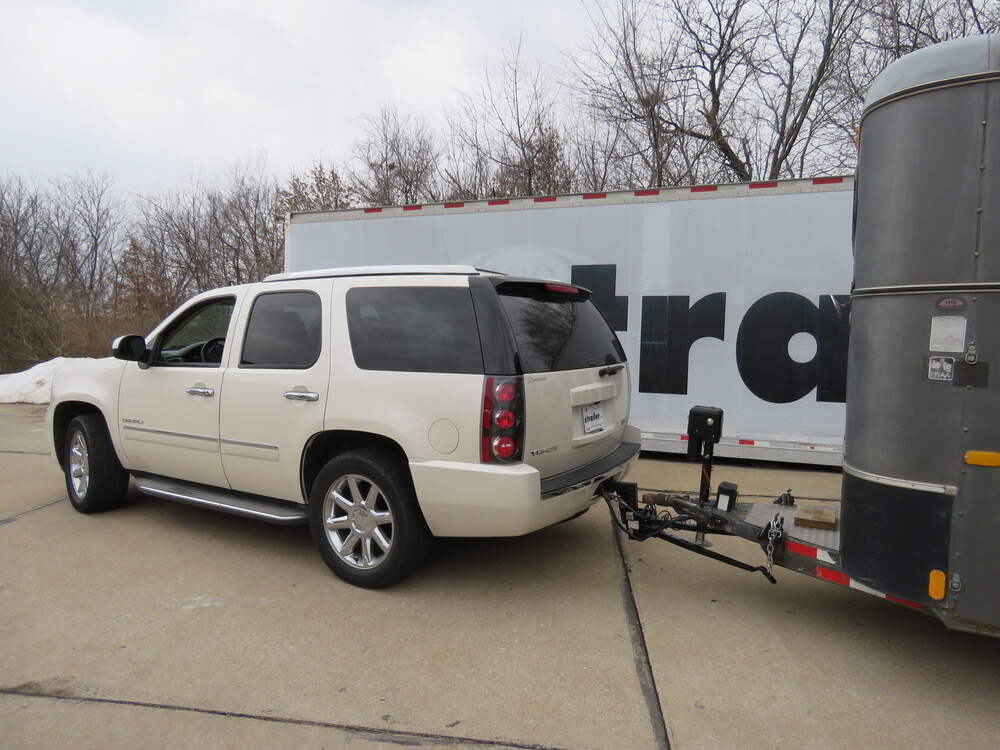
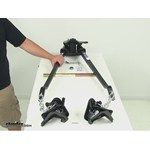
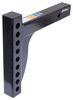
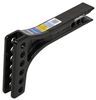
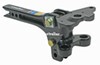
Reese Weight Distribution - RP66022
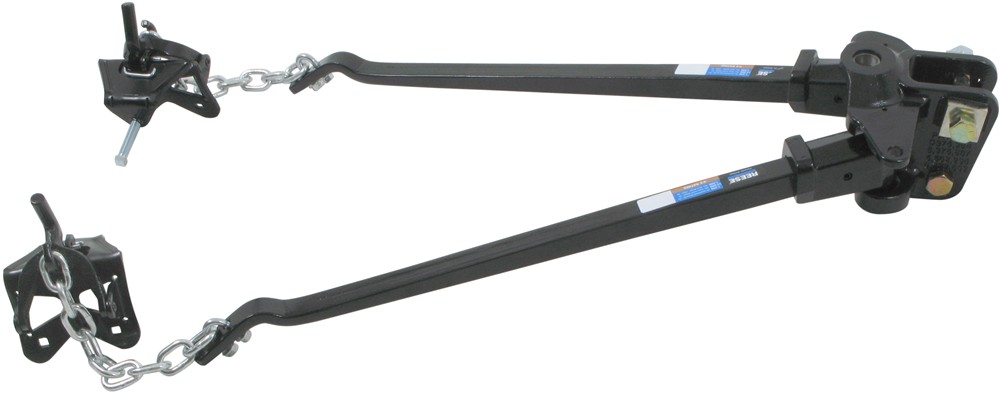
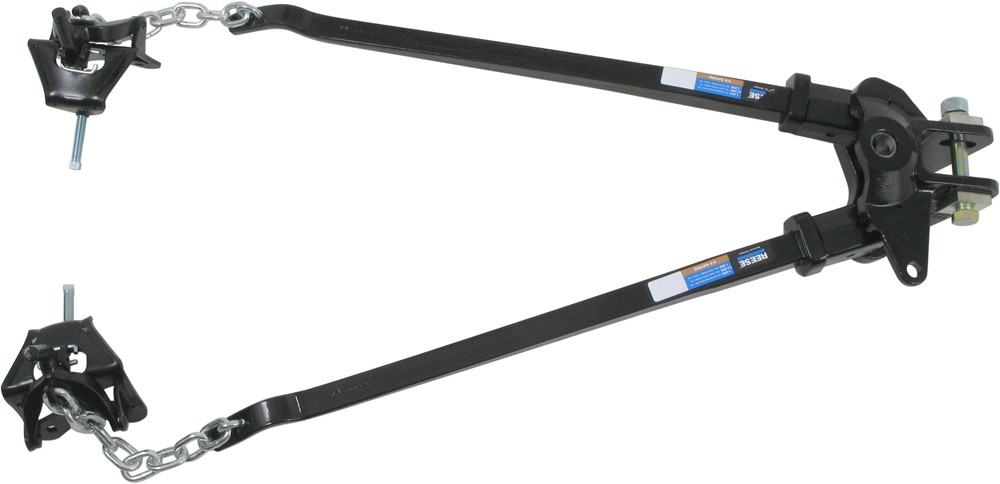
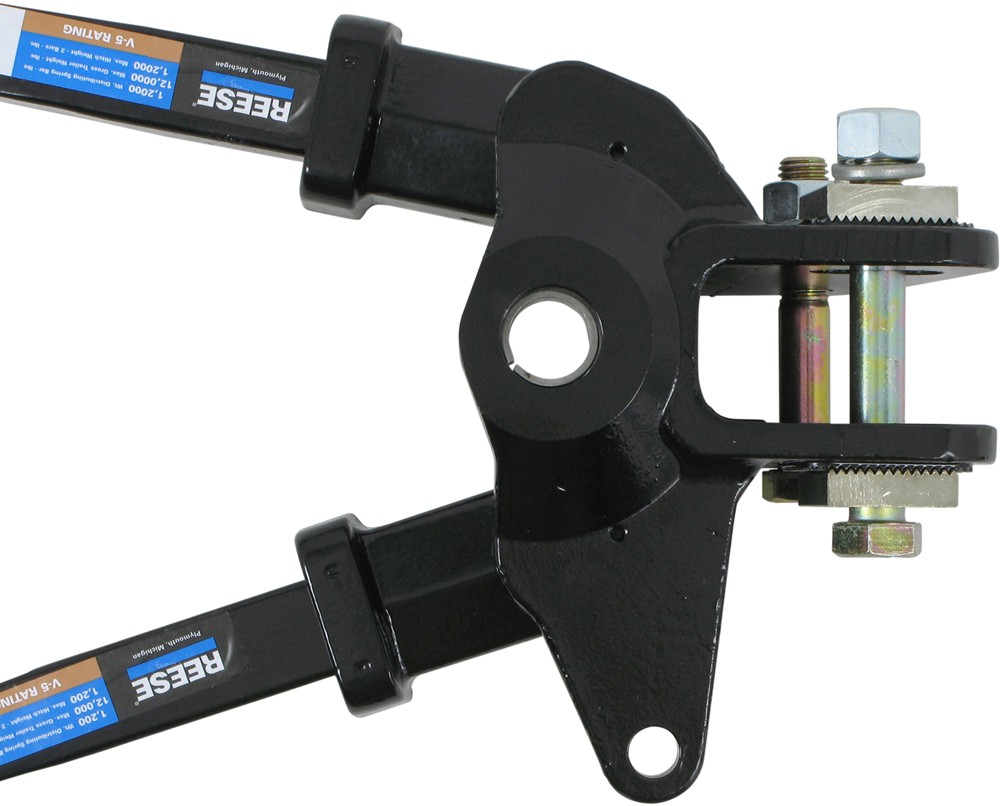
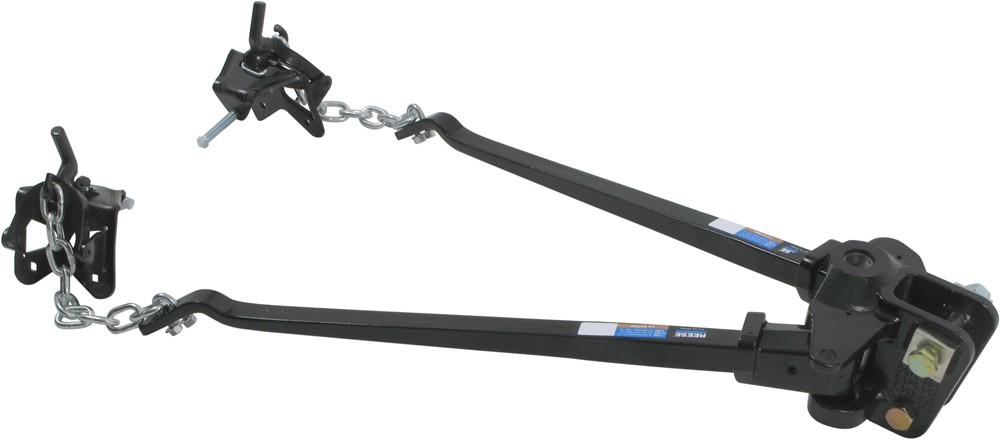
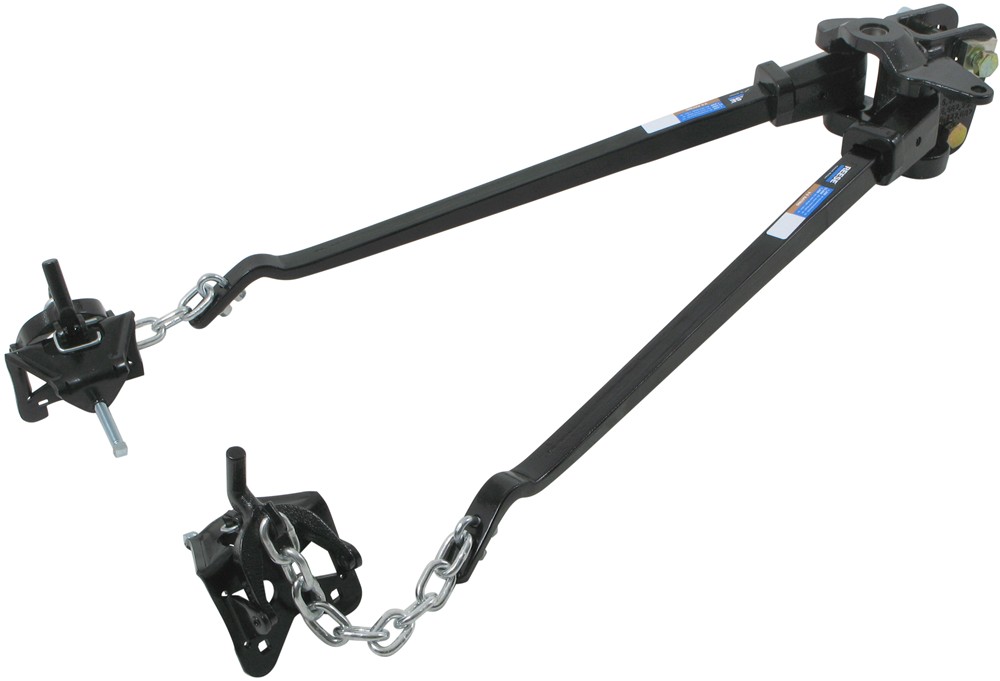
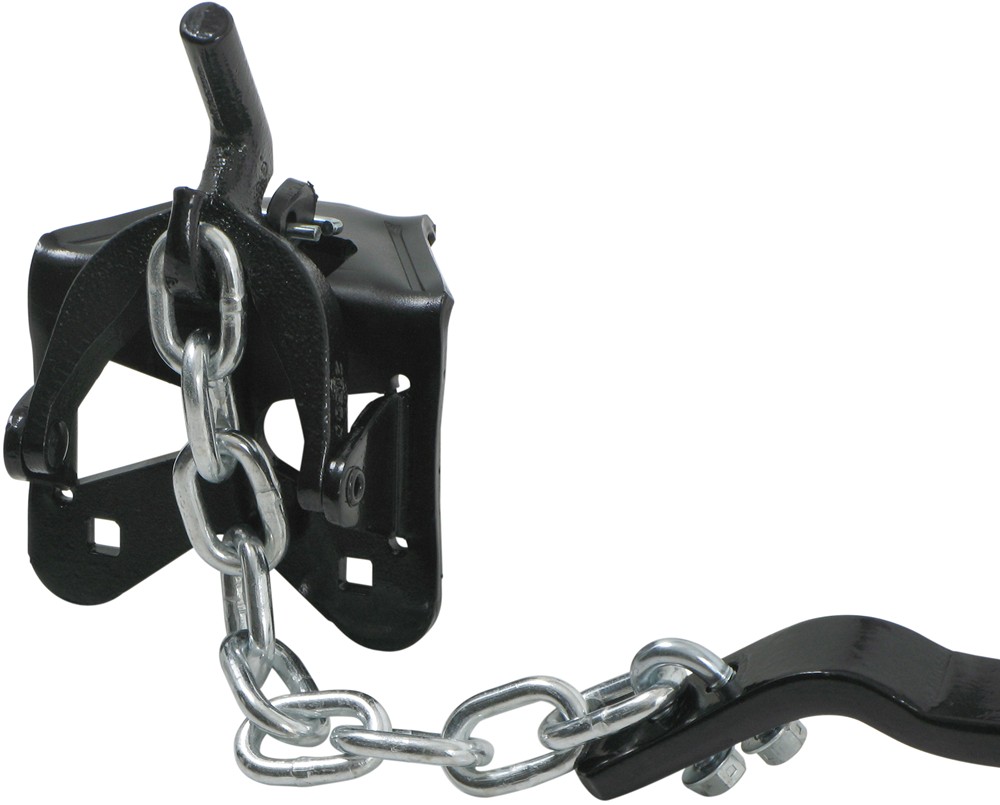
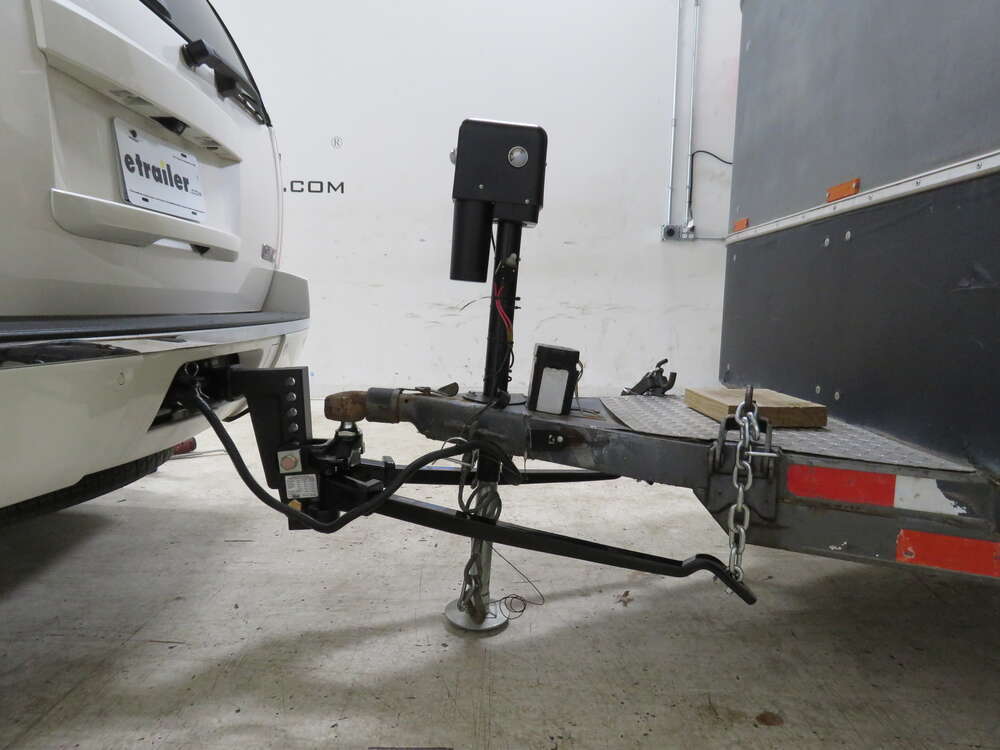
High-performance system is designed to offer the best in weight distribution with an easy-to-adjust, forged head; a raised ball platform; and flexible, powder coated steel, trunnion spring bars. Adjustable shank and hitch ball sold separately.
Features:
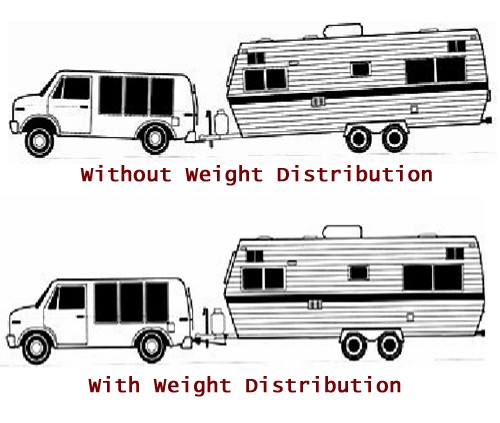
- Evenly distributes weight over axles of tow vehicle and trailer for stability and control
- Creates a more level ride for both tow vehicle and trailer
- Trunnion spring bars are hot rolled and tapered for superior strength and flexibility
- Bars flex appropriately over uneven terrain for a controlled, even ride
- Curved ends are designed for use with dual-cam sway control (RP26002 - sold separately)
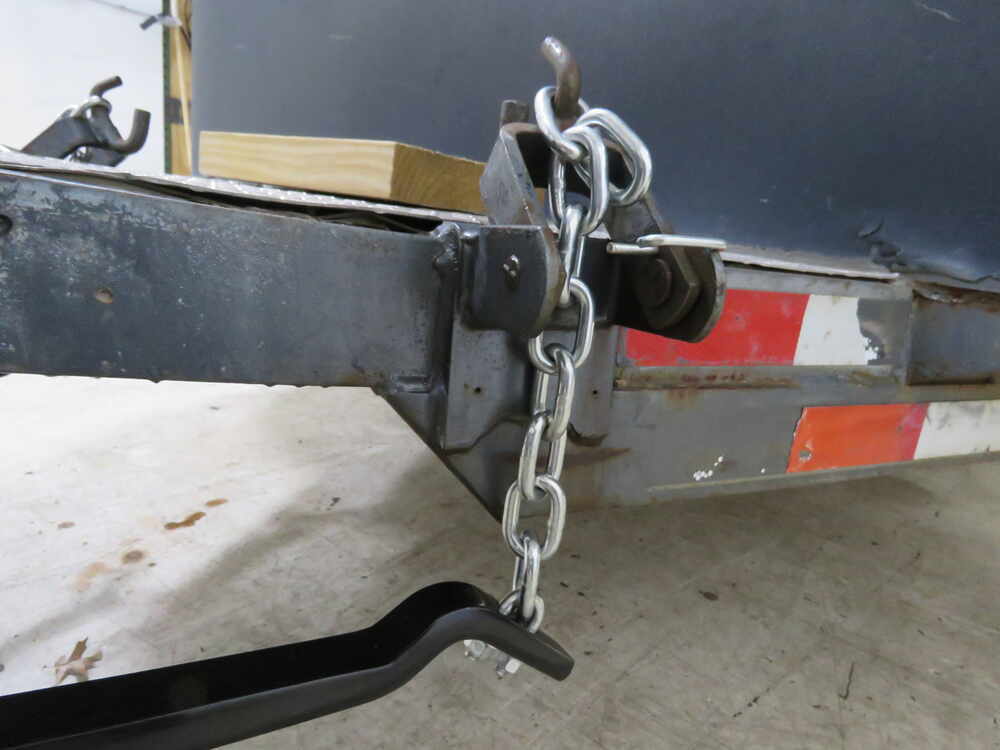
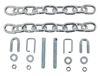
- Adjustable spring-bar tension - just switch links in lift chains to fine-tune
- Desired tilt is easily achieved with serrated-washer design - no more piling on washer after washer
- Forged, raised ball platform on head eliminates need for raised hitch ball
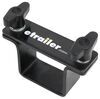
- System includes head assembly, lift brackets, trunnion spring bars, lift chains, and all necessary hardware
- Adjustable shank and trailer hitch ball sold separately
- Ball requires threaded shank with 1-1/4" diameter
- Made in the USA
Specs:
- Tongue weight: 600 lbs - 1,200 lbs
- Gross towing weight: 12,000 lbs
- Fits: 2" x 2" trailer hitch receivers rated for use with weight-distribution systems
- Lift-bracket positioning: mount about 30" back from hitch ball
- Requires approximately 5-1/2" of space along trailer frame
- Optional mounts (sold separately) that take up less space on a trailer frame are available
- Will not fit trailer frames wider than 2-1/2"
- Limited lifetime warranty
| Included w/ RP66022 | Required - Sold Separately | Optional Add-Ons |
|---|
- System Head
- Lift Brackets
- Spring Bars
| - Adjustable Shank
- Hitch Ball w/ 1-1/4" Diameter Shank
| - Bar-Style Friction Sway Control
- Dual-Cam Sway Control
|

Create a stable ride for your tow vehicle and trailer with a weight-distribution hitch. Adding spring bars to your towing system applies leverage, which transfers the load that is pushing down on the rear of your vehicle to all the axles on both your tow vehicle and your trailer, resulting in an even distribution of weight throughout. The result is a smooth, level ride, as well as the ability to tow the maximum capacity of your hitch.
Selecting a Weight-Distribution System
The tongue weight rating is the most important factor in determining which size weight-distribution system you should use. If the bars of the system you choose are rated too high for your setup, they will create a rigid ride, which can result in a bouncing trailer. If, on the other hand, the bars are not rated high enough, the system will be unable to properly distribute the weight, rendering it virtually useless.
To determine the proper weight rating for a weight-distribution system, you must first determine your trailer's tongue weight. Then add to that the weight of the cargo behind the rear axle of your tow vehicle. These two measurements make up the tongue weight rating for a weight-distribution system.

Unique Features of Reese Trunnion-Bar Weight Distribution
The easy-to-use, serrated washers on the Reese system make adjusting the tilt of the weight-distribution head a snap. This is a huge improvement over the standard pin-and-washer method, which involves piling washers - one on top of another - onto a difficult-to-access pin. The serrated-washer system lets you easily loosen, adjust and tighten a single washer and nut on either side of the head for simple, secure positioning.
The trunnion spring bars of this system slide into the weight-distribution head for quick, easy installation. With a tapered design and hot rolled steel construction, these bars offer superior flex, ensuring a smooth, controlled ride for both your tow vehicle and your trailer. In addition, these specially designed bars have rounded, hooked ends, making them the only kind of spring bars that can function with Reese's active-style, dual-cam sway control (sold separately).
66022 Reese Trunnion Bar Weight Distribution Hitch without Hitch Bar
Video of Reese Weight Distribution w/out Shank - Trunnion Bar - 12,000 lbs GTW, 1,200 lbs TW
Videos are provided as a guide only. Refer to manufacturer
installation instructions and specs for complete information.
Video Transcript for Draw-Tite Trunnion Style Weight Distribution Kit Installation
This part is good for 1,200 pounds tongue weight and 12,000 pounds trailer weight. Before we start we need to take care of a few preliminary steps, first its good to get the trailer in line at a nice level spot then take it apart and get some measurements off of it and well show you what measurements you need. The first measurements we need are on the truck itself. Were going to measure from the top of the wheel well down to the ground. The reason for these measurements is to make sure we get the truck back to its original height or as close as possible. Finally we need the coupler height with the trailer level on the ground. Just to make sure we need to measure from the ground to the top of the wheel well. On the front wheel we have 39-1/2 inches, and at the rear axle we have 41-1/2inches. from the ground to the top of the coupler we have about 23 inches.
Go ahead and write those measurements down on the blanks of your instruction sheet for reference later on. To start off the assembly we need to put the shank into the truck and put our head assembly on the back, loosely, and attach our ball. When installing our shank here, were going to do a quick estimate where its going to lay at, chances are were going to have to adjust it up or down. For now were just going to hold it in place. Were also at this point going to install our adjustment washers, well start off with six washers and we can always adjust it from there. Next well install the ball on here and to make it easier we will turn this sideways. Well install our 2-5/16 ball, which is part number 19286. Next were going to install the chains on our spring bars and we do that by putting the chain up to the spring bar, ing a u-bolt and putting some nuts on to hold it in place. When you tighten these down, you run the threads past the nut is all it takes. You just have to make sure this has plenty of movement. Now repeat for the other side. Next were going to couple up the truck and the trailer. We did leave the head assembly loose, which well tighten down as one of the last things we do. Next we install our spring bars and start getting those adjusted up. Before we install our lift lock brackets, we the tightening bolts that go in here. Sometimes the paint gets a little thick in there, so you might have to use a wrench to run them through. Really all this bolt does is hold everything in place. Optionally you can use these two bolt holes to permanently attach these to your trailer if you want, but its not a have to deal.
Now we need to position the lift lock brackets. You need to pull the spring bar up some you wont get too far, but pull chain as vertical as you can. Align the bracket with the center of the chain. At this point we can tighten the bracket down to the frame. Now well repeat for the other side. It looks like theres some cables in the way so well undo this to make room for it. Once we have the cables out of the way we can install our bracket. Now we can make the springbar chain connection. With the lift unit in the raised position, well pull on the chain and note which link is closest to the hook. Well note which one it is and go down two links and use that one for the hook up. Now well jack up the trailer on the ball pulling up the truck at the same time to take tension off and making it easier to hook up the chains. Now repeat for the other side. One thing to make note of is to make sure you have five links minimum. That way you have plenty of room for the chain to move in between turns. Next we our safety clips, then well lower the jack and let it carry the weight. Well adjust the hook up if necessary, we need to check and make sure the ride height hasnt changed that much. We need to check the opening at the fronts original uncoupled dimension and compare it to what we have now. 39-1/2 inches is the original dimension, and we have 39-1/2 still. The rear should be slightly lower, originally it was 41-1/4 and I have 39-3/4. About a half an inch which is acceptable. It looks like weve chosen the right weight distribution, now well tighten down the bolts on the head assembly. With our head bolts tightened down and our head screw tightened down, all in all were ready to tow. If the measurements didnt come out right, one thing wed have to do is remove some of the washers on the top or add some to achieve the proper tension we need. That covers it for part number 7903 the Draw-Tite weight distribution assembly for our 1200 pounds tongue weight and 12000 pounds trailer weight.
Customers compare RP66022 to these similar products
Customers Who Purchased This Weight Distribution Also Bought...
Replacement parts available for this product
Ask the Experts about this Reese Weight Distribution
Do you have a question about this Weight Distribution?
- Is Towing without a Weight Distribution System Safe?
- You have 3500 lbs to play with here, so towing that trailer should not be a problem. You do not need the w/d system to extend the towing capacity of the hitch, but the systems do have other benefits. Because a w/d system removes some of the tongue weight from the rear axle and transfers it to the front axle of the tow vehicle, using the system can increase performance in steering, traction, and stopping while also decreasing trailer sway.
You have a fairly long trailer, and I am not sure how
view full answer...
- Replacement Retaining Clips for the Uplift Brackets on a 1000lb Reese Weight Distribution System
- We offer replacement retaining clips # 58029 for the Reese uplift brackets.
These clips would be for the newer Reese weight distribution systems made in August 2006 or later.
view full answer...
- Which Spring Bars Would be Best 600 lb or 800 lb For Dodge Ram 1500 4x4 and Starcraft Hybrid Antiqua
- When determining the correct spring bars for your trailer you will need to take into account the weight of gear loaded behind the rear axle of the truck and the additional tongue weight loaded in the camper.
I believe larger is better but in your case the 1,200 pound bars are too stiff if they are causing the ride to be uncomfortable. I would go with the 800 pound spring bars, item # RP22225, since you will have gear behind the rear axle and gear to load into the camper.
With 350 pounds of
view full answer...
- Weight Distribution System for Towing a 20 Foot Enclosed Car Hauler With Different Loads
- When determining the correct spring bars for your trailer you will need to take into account the weight of gear loaded behind the rear axle of the truck and the additional tongue weight loaded in the trailer.
I believe bigger is better and safer so I would go with a 1,200 pound spring bar rated system, item # RP66074, for the trailer you are describing. By the time you are loaded and ready to travel your trailer tongue weight will most likely be approaching the mid range weight capacity of th
view full answer...
- What Weight Distribution System For 2008 Chevy Silverado 1 Ton Towing A Trailer With 13,000 GVW
- I would recommend using the Reese Heavy Duty Trunnion Weight Distribution System, # RP66131, it is designed for 1,500 lbs. tongue weight and 15,000 lbs. Gross Towing Weight. You can also add the Draw-Tite Dual Cam High Performance Sway Control, # RP26002, to give you the pro-active sway control.
This is the same system as the Reese High Performance Trunnion Weight Distribution System, # RP66022, you have referenced, but it has a higher tongue weight and towing weight.
Because your traile
view full answer...
- How To Keep Trunnion Bars From Coming Out Of Hitch Head On The Reese Weight Distribution, # 66022
- The trunnion bars on your Reese Weight Distribution System, # RP66022, should not fall out of the head assembly when driving down the road or during normal turns. When backing the trailer or turning very sharply the bar could come loose especially if the spring bars are not very tight.
You should check the weight distribution head and trunnion head for damage and replace them if needed. You should also review your set-up instructions and make sure the attachment is correct.
I would also r
view full answer...
- What Size Wrench is Needed to Tighten the Bolts and Nuts on Reese Weight Distribution Head # 58167
- We have the instructions for you to review (see link). Remember to park the truck and trailer on a fairly level surface and get the ball mount height right, 3/4 to 1 inch higher than level coupler height, and you will not have any problems.
The wrenches needed will be 1-1/8 inch, for the bolts attaching the weight distribution head, item # RP58167, to the shank.
You may want to get some grease, item # L10337, to lubricate the spring bars and ball on your new system. I have attached a video
view full answer...
- Various Solutions When Having Trouble Unhooking or Uncoupling a Trailer from the Tow Vehicle
- There are a couple of things you can do to make uncoupling the trailer easier, depending on what is causing the problem. If the spring bars on the weight distribution system, # RP66022, are too tight, you may need to go back and set up the system as if you are just installing it for the first time. I have included a link to the installation details below for reference.
Another thing you can do to release tension from tight spring bars is to use the trailer jack to lift up on the trailer. This
view full answer...
- Weight Distribution System Recommendation for Pulling a 1200 lb Tongue Weight Trailer
- I spoke with our contact at Reese and he said that heavier trunnion bars would not fit into the current weight distribution system you have, and that you would need to upgrade to a whole new system to pull the trailer you have that has a tongue weight of 1,200lbs.
He recommended the Reese Weight Distribution w/out Shank - Trunnion Bar - 15,000 lbs GTW, 1,500 lbs TW, part # RP66131. The reason you want a system that is capable of holding more weight than you plan on towing is that you want to
view full answer...
- Adjusting a Weight Distribution System for Best Performance
- The Reese Weight Distribution System, # RP66022, has several points of adjustability depending on your application. The head unit can be tilted toward or away from the trailer which will raise or lower the spring bars. The head can also be adjust vertically and the spring bar chains can be adjusted. What you are looking for is a level trailer with the spring bars parallel with the trailer frame or pointed down slightly. Ideally, you will want 5 chain links between the spring bars and hanger brac
view full answer...
- Weight Distribution and Sway Control Recommendations for a 2004 Ford Explorer
- Weight distribution can only be used with a Class III hitch or higher. What you can do if you want to use weight distribution is add a Class III trailer hitch. The Draw-Tite Trailer Hitch, # 75132, will fit under the factory 1-1/4 inch hitch that you have on your 2004 Ford Explorer. With this hitch installed, you can add weight distribution provided that the vehicle owners manual allows the use of weight distribution as well.
If you can go this route, you would the need a weight distribution
view full answer...
- Correcting Sway on 24 Foot Camper Towed By 2007 Jeep Grand Cherokee
- For trailers exceeding 25 or 26 feet in length, using two friction sway controls with one being installed on each side of the trailer is recommended. Since you are so close to that length, going with two units would certainly help. However, when the short (relatively speaking) wheel base of your Grand Cherokee is considered, I do not believe friction sway control will solve your issue.
A friction unit will resist sway once it has started. The dual-cam approach actually forces the trailer to r
view full answer... 
- Weight Distribution and Sway Control Recommendation for a 2004 Dodge Ram 3500 towing Travel Trailer
- The thing about air bags is they do not distribute any of the weight of your trailer onto the front wheels. However, air bags will help keep your 2004 Dodge Ram 3500 riding level when you are towing a trailer. For that reason I would still recommend you get a weight distribution system such as the Reese Weight Distribution System # RP66022. This system should work well with the weight of your trailer that you listed. I attached installation instructions for you to check out.
Since trailer swa
view full answer...
- Weight Distribution System for 8000 lb Boat/Trailer w/ Surge Coupler Towed by 2004 Chevy Avalanche
- As a starting point, I would recommend finding the exact as-towed weight and tongue weight of the boat and trailer. This is an important consideration in choosing a weight distribution system, as well as determining if you are exceeding the towing capacity of the Avalanche. According to my research, the towing capacity varied from 7100 up to 12000 lbs depending on how the truck was equipped. Exceeding the manufacturer stated towing capacity is not recommended.
For best performance, you will w
view full answer...
- Recommendation for Weight Distribution on 2002 GMC Envoy Towing a Jayco 198RD Trailer
- To determine the correct weight distribution system on your 2002 GMC Envoy towing a Jayco 198RD, you will need to use the gross vehicle weight rating (GVWR) of the trailer. You will also want to make sure that your existing hitch on your Envoy is compatible with a weight distribution system.
To choose a weight distribution system you will need a system that has a tongue weight capacity range that encompasses the trailer tongue weight loaded and ready to tow, plus the weight of any gear in you
view full answer...
- How to Release Tension on Weight Distribution Spring Bar So That Bar Can Be Removed
- If you are speaking of a weight distribution system that utilizes spring bars that are held in tension by chains hanging from the trailer frame, the easy way to take the tension out of the spring bar is to use the trailer jack to raise the trailer. Leave the trailer hitched to the vehicle, and use the jack to raise both the front of the trailer and the rear of the vehicle until the chain has enough slack in it for the chain hanger to be lowered. Make sure that the vehicle and trailer are inline,
view full answer...
- How Much Weight Can a 2003 Ford Explorer V6 Tow With a Reese Weight Distribution Hitch
- You will need to check with the vehicle manufacturer or your specific vehicles owners manual to get the GCVWR (Gross Combined Vehicle Weight Rating) for your 2003 Ford Explorer V6. Once this is located you will need to subtract the gross weight of your vehicle fully loaded from the GCVWR and that will give you the total amount of weight the manufacturer allows for towing.
You will also need to determine the weight ratings of the hitch on your Explorer, and whether it is designed for use with
view full answer... 
- Weight Distribution System for 8500 lb Boat Trailer with Surge Coupler
- There are indeed weight distribution systems that are compatible with surge couplers. For a boat and trailer with a 700 lb tongue weight, the Reese SC Weight Distribution System part # RP66155, which is designed for trailers with tongue weights ranging from 600-1200 lbs would be ideal. When determining your trailer tongue weight, keep in mind that the weight of anything stowed in the cargo area behind the rear axle should be considered as tongue weight. A weight distribution shank is included, b
view full answer...
- Will Using a Weight Distribution System Increase Towing Capacity of Vehicle
- An equalizing hitch or weight distribution can sometimes increase the capacity of the receiver hitch, but the vehicle manufacturers stated towing capacity or rating will always be the final determination of how much the vehicle can tow. Any towing system will only be as strong as its lowest rated component.
I would urge you to abide by the stated towing capacity of your truck. Failure to do so can cause the hitch to fail or damage drive train components on the vehicle.
view full answer... 
- Choosing Weight Distribution System for 21 Foot Trail Lite Travel Trailer Towed by 2006 Honda Pilot
- Take a look at the rating sticker on your hitch. If your hitch is capable of using a weight distribution system, two different weight capacities will be listed. A GTW (gross trailer weight) and TW (tongue weight) capacity will be listed, as well as a GTW and TW amount for weight distribution. All of the Class III hitches we offer for the 2006 Pilot are capable of being used with weight distribution.
According to my research, the Pilot is rated by Honda for a 3500-4500 lb towing capacity (depe
view full answer...